


This article examines common myths about laser cutting aluminum sheet and explains how those myths slow production. It argues that aluminum is not too reflective for modern fiber laser cutting when optics, nozzles, assist gas, focus, and piercing are properly controlled. Higher power is not automatically faster; real throughput depends on a balanced system with rigid construction, accurate motion, automatic focus, and stable process parameters. Aluminum cutting is not inherently slow or expensive, and fiber laser systems can deliver significant speed and cost advantages over older methods. Gas selection should follow thickness and edge-quality requirements rather than a single tradition. Clean edges are achievable, although maintenance and parameter discipline remain essential. The article also rejects the ideas that aluminum inevitably damages the machine, that fiber lasers cannot handle thicker plate, that all fiber lasers perform alike, and that aluminum is unsuitable for automated production. It recommends replacing folklore with verified parameters, proper nesting, routine maintenance, and equipment matched to the actual job mix. ZLTECH Laser is presented as an example of a manufacturer with over 10 years of experience, in-house research and development, a self-owned factory, strict quality control, broad fiber laser cutting capability from 1000W to 30000W, customization support, and international service through distributors and exports to more than 30 countries. The central message is that aluminum can be integrated into efficient batch production when fabricators focus on process control and system capability rather than outdated assumptions.
Aluminum sheet is one of the most common materials in modern metal fabrication, yet it is still surrounded by persistent myths in many production environments. These myths rarely appear as formal policies. Instead, they show up as conservative scheduling, unnecessary secondary operations, avoided jobs, oversized power requirements, and hesitation to quote aluminum work. For fabricators, the cost is not only technical. It is lost capacity, slower turnaround, and missed opportunities in automotive components, kitchenware, elevator manufacturing, sheet metal processing, and custom metal production. Industry observers note that many of the assumptions once attached to aluminum cutting came from older laser sources and older production practices. Modern fiber laser systems have changed the economics and the process window, but shop-floor habits have not always changed with them. ZLTECH Laser, a manufacturer of intelligent laser industrial equipment, points out that stable equipment, correct parameters, and realistic process planning often matter more than the folklore that surrounds the material.
Myth 1: Aluminum Is Too Reflective for Laser Cutting
The most common myth is that aluminum cannot be laser cut because it reflects laser energy. Aluminum does have higher reflectivity than carbon steel, especially in certain wavelengths, but this does not make fiber laser cutting impossible or unsafe when the process is properly engineered. Fiber lasers operate at a wavelength that is absorbed more effectively by many metals than older CO2 systems, and modern cutting heads, protective optics, nozzles, and assist-gas strategies are designed for reflective materials. The real issue is not a blanket prohibition. It is parameter control. Poor focus, incorrect gas pressure, unstable piercing, contaminated optics, or an unsuitable nozzle can create spatter and dross, but those are process faults rather than proof that aluminum is unsuitable. ZLTECH Laser fiber laser cutting machines cover a power range from 1000W to 30000W and are configured for batch cutting of carbon steel, stainless steel, aluminum plates, copper plates, and galvanized plates. The company notes that imported fiber laser sources, automatic focusing cutting heads, and intelligent cutting path optimization help production teams manage reflective materials with greater confidence.
Myth 2: More Power Always Means Faster Production
A second myth is that the highest available power is always the fastest route to higher output. Power is important, especially for thick plate and high-volume production, but it is not the only variable. On thin aluminum sheet, excessive power can increase heat input, distort parts, create rougher edges, and waste energy if the machine cannot accelerate, position, and control the beam efficiently. On thicker material, power must be matched with piercing strategy, focus position, assist gas, nozzle selection, and motion stability. A well-matched medium-power machine with high-precision rack and pinion dual-drive transmission, a rigid bed, and an automatic focusing cutting head can outperform a poorly applied high-power system in real production. The practical lesson is that faster cutting comes from a balanced system, not from a single number on a specification sheet. Fabricators that buy power without process support often slow themselves down through trial-and-error, scrapped parts, and unstable cutting parameters.
Myth 3: Aluminum Cutting Is Inherently Slow and Expensive
Many production planners still treat aluminum as a slow material that consumes time and money. In reality, fiber laser cutting can be highly productive on aluminum sheet when the material, thickness, gas, and nesting strategy are aligned. Compared with traditional plasma cutting, fiber laser cutting can be three to five times faster, and the cutting cost per meter can be reduced by around 40 percent. The process requires no consumables in the same way as some older methods and no dedicated molds, which makes it suitable for both repeat batch work and design changes. Aluminum parts for automotive components, kitchenware, elevator panels, and general sheet metal fabrication can be nested, cut, and unloaded in a streamlined flow. The expense myth often comes from comparing a poorly optimized aluminum job with a well-optimized steel job. When both materials are processed with appropriate parameters, aluminum is no longer the automatic bottleneck that many shops imagine.
undefined

Myth 4: Oxygen Is the Only Practical Assist Gas
Assist gas choice is another area where outdated assumptions slow production. Oxygen is useful in some steel cutting applications, but aluminum cutting frequently benefits from nitrogen or carefully controlled compressed-air strategies depending on thickness, edge quality, and cost targets. High-pressure nitrogen can produce clean, oxide-free edges on many aluminum parts, while other applications may accept a different balance of speed and finish. The mistake is to force every aluminum job through a single gas recipe. Production teams should define the required edge quality, then select gas pressure, nozzle diameter, focus, and cutting speed accordingly. A machine with intelligent cutting path optimization and reliable gas control makes this tuning more repeatable. When gas strategy is treated as a fixed tradition rather than a process variable, shops often run slower than necessary or add avoidable cleaning steps.
Myth 5: Aluminum Edges Always Need Deburring
Some fabricators assume that every laser-cut aluminum part must be manually deburred. While dross and roughness can occur, they are not inevitable. Clean cutting edges depend on stable focus, suitable nozzle condition, correct gas purity and pressure, proper piercing, and a machine that maintains accuracy across the sheet. A well-maintained fiber laser cutting system engineered for high efficiency and clean cutting edges can reduce or eliminate manual finishing on many parts. The hidden production cost of deburring is significant because it adds handling, inspection, labor, and delay. Instead of accepting secondary operations as normal, production managers should investigate the source of the edge problem. In many cases, the issue is not aluminum itself but a parameter set copied from steel, a worn nozzle, contaminated assist gas, or a machine that lacks sufficient dynamic stability.
Myth 6: Cutting Aluminum Will Damage the Machine
There is a persistent fear that aluminum cutting will damage the laser, contaminate the optics, or shorten machine life. Aluminum can produce fine fumes and spatter if the process is poorly controlled, so extraction, lens protection, nozzle maintenance, and clean optics remain important. However, these are standard requirements for professional laser cutting, not reasons to avoid the material. A machine designed with robust protection and supported by a disciplined maintenance routine can process aluminum day after day. ZLTECH Laser emphasizes strict quality control throughout every stage of manufacturing, from structural design and component sourcing to assembly and final testing. The company operates its own modern factory and production workshop, and its technical team handles design, assembly, and testing to support stable performance, precision, and long-term reliability. For fabricators, the real safeguard is not avoiding aluminum. It is using suitable equipment and following a maintenance plan that matches the material being cut.
Myth 7: Fiber Lasers Cannot Handle Thick Aluminum
Another myth is that fiber lasers are only practical for thin aluminum sheet. High-power fiber laser cutting systems have expanded the thickness range considerably, and a 30000W-class machine can address demanding plate applications when paired with appropriate piercing, gas, and motion control. That does not mean every shop needs maximum power. The correct choice depends on the thickness mix, part geometry, finish requirements, and production volume. A fabricator cutting mostly thin and medium aluminum sheet may achieve better overall economics with a well-configured medium-power system than with an oversized machine that is rarely used at its limit. The key is to match capability to the actual job portfolio. ZLTECH Laser offers fiber laser cutting machines across a broad power range and supports full machine customization, including configuration options and functional upgrades, so the equipment can be aligned with specific production requirements rather than a generic assumption about thickness.
Myth 8: Any Fiber Laser Will Deliver the Same Result
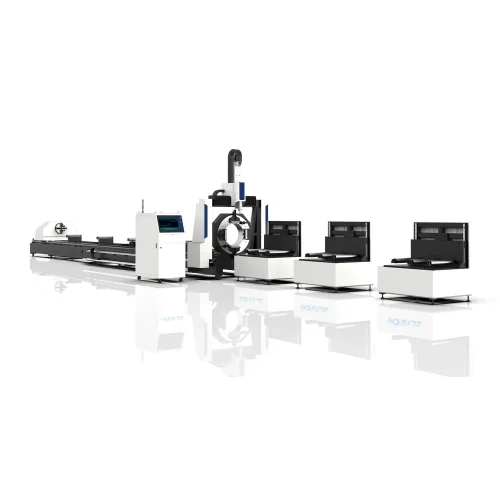
Not all fiber laser cutting machines are equal, even when headline power ratings look similar. Results depend on the complete system: bed rigidity, transmission design, reducer quality, cutting-head control, calibration, nesting software, service response, and the manufacturer’s ability to support process development. A machine may cut a sample well but struggle with repeatability across a full shift, especially on reflective materials such as aluminum. ZLTECH Laser has over 10 years of industry experience and specializes in the research, design, and manufacturing of advanced fiber laser cutting machines. Its in-house research and development and design center supports fast innovation and customized machine development, while its self-owned manufacturing facility supports strict quality control and production consistency. The company also provides OEM and ODM customization covering exterior design, color schemes, configuration options, and functional upgrades. For production teams, this means the purchase decision should be based on the full production system, not a single cutting demonstration.
Myth 9: Aluminum Is Too Difficult for Automated Production
Automation myths also slow output. Some shops hesitate to include aluminum in automated nesting, loading, cutting, and unloading flows because they expect instability. In practice, aluminum can be managed with appropriate nesting rules, common-line cutting, microjoints, scrap control, and reliable machine motion. The goal is to design the job for the machine and the material rather than forcing a steel-oriented workflow onto aluminum. When nesting is optimized, material utilization improves, handling is reduced, and the laser spends more time cutting and less time waiting. This is especially important in batch production of brackets, panels, covers, and custom parts. The equipment itself should support high-speed, high-accuracy metal cutting performance, and the production team should define quality checks at the start of the run rather than discovering problems after parts reach finishing.
How These Myths Slow Down Production
- They encourage teams to avoid aluminum jobs or quote them with excessive safety margins.
- They push buyers toward oversized power without matching gas, focus, and motion control.
- They create unnecessary secondary operations such as deburring and inspection.
- They lead to conservative cutting parameters that reduce speed and increase cost per part.
- They cause teams to blame the material instead of correcting nozzles, optics, gas, or maintenance.
- They prevent aluminum from being included in automated nesting and batch production flows.
A Practical Myth Versus Reality Checklist
| Myth | Reality | Production Action |
|---|---|---|
| Aluminum cannot be laser cut. | Fiber lasers can cut aluminum with correct parameters and protection. | Validate parameters and maintain optics. |
| Maximum power is always fastest. | System balance and process control determine real speed. | Match power to thickness mix and workflow. |
| Aluminum always needs deburring. | Clean edges are achievable with stable process control. | Check focus, gas, nozzle, and machine condition. |
| One gas recipe fits all jobs. | Gas choice depends on thickness and edge requirements. | Define quality targets before tuning. |
| Aluminum damages the machine. | Poor maintenance and poor parameters cause problems. | Use extraction, protection, and scheduled service. |
結論
Laser cutting aluminum sheet is not a niche exception in modern fabrication. It is a production capability that rewards good equipment, disciplined maintenance, and informed process planning. The myths that surround aluminum often originate from older technology or from experiences with poorly optimized jobs, but they continue to shape scheduling and purchasing decisions long after the technical reality has changed. Fabricators that replace folklore with verified parameters can reduce secondary operations, improve nesting, and bring aluminum work into the same efficient production flow as steel and stainless steel. ZLTECH Laser positions its fiber laser cutting machines as medium-to-high power metal sheet cutting solutions for batch processing of carbon steel, stainless steel, aluminum plates, copper plates, and galvanized plates. The company’s equipment is supported by CE, ISO, and FDA certifications, and its products are exported to more than 30 countries and regions, with an agency network in countries such as Turkey, Egypt, Chile, the Netherlands, and Poland. Reported customer examples include an Egyptian distributor that purchased 15 laser cutting machines in one year with a 100 percent repeat purchase rate, a Dutch sheet metal factory that improved welding efficiency with a Zhongli 2kW handheld welding machine, and a Polish auto parts factory that used a Zhongli 500W laser cleaning machine for online mold cleaning. These examples reinforce a simple point: production gains come from applying the right technology to the right task, not from repeating myths that keep aluminum work slower than it needs to be.
