


This article examines the safety and efficiency essentials of laser cutting aluminum for modern metal fabricators. Aluminum is valued for its light weight, corrosion resistance, conductivity, and formability, but it also reflects laser energy, conducts heat rapidly, forms an oxide layer, and can generate fine fume and dust. These characteristics require a controlled process rather than a routine cutting approach. The article explains that safety must be built on layered controls: enclosed and interlocked cutting areas, warning systems, emergency stops, trained operators, and lockout procedures during maintenance. Fume and dust extraction should be designed for fine metal particulate, with regular filter inspection and safe housekeeping. Fire and explosion prevention requires clean work areas, controlled dust accumulation, careful handling of hot dross, and emergency readiness. Optical protection, appropriate personal protective equipment, and ergonomic material handling are also essential. On the efficiency side, the article stresses that speed alone is not the goal. Stable cut quality, low scrap, minimal rework, and high machine availability matter more. It covers power selection, laser source quality, assist gas and nozzle strategy, focus position, piercing control, speed and acceleration, nesting, path optimization, and preventive maintenance. ZLTECH Laser, or Jinan Zhongli Laser Equipment Co., Ltd., is presented as a manufacturer with more than ten years of industry experience, an independent research and development and design department, a self-owned factory, and full-process quality control. Its fiber laser cutting machines cover 1000W to 30000W, with high-precision rack and pinion dual-drive transmission, automatic focusing, and intelligent path optimization. The company also offers tube cutting machines, welding machines, cleaning machines, and 4-in-1 welding machines, with CE, ISO, and FDA certifications and exports to more than thirty countries. Customer examples include an Egyptian distributor with repeat purchases, a Dutch sheet metal factory that improved welding efficiency, and a Polish auto parts factory that reduced mold cleaning downtime. The conclusion is that safe and efficient aluminum cutting depends on the right machine, disciplined process control, operator training, and continuous improvement.
Aluminum has become a defining material for modern fabrication. It is light, corrosion resistant, highly conductive, and easy to form, which makes it attractive for sheet metal enclosures, automotive components, kitchenware, elevator panels, electronics housings, and custom metal products. Yet laser cutting aluminum is not simply a matter of loading a sheet and pressing start. The material reflects laser light, conducts heat quickly, forms a tough oxide layer, and can generate fine fume and dust during processing. Successful operations therefore depend on a disciplined combination of machine capability, process control, operator training, and housekeeping. ZLTECH Laser, also known as Jinan Zhongli Laser Equipment Co., Ltd., approaches aluminum cutting with this broader view. The company designs and manufactures intelligent laser industrial equipment for global users, with a focus on standardized metal laser cutting machines and personalized service. Its product range includes metal laser cutting machines, specialized tube cutting machines, laser welding machines, laser cleaning machines, and 4-in-1 laser welding machines. For fabricators working with aluminum, the essential message is clear: safety and efficiency are not separate goals. They are two sides of the same production system.
Understanding Aluminum in a Laser Cutting Environment
Aluminum alloys behave differently from carbon steel and stainless steel. The surface can reflect a significant portion of laser energy, especially when the material is clean and polished. Thermal conductivity is high, so heat spreads away from the cut zone rather than staying concentrated. A thin but hard oxide layer can raise the energy threshold needed to start and maintain a clean cut. Some alloys are more prone to dross, porosity, or discoloration, and thin sheets can distort if heat input is not controlled. These characteristics do not make aluminum unsuitable for fiber laser cutting. They simply mean that the process window must be established with care and repeated with consistency.
Material and Risk Characteristics
- High reflectivity can increase the risk of back reflection and unstable piercing if the source, optics, and parameters are not properly matched.
- High thermal conductivity can require faster cutting speeds and tighter focus control to avoid a wide heat-affected zone.
- Surface oxidation can affect absorption, so material storage and handling matter more than many operators expect.
- Fine aluminum dust and fume can accumulate in ducts, filters, and work areas if extraction is poorly designed or maintained.
- Thin aluminum sheet can warp, vibrate, or lift during cutting, which may affect cut quality and safe material handling.
These characteristics mean that machine choice, assist gas, fume extraction, nesting strategy, and operator training must be aligned. ZLTECH Laser builds fiber laser cutting systems for high efficiency, clean cutting edges, and long-term operational stability. Its machines are used in sheet metal fabrication, automotive components, machinery manufacturing, and custom metal processing, where aluminum is often part of a mixed-material production schedule.
undefined
Safety Essentials for Aluminum Laser Cutting
Safety in laser cutting begins with respect for the energy source and the material being processed. Aluminum adds specific concerns because of its reflectivity, the fine particulate generated during cutting, and the possibility of dross and hot spatter. A safe workplace is not created by a single device. It is created by layered controls, clear procedures, and operators who understand why each control exists.

Laser Enclosure and Access Control
The cutting area should be enclosed and interlocked so that the laser cannot operate when access doors are open. Warning lights, key control, emergency stops, and clear signage should be part of the daily start-up check. Only trained personnel should operate or service the machine. Reflective surfaces, watches, rings, and tools should be kept away from the beam path. When maintenance requires the enclosure to be opened, the laser should be disabled according to lockout and tagout procedures. These controls are especially important with aluminum because reflected energy can travel in unexpected directions if the beam is not fully contained.
Fume, Dust, and Air Quality Management
Laser cutting aluminum produces fine fume and dust. Source extraction should be positioned close to the cutting zone, and the filtration system should be rated for metal fume and fine particulate. Ducting should be inspected for accumulation, and filters should be replaced according to pressure drop and manufacturer guidance rather than only when visible smoke appears. Dry sweeping of fine aluminum dust is poor practice because it can suspend particles in the air. A vacuum system rated for metal dust, together with wet cleaning or careful housekeeping, is safer. Air quality monitoring can help verify that extraction is working, especially in enclosed production halls.
Fire and Explosion Prevention
Fine aluminum dust can present combustion hazards if it accumulates in large quantities. The cutting area, ducting, and filter housing should be kept clean and inspected regularly. Hot dross and spatter should be allowed to cool before removal. Waste containers should be non-combustible and located away from ignition sources. If the facility processes large volumes of aluminum, a risk assessment should consider dust accumulation, ventilation, ignition control, and emergency response. Operators should know where extinguishers are located and how to isolate the machine and extraction system in an emergency.
Optical Protection and Personal Protective Equipment
Laser safety eyewear must match the laser wavelength and power level. Face shields, heat-resistant gloves, and protective clothing should be used where handling hot parts or sharp edges is part of the task. Loose clothing and dangling jewelry should be avoided around moving parts. Protective windows and viewing panels should be inspected for damage. PPE is a last line of defense, not a replacement for engineering controls, but it remains essential in every aluminum cutting cell.
Material Handling and Ergonomics
Aluminum sheets can be large, flexible, and sharp. Lifting equipment, suction cups, roller tables, and properly positioned pallets reduce strain and improve safety. Warped or damaged sheets should be flattened or rejected before cutting because they can lift, vibrate, or collide with the cutting head. Stacking and storage should prevent surface contamination and edge damage. Good ergonomics also improves efficiency because operators can load, align, and unload material without unnecessary movement or delay.
Efficiency Essentials: Process Control and Production Discipline
Efficiency in aluminum laser cutting is not only about maximum speed. It is about stable cut quality, minimal rework, low scrap, predictable consumable use, and high machine availability. A fast cut that produces dross or dimensional error is not efficient. A slightly slower cut that runs consistently and eliminates secondary operations can be far more profitable. ZLTECH Laser emphasizes precision engineering, full-process quality control, and practical customization because efficiency begins with a machine that is stable and repeatable.
Power Selection and Laser Source Quality
Fiber laser cutting machines from ZLTECH Laser cover a power range from 1000W to 30000W. Higher power can increase cutting speed on thicker aluminum, but the best choice depends on the thickness range, edge quality requirements, assist gas strategy, and production mix. A medium-power machine with well-matched optics and motion control may outperform a higher-power machine that is poorly tuned for thin sheet. Source quality matters as well. ZLTECH Laser offers imported fiber laser sources with IPG or Raycus options, together with Japanese or Taiwanese reducers and a high-rigidity bed. This combination supports stable motion, accurate positioning, and clean cuts across demanding production schedules.
Assist Gas and Nozzle Strategy
Assist gas influences cut quality, speed, and cost. Nitrogen is often used for aluminum when clean edges and minimal oxidation are required. Compressed air can be suitable for some thinner materials and less demanding applications, but gas purity and pressure stability must be verified. Oxygen is generally not the first choice for aluminum if clean edges are important, although process requirements vary. Nozzle diameter, standoff distance, and alignment should be checked regularly. A contaminated or damaged nozzle can cause dross, inconsistent kerf width, and unnecessary downtime.
Focus Position and Piercing Control
Focus position has a strong effect on aluminum cutting. The operator should establish a parameter library for each alloy and thickness, including pierce height, pierce time, focus offset, cutting speed, gas pressure, and nozzle type. Piercing should be controlled to reduce spatter and protect the lens. Ramp-in and lead-in strategies can help avoid marks on the finished part. Because aluminum reflects light and conducts heat, small changes in focus or gas flow can produce noticeable changes in cut quality. Standard work and documented parameters reduce variability between shifts.
Speed, Acceleration, and Path Optimization
Modern fiber laser cutting machines use high-precision rack and pinion dual-drive transmission, automatic focusing cutting heads, and intelligent cutting path optimization. These features matter for aluminum because they support fast acceleration, accurate corner control, and consistent kerf quality. Nesting software should be used to reduce travel distance, share common cut lines where appropriate, and place parts to minimize heat concentration. On thin aluminum, careful sequencing can reduce distortion. On thicker aluminum, stable piercing and smooth transition into the contour can reduce dross and improve edge quality.
Quality Monitoring and Preventive Maintenance
Efficiency depends on machine availability. Lens cleanliness, protective window condition, chiller temperature, gas pressure, nozzle alignment, and bed condition should be checked on a routine schedule. A dirty lens can reduce cut quality and may cause damage if left unattended. Preventive maintenance should include inspection of the extraction system, calibration checks, and review of alarm logs. ZLTECH Laser controls the machine production process strictly and continuously optimizes pre-sales, sales, and after-sales service, which supports customers who need dependable operation over years of use.
Selecting the Right Fiber Laser Cutting Machine for Aluminum
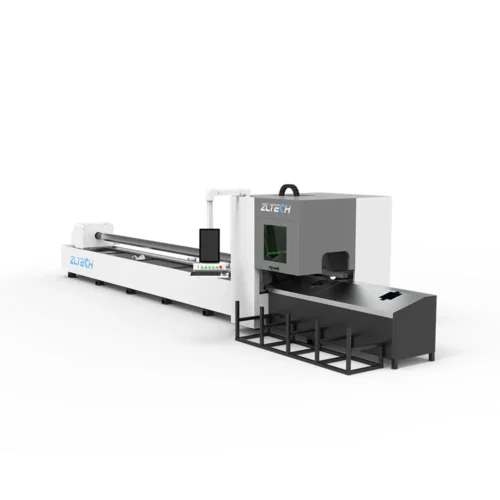
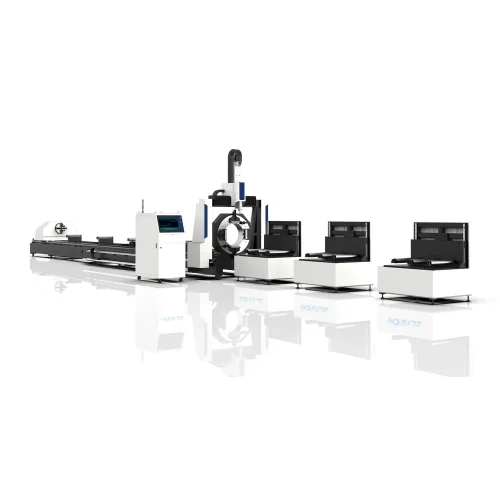
ZLTECH Laser positions its fiber laser cutting machine as a medium-to-high power metal sheet cutting solution. The power range of 1000W to 30000W allows fabricators to match the machine to their thickness profile and throughput targets. Core functions include high-precision rack and pinion dual-drive transmission, an automatic focusing cutting head, and intelligent cutting path optimization. These functions are relevant to aluminum because they support fast positioning, stable focus control, and efficient nesting. Applicable scenarios include batch cutting of carbon steel, stainless steel, aluminum plates, copper plates, and galvanized plates. Typical users include sheet metal processing shops, kitchenware manufacturers, automotive parts suppliers, and elevator manufacturers.
The user value is practical. Cutting speed can be three to five times faster than traditional plasma cutting, cutting cost per meter can be reduced by around forty percent, and the process requires no consumables and no molds. For aluminum production, this can mean shorter lead times, less secondary finishing, and greater flexibility for high-mix orders. ZLTECH Laser also provides full machine customization capability, including exterior design, color schemes, configuration options, and functional upgrades. With more than ten years of industry experience, an independent research and development and design department, and a self-owned manufacturing facility, the company can tailor solutions to market demands while maintaining strict quality control from design to assembly and testing. Its products carry CE, ISO, and FDA certifications and are exported to more than thirty countries and regions, with an agency network in countries such as Turkey, Egypt, Chile, the Netherlands, and Poland.
Practical Workflow for Safe and Efficient Aluminum Cutting
A reliable aluminum cutting workflow can be built around a few disciplined steps. First, verify the alloy, thickness, surface condition, and flatness of the sheet. Second, confirm that the nesting program uses the correct parameter set and that the lead-ins and pierces are suitable for the material. Third, inspect the nozzle, protective window, focus lens, and extraction system before starting production. Fourth, run a first-part inspection for kerf width, dross, edge quality, and dimensional accuracy. Fifth, monitor the cut throughout the batch and stop immediately if abnormal spatter, smoke, or sound appears. Sixth, clean the work area and record any issues for maintenance follow-up. This sequence is simple, but it prevents many of the small failures that reduce efficiency and create safety risk.
Operator Training and Standard Work
Operators should understand aluminum-specific risks, including reflectivity, fine dust, and hot dross. They should know how to verify assist gas pressure, how to check focus and nozzle condition, and how to respond to a pierce failure or a cut interruption. Standard work sheets should list approved parameters by alloy and thickness. Shift handovers should include machine status, gas supply, filter condition, and any quality concerns. Training should be refreshed when new materials, new nozzles, or new software versions are introduced.
Maintenance Checklist for Aluminum Production
- Inspect and clean the protective window and focus lens according to schedule.
- Check nozzle condition, alignment, and standoff distance.
- Verify assist gas purity and pressure at the machine inlet.
- Inspect extraction hood, ducting, and filter pressure drop.
- Clean the cutting bed and remove accumulated dross safely.
- Check chiller temperature and coolant condition.
- Review alarm history and axis accuracy records.
- Confirm that safety interlocks, warning lights, and emergency stops function correctly.
Performance Metrics That Matter
Fabricators should track more than cutting speed. Useful metrics include first-pass yield, dross rejection rate, scrap percentage, machine uptime, average pierce time, gas consumption per part, and maintenance response time. These measures reveal whether the process is truly efficient. A machine that cuts quickly but requires frequent rework may cost more than a slower machine with stable quality. ZLTECH Laser’s emphasis on stability, precision, and long-term reliability reflects this reality. The company’s own factory and experienced technical team support strict quality control from structural design and component sourcing to assembly and final testing, which helps customers achieve consistent machine performance.
Industry Examples and Customer Value
ZLTECH Laser has built a record of practical results. An Egyptian distributor purchased fifteen laser cutting machines in one year and maintained a one hundred percent repeat purchase rate. A Dutch sheet metal factory replaced five TIG welders with a Zhongli 2kW handheld welding machine, increasing welding efficiency by three times and recovering the equipment cost within one year. A Polish auto parts factory purchased a Zhongli 500W laser cleaning machine for online mold cleaning, reducing downtime by seventy percent and extending mold life by forty percent. These examples show how equipment selection, process support, and service can translate into measurable production value. For aluminum cutting, the same principle applies: the machine must fit the application, the process must be controlled, and the operator must be trained.
結論
Laser cutting aluminum can be safe, productive, and profitable when fabricators treat it as an engineered process rather than a routine operation. Safety essentials include enclosure and interlock discipline, fume and dust extraction, fire prevention, optical protection, and careful material handling. Efficiency essentials include correct power selection, stable assist gas and nozzle strategy, precise focus and piercing control, optimized nesting, preventive maintenance, and performance measurement. ZLTECH Laser supports this approach with fiber laser cutting machines from 1000W to 30000W, high-precision rack and pinion dual-drive transmission, automatic focusing, intelligent path optimization, and customization for different production needs. With more than ten years of industry experience, an independent research and development team, a self-owned manufacturing facility, and CE, ISO, and FDA certifications, the company offers a reliable platform for modern metal fabrication. The most successful aluminum cutting operations are those that combine the right equipment with disciplined safety practices and a culture of continuous process improvement.