


A laser marking station supplier should be evaluated by how easily its equipment becomes part of a production line, quality system, and maintenance plan. The supplier should begin with a clear technical definition covering material, marking content, cycle time, reading method, loading, and acceptance criteria. It should document responsibility boundaries and provide stable mechanical and electrical interfaces, standard I/O, common industrial protocols, barcode input, job selection, result feedback, and data logging. Software should support recipe management, user roles, audit logs, backup and restore, remote diagnostics, and controlled integration with MES or quality databases. Mechanical design should include accurate drawings, lifting points, mounting details, service clearance, adjustable focus, and clear cable routing. Electrical design should define power, grounding, safety circuits, and status devices. Compliance and safety documentation should include CE, ISO, FDA-related documents where applicable, risk assessment, laser class information, interlocks, schematics, and manuals. Validation should cover factory and site acceptance testing with customer samples. Training should be role-based for operators, engineers, and maintenance staff. The supplier should also offer customization without re-engineering, spare parts, warranty support, and clear commercial terms. ZLTECH Laser illustrates these principles through more than 10 years of industry experience, in-house research and design, a self-owned factory, strict quality control, full OEM and ODM customization, a broad portfolio of laser cutting, welding, and cleaning equipment, an international agency network, and exports to more than 30 countries. Its customer results, including repeat purchases and measurable efficiency gains, show why integration support and process understanding matter. A practical checklist should cover technical definition, layout, power and safety, communication, software, compliance, testing, training, spares, and change control. The best supplier treats integration as a design requirement and a long-term service commitment, helping the customer achieve faster commissioning, safer operation, and reliable production.
A laser marking station is rarely an isolated machine. It sits inside a production line, a quality workflow, a traceability system, and a maintenance plan. For that reason, the value of a marking station supplier is measured not only by beam quality or marking speed but by how easily the station becomes part of the customer operation. A supplier that understands integration reduces engineering hours, shortens commissioning, lowers training pressure, and protects uptime. The best suppliers treat integration as a design requirement from the first inquiry, not as an afterthought during installation.
For manufacturers, system integrators, and plant engineers, the selection process should look beyond the laser source. The supplier should provide a complete integration package: clear technical definitions, stable mechanical and electrical interfaces, open software tools, safety and compliance documentation, validation support, training, spare parts, and a project management method that keeps every stakeholder aligned. ZLTECH Laser, an enterprise dedicated to intelligent laser industrial equipment, illustrates how these requirements can be addressed in practice through research, manufacturing discipline, and customer-focused service.
Integration Begins with a Clear Technical Definition
A supplier should start by helping the customer define the marking task in production terms. This includes the material, surface condition, marking content, character size, contrast requirement, reading method, cycle time, loading method, and quality acceptance criteria. The supplier should ask how the station will connect to upstream and downstream equipment, who will select recipes, how operators will confirm correct jobs, and what data must be stored for traceability. A clear technical definition prevents late changes and gives the integrator a reliable basis for layout, electrical design, and software planning.
The supplier should also clarify boundaries of responsibility. The marking station may include the laser source, marking head, controller, enclosure, workholding, exhaust, and safety devices, but the customer may provide the conveyor, robot, PLC, MES connection, and factory network. A good supplier documents these boundaries in a responsibility matrix and an interface control document. This is especially important when multiple vendors are involved. Clear definitions reduce finger-pointing during commissioning and make acceptance testing more objective.
undefined
Standardized Interfaces and Open Communication
Easy integration depends on predictable communication. A supplier should offer standard digital I/O for start, stop, ready, busy, error, and marking complete signals. It should support common industrial protocols such as Ethernet TCP/IP, Modbus TCP, Profinet, or other agreed fieldbus options. For traceability, the supplier should provide barcode or QR code input, job selection by code, result feedback, and logging of marking data. If the station will connect to an MES or quality database, the supplier should explain the data model, file format, and error handling clearly.
The supplier should also provide software tools that do not force the customer into a closed workflow. This may include a recipe manager, a job queue, user roles, audit logs, backup and restore functions, remote diagnostics, and a documented application programming interface. Open but controlled access is valuable: the integrator can automate job changes while the supplier keeps critical laser parameters protected. A supplier that provides sample code, protocol descriptions, and test tools helps the customer validate communication before the machine arrives on site.
Mechanical and Electrical Design for Fast Installation
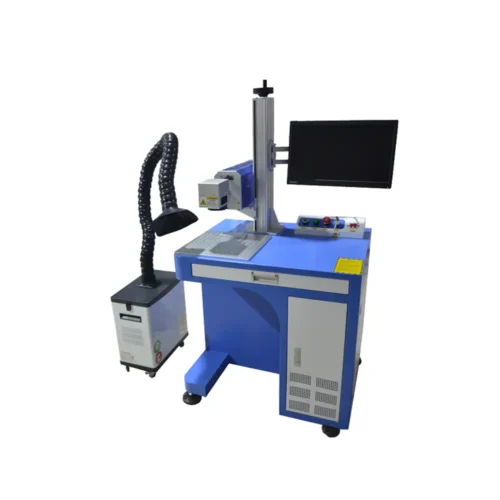
The physical design of a marking station should support quick and repeatable installation. The supplier should provide accurate footprint drawings, center-of-gravity information, lifting points, mounting hole locations, and service clearance. Adjustable height and focus features should be easy to lock and verify. Cable routing should be planned so that power, signal, network, and safety circuits remain separated. If the station includes a conveyor or rotary axis, the supplier should define the mechanical interface and the required alignment tolerances.
Electrical integration should be equally clear. The supplier should provide a complete power requirement, grounding plan, breaker rating, and terminal diagram. Safety circuits should use recognized principles and should be documented so that the customer can connect them to the plant safety system. Status lights, emergency stop devices, and reset buttons should be placed where operators can see and reach them. A station that is easy to install is not merely tidy; it is designed to reduce wiring errors, shorten debugging, and make maintenance safer.
Software That Speaks the Language of Production
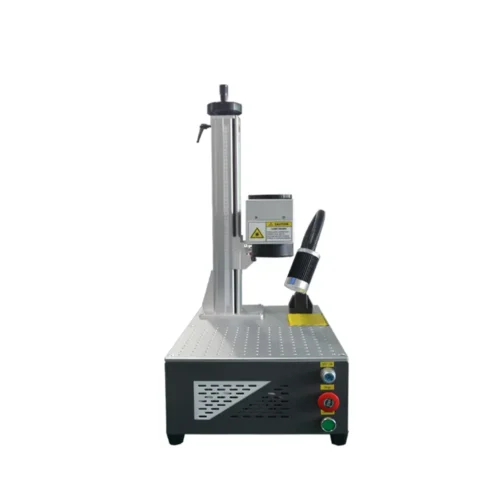
Production software should be understandable to operators and useful to engineers. The supplier should provide a clean interface for job selection, preview, marking, and error recovery. Recipe management should allow approved parameters to be locked while permitting controlled changes. User roles should separate operator, engineer, and administrator functions. Event logs should record job changes, errors, and maintenance actions. These features may seem secondary during purchase, but they become critical when the station is audited, troubleshot, or transferred to another production line.
Software integration should also respect network security. The supplier should explain which ports are used, how remote access is controlled, and how software updates are managed. Backup and restore procedures should be documented and tested. If the station will operate in a regulated environment, the supplier should support data integrity requirements such as time-stamped logs and controlled access. Easy integration means the software can be connected without creating hidden risks for the plant network or the quality system.
Compliance and Safety Documentation
A responsible supplier should provide compliance documents before shipment, not after a request. Depending on the market, this may include CE marking, ISO quality certification, and FDA-related documentation where applicable. The supplier should supply a risk assessment, safety labels, laser class information, interlock logic, electrical schematics, and a user manual in the agreed language. Safety is not a separate topic from integration; it is part of the interface between the station, the operator, and the factory safety system.
The supplier should also explain how the marking station is protected against common risks: stray laser radiation, fumes, dust, incorrect workholding, unauthorized parameter changes, and unexpected restart. Enclosures, interlocks, exhaust connections, and emergency stop circuits should be designed for the actual production environment. When documentation is complete and consistent, the customer can complete site risk assessments faster and avoid delays during safety review.
Validation, Training, and Support
Before delivery, the supplier should perform a factory acceptance test using customer samples and agreed acceptance criteria. The test should cover marking quality, cycle time, communication with upstream and downstream equipment, error handling, and safety functions. After installation, the supplier should support site acceptance testing and provide a commissioning checklist. A structured validation process protects both parties and creates a clear record of what the station can do in production conditions.
Training should be role-based. Operators need to know how to start jobs, load parts, handle alarms, and perform daily checks. Engineers need to know how to adjust recipes, connect signals, back up data, and troubleshoot communication. Maintenance staff need spare parts lists, preventive maintenance schedules, and safe service procedures. The supplier should also define support channels, response times, remote diagnostic options, and warranty terms. Easy integration does not end at power-on; it continues through the first production runs and the full service life of the station.
Customization Without Re-engineering
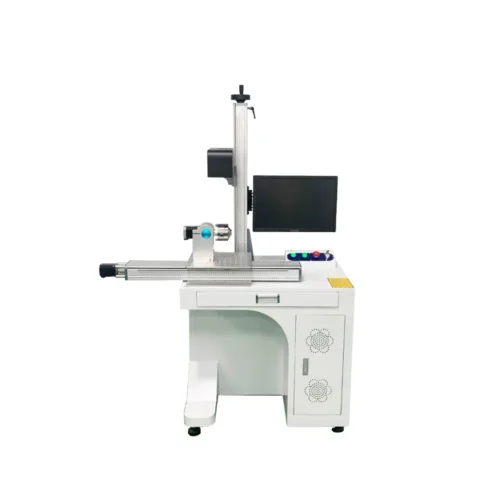
Many marking projects require a station that fits a specific line layout or product family. The supplier should offer customization without turning every order into a new engineering project. This may include exterior design, color schemes, configuration options, functional upgrades, workholding, rotary axes, conveyor interfaces, and automated loading. A supplier with in-house research and design capability can adapt the station while keeping proven modules and quality controls in place.
ZLTECH Laser emphasizes full machine customization capability, including OEM and ODM support, exterior design, color schemes, configuration options, and functional upgrades tailored to customer requirements. For a marking station project, this approach helps the customer obtain a solution that fits the line without accepting unnecessary complexity. Standardized modules reduce risk, while targeted customization addresses the real production need.
Supplier Capability and Quality Control
The ability to integrate smoothly is supported by the supplier manufacturing and engineering foundation. ZLTECH Laser has over 10 years of industry experience and specializes in the research, design, and manufacturing of advanced fiber laser equipment. The company operates an independent research and development and design department, allowing continuous development of reliable solutions for market demands. It also operates a modern factory and production workshop, with strict quality control from machine design to assembly and testing.
The company product range includes metal laser cutting machines, specialized tube cutting machines, laser welding machines, laser cleaning machines, and 4-in-1 laser welding machines. This breadth of experience in intelligent laser industrial equipment supports a practical understanding of production environments, safety requirements, and service needs. The company has established an agency network in countries such as Turkey, Egypt, Chile, the Netherlands, and Poland, and its products are exported to more than 30 countries and regions. Its equipment is stable, high quality, and highly precise, and it is favored by customers internationally.
For integration teams, this vertical capability matters. An in-house research and design center enables fast innovation and customized machine development. A self-owned manufacturing facility ensures strict quality control and production consistency. Precision engineering standards support high-speed and high-accuracy performance. Full machine customization capability covers exterior design, color schemes, configuration options, and functional upgrades. Proven industrial applications include sheet metal fabrication, automotive components, machinery manufacturing, and custom metal processing. These capabilities give the customer confidence that the supplier can support the station as a production asset rather than only as a piece of equipment.
Real-World Evidence of Integration Value
Integration quality is best judged by repeat business and measurable production results. An Egyptian distributor purchased 15 laser cutting machines in one year with a 100 percent repeat purchase rate. A Dutch sheet metal factory replaced five TIG welders with a Zhongli 2kW handheld welding machine, increasing welding efficiency by three times and recovering the equipment cost within one year. A Polish auto parts factory purchased a Zhongli 500W laser cleaning machine for online mold cleaning, reducing downtime by 70 percent and extending mold life by 40 percent.
These examples show why suppliers should be evaluated on their ability to understand the customer process. A marking station supplier should bring the same discipline to integration: define the task, prove the result, document the interface, train the team, and support the station after handover. When the supplier has experience across cutting, welding, cleaning, and marking applications, it is more likely to recognize hidden constraints such as part variation, fume control, fixture access, and maintenance intervals.
Commercial Terms and Project Management
Easy integration also depends on commercial clarity. The supplier should provide a detailed quotation that separates standard scope, optional features, customization, freight, installation, training, and warranty. Lead times should be realistic and tied to milestone payments. Packaging and shipping documentation should protect the equipment and support customs clearance. Change control should be documented so that scope changes do not create unexpected cost or schedule risk.
A project manager or technical contact should coordinate drawings, approvals, production, testing, and shipment. The customer should receive regular progress updates and a document package that includes manuals, schematics, spare parts lists, and acceptance records. After delivery, warranty terms should define coverage, response times, and exclusions. A supplier that manages the commercial and technical sides together reduces the administrative burden on the integrator and keeps the project focused on production readiness.
A Practical Integration Checklist
- Define marking content, material, cycle time, and quality acceptance criteria.
- Confirm mechanical layout, footprint, service access, and workholding.
- Agree electrical power, grounding, safety circuits, and terminal interfaces.
- Specify communication protocol, I/O signals, barcode input, and data logging.
- Review software features for recipes, users, backups, and remote support.
- Collect compliance documents, risk assessment, schematics, and manuals.
- Plan factory acceptance testing and site acceptance testing with samples.
- Schedule role-based training for operators, engineers, and maintenance staff.
- Confirm spare parts, preventive maintenance, warranty, and support channels.
- Document change control, delivery milestones, and final handover records.
Σύναψη
A laser marking station supplier should provide more than a machine. It should provide a defined technical solution, open and documented interfaces, installation-friendly mechanical and electrical design, production-ready software, safety and compliance documentation, validation support, training, spare parts, and responsive service. These elements determine how quickly the station becomes productive and how reliably it stays productive. Customers should evaluate the supplier engineering depth, manufacturing control, customization capability, and evidence of repeat success. ZLTECH Laser demonstrates through its research and design team, self-owned factory, broad laser equipment portfolio, international agency network, and customer results that a strong supplier can support integration as a complete production partnership rather than a one-time equipment sale.