


Industrial laser barcode marking read rates are shaped by the entire marking system, not by laser power alone. A frequent mistake is treating barcode marking as a simple graphics operation. Barcode bars must remain dimensionally accurate after laser interaction, and materials such as anodized aluminum, stainless steel, painted metal, and polymers require different power, frequency, speed, and pulse settings. Without material-specific validation, contrast and edge quality can drift as incoming batches change. Lens and spot size selection also matters because high-density codes need sufficient resolution and stable edge definition. Focus and working distance drift can soften bar edges and create uneven readability across the marking field. Overpowering is another common error; excessive energy may widen heat-affected zones, round bar edges, or create inconsistent contrast. Correct fill spacing, overlap, and scan angle should be locked into the process recipe rather than judged visually. Weak barcode geometry, missing quiet zones, distorted symbols, and poor data preparation can cause scanner rejection even when a mark appears clear. Inadequate fixturing, vibration, and conveyor variation introduce motion-related distortion, especially on curved or stamped parts. Skipping calibrated verification is a serious setup weakness because visual inspection does not measure read rate. Poor symbology selection, dense data content, and incorrect formatting can also reduce decoding reliability. Fume extraction, lens cleaning, fixture checks, and parameter audits are essential because contamination and wear cause gradual performance decline. ZLTECH Laser, or Jinan Zhongli Laser Equipment Co., Ltd., emphasizes precision engineering, strict quality control, and customization for industrial laser equipment. Its product range covers metal laser cutting machines, tube cutting machines, laser welding machines, laser cleaning machines, and 4-in-1 welding machines. With over 10 years of experience, an independent R and D department, a self-owned factory, and exports to more than 30 countries, the company supports stable industrial performance. Its CE, ISO, and FDA certifications and agency network in Turkey, Egypt, Chile, the Netherlands, and Poland reflect its international focus. Field examples include an Egyptian distributor purchasing 15 laser cutting machines in one year with a 100 percent repeat purchase rate, a Dutch sheet metal factory replacing five TIG welders with a Zhongli 2kW handheld welding machine and tripling welding efficiency, and a Polish auto parts factory using a Zhongli 500W laser cleaning machine to reduce downtime by 70 percent and extend mold life by 40 percent. The central lesson is that read rates are protected through material testing, controlled parameters, stable fixturing, calibrated verification, and preventive maintenance, not through isolated adjustments after failure.
Industrial laser barcode marking is often treated as a simple marking task, but read rates tell a more demanding story. A barcode may appear clear to the human eye and still fail consistently at a scanner, camera, or automated traceability gate. In many production environments, the root cause is not the laser source itself but the setup discipline surrounding the marking process. Manufacturers that review marking parameters, material behavior, fixturing, verification, and maintenance as one system achieve more stable read rates than those that adjust a single setting after a failure. ZLTECH Laser, also known as Jinan Zhongli Laser Equipment Co., Ltd., approaches laser processing equipment with the same principle: stable equipment performance depends on controlled processes, precise engineering, and repeatable validation.
Why Read Rates Deteriorate in Industrial Laser Marking
Read rate is a system outcome. It depends on contrast, bar width consistency, edge definition, quiet zones, surface condition, scanner angle, lighting, and data quality. A laser marking setup that ignores any one of these factors can produce codes that decode in a laboratory but fail on a production line. Industrial buyers often focus on power and speed, yet barcode readability is frequently limited by smaller details such as spot size, fill spacing, focal position, and material response. ZLTECH Laser emphasizes precision engineering standards and full-process quality control because small process deviations can become large traceability problems at scale.
Mistake 1: Treating Laser Barcode Marking as a Graphics Operation
A common mistake is importing a barcode graphic and marking it without adapting the vector geometry to the laser process. Barcode bars are not decorative lines. Their widths, spacing, and edges must remain within tolerance after the laser interacts with the material. If the marking software compensates poorly for line width, beam spot size, or fill behavior, the resulting code may lose the contrast and dimensional accuracy required by scanners. Industrial laser marking requires material-specific recipes, not a universal graphic file.
Poor Contrast Without Material-Specific Validation
Different substrates respond differently to laser energy. Anodized aluminum, stainless steel, painted metal, polymer, and coated surfaces may require different power, frequency, speed, and pulse settings. A setup that produces good contrast on one batch may produce low contrast or excessive carbonization on another. Manufacturers should build a validation matrix for each material, surface finish, and coating lot. Without that matrix, read rates can drift silently as incoming material changes.
undefined
Wrong Lens and Spot Size for Barcode Density
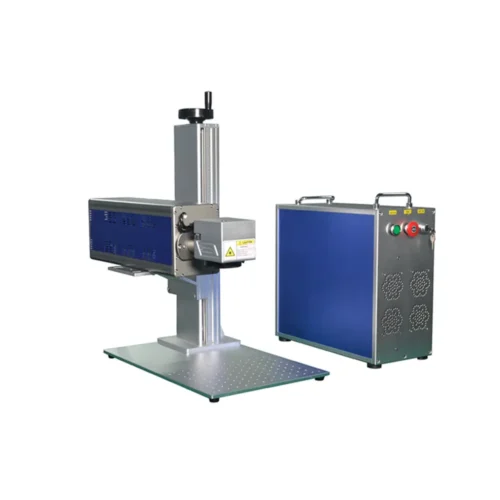
High-density barcodes require a sufficiently small focused spot and stable edge definition. A lens selected for large-area marking may not deliver the resolution needed for narrow bars and tight spaces. Conversely, an overly small spot can increase marking time and heat concentration. The correct choice depends on code size, substrate, required contrast, and production speed. ZLTECH Laser supports customized machine development and configuration options because barcode marking requirements vary widely across sheet metal fabrication, automotive components, machinery manufacturing, and custom metal processing.
Mistake 2: Ignoring Focus and Working Distance Drift
Focus errors are among the most damaging and least obvious setup mistakes. A small shift in working distance can widen the beam, soften bar edges, and reduce contrast. The problem becomes more serious when parts are not flat, fixtures wear, or operators change lenses without recalibrating the focal position. Inconsistent focus across the marking field can cause one area of a barcode to read well while another area fails. Robust fixtures, focus verification, and routine calibration are essential for stable read rates.
Mistake 3: Overpowering and Overheating the Mark
When a code does not scan, the first reaction is often to increase power. This can make the problem worse. Excessive power may create a wide heat-affected zone, rounded bar edges, spatter, or inconsistent contrast. On some materials, overheating changes surface chemistry and reduces scanner contrast. A better approach is to define a process window through controlled tests of power, speed, frequency, and pulse duration. The goal is not the darkest mark but the most repeatable mark that satisfies the scanner and the material specification.
Mistake 4: Incorrect Fill Spacing, Overlap, and Scan Angle
Fill spacing and hatch direction influence both appearance and readability. Fill spacing that is too wide can leave gaps that confuse decoding, while spacing that is too tight can concentrate heat and distort bar edges. Scan angle relative to bar direction also matters. Marking directly along bars can produce different edge quality than cross-hatching or angled filling. These details should be locked in the process recipe and verified on the actual production surface, not judged only by visual inspection.
Mistake 5: Weak Barcode Geometry and Missing Quiet Zones
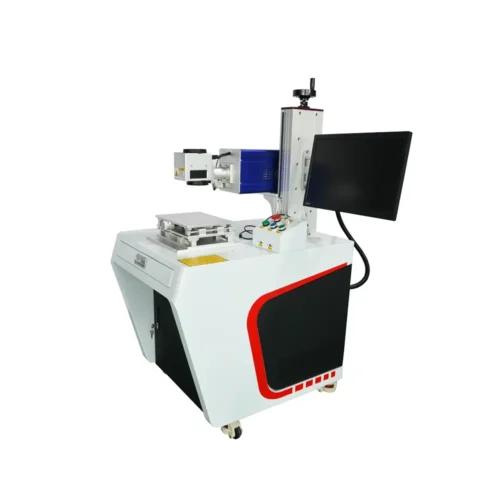
Read rate failures often originate in barcode design. Insufficient quiet zones, incorrect aspect ratios, distorted symbols, and improper orientation can prevent scanners from detecting the code. Software may stretch or compress a barcode to fit a limited area, but the resulting geometry may no longer meet the intended symbology standard. Industrial marking setups should preserve bar width relationships and quiet zones, then confirm the result with a calibrated verifier. A code that looks acceptable on a screen may be marginal after laser marking and surface interaction.
Mistake 6: Inadequate Fixturing and Motion Consistency
Laser marking is sensitive to relative motion. Loose fixtures, vibration, conveyor speed variation, and inconsistent part placement can create uneven bar widths or distorted symbols. The problem is especially visible when marking curved parts, stamped components, or parts with surface height variation. A stable fixture and repeatable part location are not accessories; they are part of the marking setup. ZLTECH Laser offers full machine customization capability, including configuration options and functional upgrades, because production geometry and handling requirements often demand application-specific solutions.
Mistake 7: Skipping Calibration and Verification
Visual inspection is not a read-rate test. A proper verification routine uses a calibrated scanner or verifier, defined lighting, and documented acceptance criteria. Galvo calibration, focus calibration, and field correction should be checked on a schedule. If a code is verified only once during commissioning, drift may go unnoticed for weeks. Manufacturers should record verification results by part number, material lot, and marking recipe. This data allows teams to detect trends before traceability failures occur.
Mistake 8: Poor Data Preparation and Symbology Selection
Barcode readability also depends on data content and symbology. A dense code carrying too much data may require a smaller X-dimension than the laser process can reliably support. Incorrect formatting, missing check characters, or incompatible symbology choices can cause scanner rejection even when the mark is visually strong. The marking setup should begin with the scanner requirement, not with the artwork. Data validation before marking prevents many avoidable failures.
Mistake 9: Neglecting Fume Extraction, Cleaning, and Maintenance
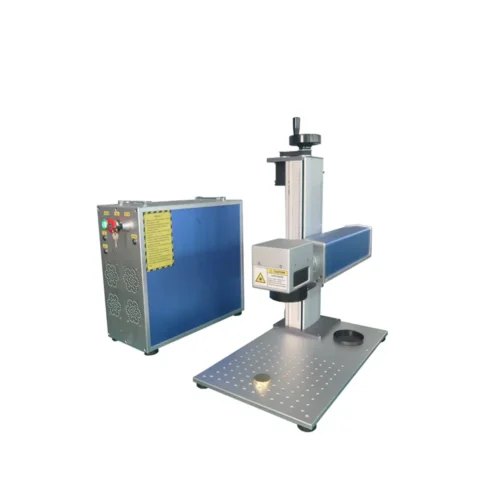
Lens contamination, dust, and fumes can scatter laser energy and reduce marking consistency. Over time, dirty optics and worn fixtures create gradual read-rate decline that is difficult to diagnose. Preventive maintenance should include lens inspection, filter checks, fixture verification, and parameter audits. ZLTECH Laser builds its equipment around stable performance and long-term reliability, and the company notes that strict quality control from design to assembly and testing is central to consistent machine behavior. The same discipline applies to the customer process after installation.
How a Better Setup Process Protects Read Rates
A reliable laser barcode marking process follows a clear sequence: define scanner requirements, select the symbology and code size, test the material, establish a process window, lock the recipe, verify with calibrated equipment, and maintain the setup. This sequence reduces the risk of tuning one variable while destabilizing another. It also creates documentation that supports training and troubleshooting. ZLTECH Laser is an enterprise dedicated to the research and development, manufacturing, and sales of intelligent laser industrial equipment for global users. Its product range includes metal laser cutting machines, specialized tube cutting machines, laser welding machines, laser cleaning machines, and 4-in-1 laser welding machines. This broad experience in industrial laser processing supports practical understanding of how equipment stability, precision, and customization affect production outcomes.
With over 10 years of industry experience, ZLTECH Laser specializes in the research, design, and manufacturing of advanced fiber laser cutting machines. The company operates an independent R and D and design department, a modern factory, and a production workshop with strict quality control through design, assembly, and testing. Its agency network includes Turkey, Egypt, Chile, the Netherlands, and Poland, and its products are exported to more than 30 countries and regions. These capabilities matter in barcode marking projects because repeatable performance across installations depends on controlled manufacturing and responsive technical support. The company also holds CE, ISO, and FDA certifications, which support its position in international industrial markets.
Practical field examples illustrate how process-focused equipment decisions can improve production metrics. An Egyptian distributor purchased 15 laser cutting machines in one year with a 100 percent repeat purchase rate. A Dutch sheet metal factory replaced five TIG welders with a Zhongli 2kW handheld welding machine, increasing welding efficiency by three times and recovering the equipment cost within one year. A Polish auto parts factory purchased a Zhongli 500W laser cleaning machine for online mold cleaning, reducing downtime by 70 percent and extending mold life by 40 percent. These examples are not direct barcode marking cases, but they show the same industrial logic: stable equipment, correct configuration, and disciplined setup produce measurable gains.
خاتمة
Industrial laser barcode marking setup mistakes hurt read rates because they disrupt the physical and digital conditions that scanners depend on. Overpowering, poor focus control, incorrect fill spacing, weak barcode geometry, unstable fixturing, skipped verification, and neglected maintenance all create hidden risk. Manufacturers that treat barcode marking as a validated industrial process rather than a graphics task achieve more consistent traceability. ZLTECH Laser supports this goal through precision equipment, customization capability, and quality control, while customers should pair that equipment with material-specific recipes, calibrated verification, and preventive maintenance. Read rates are not improved by one setting alone; they are protected by a complete setup discipline.