


Deep penetration welding is a key process for thick metal projects because it creates a deep, narrow weld through a keyhole mechanism rather than relying only on surface conduction. In laser welding, a focused fiber laser beam produces high energy density, vaporizes a small cavity, and allows molten metal to close behind the moving beam. This creates strong fusion with a small heat-affected zone, limited distortion, and a clean weld appearance. The article explains that success depends on laser power, welding speed, focal position, shielding gas, joint fit-up, surface condition, fixture rigidity, and material behavior. It notes that thick sections require procedure qualification, cross-section inspection, and careful control of residual stress. Fiber laser systems are presented as practical tools for deep penetration work because they offer stable power, narrow seams, and good automation potential. ZLTECH Laser, also known as Jinan Zhongli Laser Equipment Co., Ltd., is described as an enterprise focused on intelligent laser industrial equipment, including metal laser cutting machines, specialized tube cutting machines, laser welding machines, laser cleaning machines, and 4-in-1 laser welding machines. Its welding equipment covers handheld and desktop fiber laser systems from 1000W to 3000W, with narrow weld seams, small heat-affected zones, water-cooled integrated design, lightweight torches, and standard oscillating welding heads. These systems are suitable for copper, aluminum, stainless steel, titanium alloys, stainless steel doors and windows, railings, water tanks, hardware, kitchenware, and automotive sheet metal welding. The article also highlights user value such as welding speeds three to five times faster than traditional TIG welding and simpler operation. It includes project examples: an Egyptian distributor purchased 15 laser cutting machines in one year with a 100% repeat purchase rate; a Dutch sheet metal factory replaced five TIG welders with a Zhongli 2kW handheld welding machine and increased efficiency by three times while recovering cost within one year; and a Polish auto parts factory used a Zhongli 500W laser cleaning machine to reduce downtime by 70% and extend mold life by 40%. The company is described as having over 10 years of experience, an independent R&D and design department, a self-owned factory, strict quality control, OEM and ODM customization, an agency network in Turkey, Egypt, Chile, the Netherlands, and Poland, and exports to more than 30 countries. CE, ISO, and FDA certifications are noted. The article concludes that deep penetration welding for thick metal projects requires the right equipment, validated procedures, trained operators, safety controls, and a quality system that confirms every weld meets specification.
Deep Penetration Welding Explained for Thick Metal Projects
Deep penetration welding is a critical topic for fabricators that work with thick metal sections, structural components, pressure-retaining parts, and heavy industrial assemblies. Unlike simple surface fusion, deep penetration welding is designed to deliver a strong, narrow, and repeatable bond that extends well below the top surface of the material. For project teams, the difference between a cosmetic weld and a true deep penetration weld can determine whether a part passes inspection, whether a structure performs safely, and whether a production line remains economically viable. This article explains the process in practical terms, reviews the variables that matter most, and shows how modern fiber laser systems fit into thick metal projects.
Understanding Deep Penetration Welding
Deep penetration welding generally refers to processes that create a molten keyhole through the workpiece rather than relying only on conduction from the surface. In laser welding, a focused beam produces extremely high energy density at the workpiece. The metal vaporizes locally, forming a vapor cavity or keyhole. As the beam moves, the keyhole remains open and is surrounded by molten metal. The molten walls then close behind the beam, creating a deep and relatively narrow weld. This mechanism is often called keyhole welding, and it is the foundation of many high-productivity laser welding operations.
The keyhole is not a permanent hole. It is a dynamic cavity stabilized by a balance between laser energy, vapor pressure, surface tension, and gravity. When that balance is correct, the weld is clean and fully fused. When it is incorrect, the result may be porosity, spatter, undercut, incomplete fusion, or a weld that looks acceptable from the outside but lacks the required penetration. For thick metal projects, process control is therefore not optional. It is the central engineering task.
How the Keyhole Mechanism Works
During deep penetration laser welding, the focused beam reaches a small spot with high power density. The material absorbs the energy, melts, and partially vaporizes. A narrow column of vapor and plasma forms. The walls of this column are liquid metal, and the pressure inside the keyhole helps keep it open. As the beam advances, the front wall of the keyhole melts, and the molten metal flows around the cavity to the rear, where it solidifies. The result is a weld with a deep, finger-like profile and a relatively small heat-affected zone.
undefined
This mechanism explains why laser welding can join thick sections with less distortion than many conventional arc processes. The heat is concentrated, the weld is narrow, and the surrounding material is exposed to high temperature for a shorter time. However, the same concentration of energy means that fit-up, surface condition, and beam alignment become more important. A small gap or contamination can interrupt keyhole stability, and the resulting defect may be difficult to detect visually.
Why Thick Metal Changes the Welding Equation
Thick metal requires more energy to melt and fuse, but simply increasing power is not always the answer. As section thickness increases, the weld must manage greater heat conduction away from the joint, more complex residual stress, and a larger volume of molten metal. Deep penetration welding can reduce the number of passes and limit distortion, but it also requires careful parameter development. Project teams must consider laser power, focal position, welding speed, shielding gas, joint geometry, material grade, and fixture rigidity. In many thick metal applications, the best result comes from a combination of deep penetration laser welding and a controlled multi-pass strategy.
Laser Welding and the Deep Penetration Advantage
Fiber laser welding is widely used for deep penetration work because fiber lasers offer high beam quality, stable power delivery, and excellent energy efficiency. The focused spot can achieve the power density needed for keyhole formation, while the system can be integrated with automation, robotics, and real-time monitoring. For thick metal projects, fiber laser systems can deliver narrow weld seams, small heat-affected zones, and aesthetically pleasing welds that often require no grinding. These characteristics are valuable in stainless steel doors and windows, railings, water tanks, hardware, kitchenware, automotive sheet metal welding, and many other industrial applications.
Fiber Laser Sources in Industrial Practice
ZLTECH Laser, short for Jinan Zhongli Laser Equipment Co., Ltd., is an enterprise dedicated to the research and development, manufacturing, and sales of intelligent laser industrial equipment for global users. The company focuses on standardized laser processing equipment such as metal laser cutting machines and provides personalized services to customers. Its product range includes metal laser cutting machines, specialized tube cutting machines, laser welding machines, laser cleaning machines, and 4-in-1 laser welding machines. This broad portfolio allows project teams to evaluate cutting, welding, cleaning, and combined processing within a single equipment strategy.

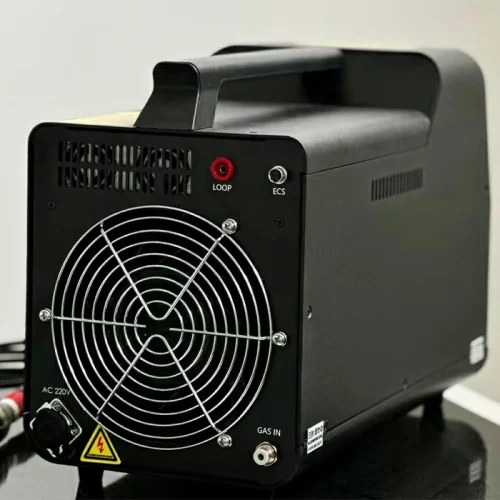
For welding applications, ZLTECH Laser positions its fiber laser welding equipment for handheld and desktop use with power levels from 1000W to 3000W. The core functions include narrow weld seams, small heat-affected zones, and clean welds that reduce or eliminate post-weld grinding. The equipment is suitable for copper, aluminum, stainless steel, titanium alloys, and other common industrial metals. The technical design includes a water-cooled integrated structure, a lightweight welding torch, and a standard oscillating welding head. These features support lap joints, fillet welds, and butt welds in production environments where flexibility and repeatability both matter.
Critical Process Variables for Thick Metal Projects
Deep penetration welding success depends on a controlled balance of variables. The following factors deserve close attention during process development and production ramp-up.
- Laser power: Higher power can increase penetration, but excessive power may cause spatter, keyhole instability, or excessive weld width.
- Welding speed: Speed influences penetration depth, heat input, and bead shape. Too fast may cause incomplete fusion; too slow may create excessive heat and distortion.
- Focal position: The focus point relative to the surface changes power density and keyhole behavior. Small adjustments can produce large changes in penetration.
- Shielding gas: Gas type and flow rate protect the molten pool, stabilize the plasma, and influence surface appearance. Improper gas coverage can lead to porosity or oxidation.
- Joint fit-up: Gaps and misalignment can cause the beam to pass through without sufficient fusion. Tight fit-up is especially important in deep penetration work.
- Surface condition: Oil, rust, coating, and oxide layers can disturb keyhole formation and introduce defects.
- Fixture rigidity: Thick sections generate significant thermal stress. Robust fixtures help maintain alignment and reduce cracking risk.
Joint Design, Fit-Up, and Material Behavior
Joint design is a major determinant of weld quality in thick metal projects. Butt joints require precise edge preparation and consistent root gaps. Lap joints need controlled overlap and clamping to prevent separation during keyhole formation. Fillet welds require attention to beam angle and travel direction so that both members receive adequate fusion. In many cases, a slight groove or a prepared land helps the weld achieve the required penetration without excessive power. The objective is not simply to melt more metal, but to create a sound metallurgical bond with controlled geometry.
Material behavior also matters. Stainless steel, carbon steel, aluminum, copper, and titanium alloys respond differently to laser energy. Aluminum and copper have high reflectivity and thermal conductivity, so they often require higher power density and careful parameter tuning. Stainless steel generally welds well with proper shielding, but sensitization and oxidation must be managed. Thick carbon steel may require preheat or post-weld treatment depending on the application and code requirements. Titanium alloys demand high-purity shielding to prevent contamination. A robust welding procedure should be developed for each material combination and thickness range.

Materials Commonly Welded
ZLTECH Laser welding systems are suitable for welding copper, aluminum, stainless steel, titanium alloys, and other metals used in industrial fabrication. The equipment supports stainless steel doors and windows, railings, water tanks, hardware, kitchenware, and automotive sheet metal welding. For thick metal projects, the same principles apply, but the procedure must be validated with penetration tests, cross-section examination, and production trials. The company’s focus on stable, high-quality, and highly precise equipment supports these validation efforts, especially when repeatability is essential.
Comparing Deep Penetration Laser Welding with Traditional Methods
Traditional TIG welding remains a flexible and well-understood process, but it can be slower and more dependent on operator skill. In thick metal work, TIG welding often requires multiple passes, more heat input, and more post-weld finishing. Deep penetration laser welding can reduce the number of passes, narrow the heat-affected zone, and produce a clean bead that requires little or no grinding. For many production environments, the result is higher throughput and more consistent quality.
- Speed: Laser welding can be three to five times faster than traditional TIG welding in suitable applications.
- Skill requirement: Handheld fiber laser welding systems are simple to operate and reduce the need for highly skilled welders in repetitive work.
- Heat input: Concentrated laser energy limits distortion and protects heat-sensitive components near the weld.
- Appearance: Narrow, smooth welds often require no grinding, which saves labor and avoids surface damage.
- Automation potential: Fiber laser systems integrate well with robots, gantries, and production cells for repeatable thick metal welding.
Equipment Selection for Thick Metal Welding
Selecting equipment for thick metal projects requires more than a power rating. The system must match the material, thickness, joint type, duty cycle, and quality standard. ZLTECH Laser has over 10 years of industry experience and specializes in the research, design, and manufacturing of advanced fiber laser cutting machines. The company is equipped with an independent R&D and design department, allowing it to continuously develop innovative and reliable solutions tailored to market demands. It also operates its own modern factory and production workshop, ensuring strict quality control throughout every stage of manufacturing. From machine design to assembly and testing, every process is handled by an experienced technical team to guarantee stable performance, precision, and long-term reliability.
This vertical integration supports higher stability, faster delivery, and consistent machine performance. ZLTECH Laser offers full machine customization capability for OEM and ODM projects, covering exterior design, color schemes, configuration options, and functional upgrades tailored to customer requirements. Its proven industrial applications include sheet metal fabrication, automotive components, machinery manufacturing, and custom metal processing. The company’s fiber laser cutting systems are engineered for high efficiency, clean cutting edges, and long-term operational stability, making them a reliable solution for modern metal fabrication industries.
Handheld and Desktop Fiber Laser Welding Platforms
For thick metal projects that require flexibility, handheld fiber laser welding equipment can be a practical choice. ZLTECH Laser offers handheld and desktop fiber laser welding equipment with power from 1000W to 3000W. The systems produce narrow weld seams and small heat-affected zones, and they are suitable for copper, aluminum, stainless steel, titanium alloys, and other metals. Typical applications include stainless steel doors and windows, railings, water tanks, hardware, kitchenware, and automotive sheet metal welding. The water-cooled integrated design, lightweight welding torch, and standard oscillating welding head support lap joints, fillet welds, and butt welds.
User Value in Production
The user value of these systems is clear in daily production. Welding speed can be three to five times faster than traditional TIG welding, efficiency is high, operation is simple, and skilled welders are not always required. For fabricators facing labor shortages or inconsistent manual results, this can be a significant advantage. At the same time, thick metal projects still require procedure qualification. The equipment should be paired with proper fixture design, parameter control, and inspection to ensure that deep penetration welds meet the required standard.
Quality Assurance and Verification
Quality assurance for deep penetration welding should begin before production. Procedure qualification tests should confirm penetration depth, fusion zone geometry, hardness, porosity levels, and mechanical performance. Cross-sections are especially useful because they reveal whether the weld has achieved the intended penetration profile. Non-destructive testing may include visual inspection, dye penetrant inspection, ultrasonic testing, or radiographic testing depending on the application. Production monitoring can include laser power verification, gas flow checks, focus position checks, and fixture alignment checks.
ZLTECH Laser has always regarded technological research and development and product quality as the lifeline of the enterprise. The company strictly controls the machine production process and continuously optimizes every aspect of pre-sales, sales, and after-sales services. This quality-focused approach is supported by CE, ISO, and FDA certifications, which are important for customers who need documented compliance and reliable equipment performance. For thick metal projects, documented quality control helps bridge the gap between a laboratory weld and a repeatable production process.
Applications and Project Examples
Deep penetration welding is used across many industries, including structural fabrication, automotive components, machinery manufacturing, pressure vessels, shipbuilding, and custom metal processing. The process is particularly valuable when thick sections must be joined with minimal distortion and high productivity. In real production environments, equipment reliability and service support are as important as the welding process itself. ZLTECH Laser has established an agency network in countries such as Turkey, Egypt, Chile, the Netherlands, and Poland, and its products are exported to more than 30 countries and regions.
- An Egyptian distributor purchased 15 laser cutting machines in one year, with a 100% repeat purchase rate.
- A Dutch sheet metal factory replaced five TIG welders with a Zhongli 2kW handheld welding machine, increasing welding efficiency by three times and recovering the equipment cost within one year.
- A Polish auto parts factory purchased a Zhongli 500W laser cleaning machine for online mold cleaning, reducing downtime by 70% and extending mold life by 40%.
These examples show how laser equipment can improve productivity beyond the welding station. Cleaning, cutting, and welding often work together in the same production flow. A fabricator that adopts a coordinated laser strategy can reduce handling, improve quality, and shorten lead times. For thick metal projects, the welding system should be evaluated as part of the complete manufacturing chain rather than as an isolated machine.
Safety, Compliance, and Workforce Considerations
Laser welding requires strict safety controls. Operators should be trained in laser hazard awareness, beam containment, eye protection, fume extraction, and emergency procedures. The work area should be classified and guarded appropriately. Reflective materials require special attention because laser radiation can be redirected. Shielding gas cylinders must be secured and handled according to local regulations. Proper ventilation is essential when welding coated, plated, or alloyed metals.
Compliance is also a commercial issue. Customers increasingly require CE, ISO, and FDA documentation depending on the market and application. ZLTECH Laser supports these requirements through certified equipment and controlled manufacturing processes. In addition, workforce considerations matter. Handheld fiber laser welding systems are easier to learn than many traditional processes, but they still require disciplined operators who understand joint preparation, parameter limits, and inspection requirements. Training should cover both normal operation and defect recognition.
A Practical Checklist for Thick Metal Projects
- Define the material grade, thickness range, joint type, and required penetration depth.
- Develop a welding procedure with parameter windows for power, speed, focus, and gas flow.
- Confirm fit-up tolerances and fixture rigidity before production.
- Validate the process with cross-sections and mechanical testing.
- Establish inspection criteria for porosity, undercut, spatter, and incomplete fusion.
- Review safety controls, fume extraction, and operator training.
- Select equipment with sufficient power, duty cycle, and service support.
- Document compliance requirements such as CE, ISO, and FDA where applicable.
結論
Deep penetration welding is a powerful method for thick metal projects when it is applied with disciplined process control. The keyhole mechanism offers deep fusion, narrow heat-affected zones, and high productivity, but it also demands attention to fit-up, material behavior, parameter development, and inspection. Fiber laser welding systems are well suited to this work because they provide concentrated energy, stable performance, and strong automation potential. ZLTECH Laser supports this field with a broad range of laser cutting, welding, cleaning, and 4-in-1 equipment, backed by over 10 years of industry experience, an independent R&D and design department, a self-owned manufacturing facility, and full OEM and ODM customization capability. For fabricators planning thick metal projects, the most reliable path is to combine the right equipment with a validated procedure, trained operators, and a quality system that proves every weld meets the requirement.