


Pulse laser cleaning delivers repeatable industrial results only when setup is treated as a controlled process. ZLTECH Laser, also known as Jinan Zhongli Laser Equipment Co., Ltd., positions its laser cleaning machines as environmentally friendly equipment for removing rust, paint, and oil from metal surfaces. The machines use pulsed fiber laser technology, cover a 200W to 3000W power range, provide non-contact cleaning, and offer handheld or automated cleaning heads with adjustable scanning width. These features support mold cleaning, ship rust removal, bridge steel structure cleaning, tire mold cleaning, and production-line integration. The main setup tips are to match power and pulse frequency to the contaminant, optimize focus distance and spot size, set scan width and overlap for uniform coverage, control travel speed and repetition, choose the correct cleaning head for the geometry, manage extraction and surface condition, and validate every job with test coupons. Documented recipes should record power, frequency, focus distance, spot size, scan width, overlap, travel speed, number of passes, head type, and extraction settings. Common mistakes include changing power without adjusting speed or overlap, using an unverified focus distance, insufficient overlap, relying on operator judgment, skipping test coupons, and neglecting extraction or optical cleanliness. ZLTECH Laser supports these practices with more than 10 years of industry experience, an independent R&D and design department, a self-owned manufacturing facility, strict quality control, and full customization capability. Its products are exported to more than 30 countries and regions, with an agency network in Turkey, Egypt, Chile, the Netherlands, and Poland. A Polish auto parts factory used a ZLTECH Laser 500W laser cleaning machine for online mold cleaning, reducing downtime by 70 percent and extending mold life by 40 percent. With proper setup discipline, pulse laser cleaning can become a repeatable, efficient, and environmentally friendly process for modern metal fabrication and maintenance operations.
Pulse laser cleaning has become a practical solution for removing rust, paint, oil, and surface deposits from metal components without abrasive contact or chemical reagents. For industrial users, the difference between acceptable cleaning and repeatable, production-grade cleaning usually comes down to setup discipline. A pulse laser cleaning machine removes contaminants through a non-contact process, but consistent results require more than selecting a power level. ZLTECH Laser, also known as Jinan Zhongli Laser Equipment Co., Ltd., emphasizes that reliable cleaning outcomes depend on matching machine parameters, optics, motion, and verification methods to the actual substrate and contaminant.
ZLTECH Laser is an enterprise dedicated to the research and development, manufacturing, and sales of intelligent laser industrial equipment for global users. Its product range includes metal laser cutting machines, specialized tube cutting machines, laser welding machines, laser cleaning machines, and four-in-one laser welding machines. The company has more than 10 years of industry experience, an independent R&D and design department, and a self-owned manufacturing facility that supports strict quality control from design and component sourcing to assembly and final testing. These capabilities are relevant to pulse laser cleaning because consistent cleaning results depend on stable hardware, repeatable optics, and well-documented process support.
Why Setup Discipline Matters in Pulse Laser Cleaning
Pulse laser cleaning is often described as a simple replacement for manual scrubbing, sanding, or chemical stripping. In practice, the process is highly controllable, but it is also sensitive to parameter choices. The cleaning head delivers short pulses of laser energy to the surface. The contaminant absorbs energy and is removed through ablation, vaporization, or thermal expansion, while the substrate remains largely unaffected when the energy density is properly controlled. If the setup is too aggressive, the substrate may be marked or micro-ablated. If the setup is too conservative, the surface may retain a thin residue that causes inconsistent adhesion, coating defects, or rework.
undefined
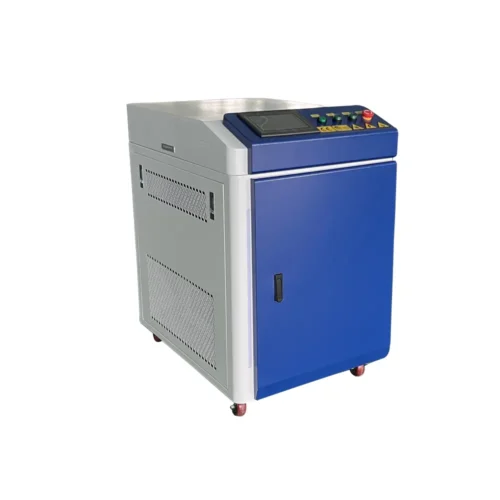
ZLTECH Laser positions its laser cleaning machines as environmentally friendly equipment for removing rust, paint, and oil stains from metal surfaces, with power options from 200W to 3000W. The machines use pulsed fiber laser technology, offer non-contact cleaning, and are designed not to damage substrates when properly configured. Handheld or automated cleaning heads are optional, and adjustable scanning width supports different work envelopes. These features make the equipment suitable for mold cleaning, ship rust removal, bridge steel structure cleaning, tire mold cleaning, and similar industrial tasks. However, the full value of these features is realized only when the setup is treated as a controlled process rather than an operator-dependent adjustment.

Consistency Is a System, Not a Single Parameter
A consistent pulse laser cleaning result is the product of several variables working together: laser power, pulse frequency, pulse duration, focus distance, spot size, scan width, scan overlap, travel speed, number of passes, surface condition, and extraction. Changing one variable often changes the effect of the others. For example, increasing power without adjusting travel speed can overclean a thin panel, while reducing power without increasing passes can leave a residue on heavy rust. A structured setup procedure helps technicians avoid these interactions and build repeatable recipes for each material and contamination level.
Tip 1: Match Power and Pulse Frequency to the Contaminant
The first setup step is to characterize the contaminant and the substrate. Light oil films, thin oxide layers, and paint may require lower energy density and higher travel speed, while thick rust, mill scale, and multiple coating layers may require more energy or additional passes. The 200W to 3000W power range available from ZLTECH Laser covers a broad set of applications, but higher power is not automatically better. The goal is to remove the target layer efficiently without transferring excess heat into the substrate.
Pulse frequency also influences the cleaning mode. Higher frequencies can produce a denser pulse train and a smoother cleaning action, while lower frequencies may deliver more peak energy per pulse. Technicians should start with a conservative power and frequency combination, clean a small test area, and inspect the result under proper lighting. If the contaminant remains, the operator can increase energy density gradually or add a second pass. If the substrate shows discoloration, hazing, or micro-melting, the setup should be reduced immediately. Documenting the successful combination creates a starting point for future jobs and reduces variability between shifts.
Use the 200W to 3000W Range as a Starting Point
Low-power settings are often suitable for delicate mold surfaces, thin coatings, and precision components where surface integrity is critical. Medium-power settings may be appropriate for general rust removal, paint stripping, and maintenance cleaning. Higher-power settings can support heavy rust removal, ship structures, bridge steel, and large-area cleaning where productivity is important. The correct setting is the lowest energy density that achieves the required cleanliness at an acceptable speed. This principle supports both surface quality and long-term equipment stability.
Tip 2: Optimize Focus Distance and Spot Size
Focus distance is one of the most common sources of inconsistent cleaning. If the cleaning head is too close or too far from the surface, the laser spot size and energy density change, which can cause narrow clean lines, uneven stripping, or substrate damage. A technician should verify the focal position with a test coupon before starting production. The correct distance should be marked on the cleaning head, the fixture, or the robot path so that every operator uses the same reference.
Spot size affects both resolution and speed. A smaller spot provides more precise control and is useful for detailed mold cleaning, small features, and selective coating removal. A larger spot covers more area per pass and is often better for large steel structures, ship hulls, and broad rust removal. Adjustable scanning width on ZLTECH Laser cleaning machines allows the operator to balance coverage and precision. The setup should define the spot size and scan width for each job, and the cleaning head should be kept perpendicular to the surface where possible to avoid uneven energy distribution.
Tip 3: Set Scan Width and Overlap for Uniform Coverage
Scan width determines the cleaned stripe, while overlap determines whether the edges of adjacent stripes are fully cleaned. Insufficient overlap can leave faint lines of contamination between passes, especially on rough or pitted surfaces. Excessive overlap can reduce productivity and increase heat input. A practical starting point is to use a modest overlap and inspect the transition between passes. If a line remains, the overlap should be increased or the travel path should be adjusted. For automated cleaning, the scan width and overlap should be programmed into the motion path and verified with a first-article inspection.
Uniform coverage also depends on surface geometry. Flat plates are straightforward, but molds, tire molds, welded structures, and ship panels often include corners, recesses, and curved surfaces. The cleaning head should be oriented so that the beam reaches the entire target area without shadowing. For complex geometry, a handheld head may provide better access, while an automated head may provide better repeatability on large or repetitive surfaces. ZLTECH Laser offers handheld or automated cleaning heads to support these different production needs.

Tip 4: Control Travel Speed and Repetition
Travel speed is a primary control variable for heat management and cleaning depth. Moving too slowly can overheat the surface and create visible marks, while moving too quickly can leave a residue that requires additional passes. The correct speed depends on power, frequency, spot size, contaminant thickness, and substrate sensitivity. A technician should establish a speed range that produces a clean surface with a single pass where possible, then use additional passes only when the contaminant requires them.
Repetition should be controlled rather than improvised. If two passes are required, the second pass should follow the same path, overlap, and speed as the first. Random repeated passes can create uneven cleaning and inconsistent surface appearance. For automated systems, the number of passes should be included in the cleaning recipe. For handheld work, the operator should use a consistent motion pattern and inspect the surface at regular intervals. This approach is especially important for mold cleaning, where surface consistency affects part release and product quality.
Tip 5: Select the Right Cleaning Head for the Geometry
Handheld cleaning heads offer flexibility for maintenance work, field repairs, and complex parts. They are useful for ship rust removal, bridge steel structure cleaning, and localized mold cleaning where access is limited. Automated cleaning heads are better for repetitive production, large flat areas, and integration into manufacturing lines. They reduce operator fatigue and improve path repeatability, which directly supports consistent results. ZLTECH Laser cleaning machines can be configured with handheld or automated cleaning heads, and adjustable scanning width helps adapt the equipment to different work envelopes.
The choice of head should be based on the task, not convenience alone. A handheld head used on a large flat surface may produce variation between operators, while an automated head used on a complex mold may require additional programming and fixturing. A practical setup plan defines which head is used for each product family, what motion pattern is required, and what inspection method confirms cleanliness. This level of planning is particularly valuable for factories that clean molds online, because consistent cleaning protects mold surfaces and reduces unplanned downtime.
Tip 6: Manage Extraction, Surface Condition, and Safety
Pulse laser cleaning is an environmentally friendly process because it does not require chemical reagents or consumables and does not generate dust pollution in the same way as abrasive methods. However, the process can produce fumes, smoke, and fine particulate matter depending on the coating and contaminant. Proper extraction and filtration should be part of the setup, especially for paint, oil, and coated surfaces. Good extraction protects operators and helps keep the optical path clean, which supports consistent energy delivery.
Surface condition should be recorded before cleaning. Heavy oil, grease, or loose debris may need to be removed first so that the laser energy reaches the target layer consistently. The substrate material, thickness, coating type, and required cleanliness should be documented for each job. Safety procedures should cover laser eyewear, interlocks, signage, and restricted access. ZLTECH Laser equipment is supported by CE, ISO, and FDA certifications, and the company emphasizes strict quality control and service support. These certifications and controls are important for industrial users who need documented safety and quality practices.
Tip 7: Validate with Test Coupons and Document Recipes
Before production cleaning begins, a test coupon made from the same material and contaminant should be cleaned with the proposed settings. The coupon should be inspected for cleanliness, substrate damage, discoloration, and surface profile. If the result is acceptable, the settings should be recorded as a cleaning recipe. The recipe should include power, frequency, focus distance, spot size, scan width, overlap, travel speed, number of passes, cleaning head type, and extraction settings. Photos of the before and after result can help operators compare future runs.
Documentation is especially important when multiple operators use the same machine or when production moves between shifts. A written recipe reduces the risk of parameter drift and makes training faster. It also supports continuous improvement because the team can compare results and adjust settings based on data rather than memory. For companies integrating cleaning into production lines, documented recipes are essential for repeatable quality and efficient changeovers.
Common Setup Mistakes That Reduce Consistency
- Changing power without adjusting travel speed or overlap, which can cause overcleaning or incomplete removal.
- Using an unverified focus distance, which changes spot size and energy density.
- Using insufficient overlap between passes, which leaves visible lines or residual contamination.
- Relying on operator judgment instead of documented recipes, which increases variation between shifts.
- Skipping test coupons, which can lead to substrate damage or rework on production parts.
- Neglecting extraction and optical cleanliness, which can reduce performance and create safety risks.
Integrating Pulse Laser Cleaning into Production Lines
Pulse laser cleaning is increasingly integrated into production lines for mold maintenance, surface preparation, and coating removal. ZLTECH Laser cleaning machines use pulsed fiber laser technology, offer adjustable scanning width, and can be integrated into production lines. This flexibility supports automated cleaning cells, robotic paths, and inline maintenance stations. Integration should begin with a clear process definition: what surface is cleaned, what contaminant is removed, what cleanliness level is required, and how the result will be inspected. The machine settings, motion path, extraction, and inspection method should then be validated together.
For manufacturers, the benefits of consistent pulse laser cleaning include reduced chemical use, lower consumable costs, less manual labor, and improved surface quality. These benefits are strongest when the setup is standardized and the equipment is maintained. ZLTECH Laser supports customers with in-house R&D and design capabilities, full machine customization, and OEM/ODM options covering exterior design, color schemes, configuration options, and functional upgrades. The company has established an agency network in countries such as Turkey, Egypt, Chile, the Netherlands, and Poland, and its products are exported to more than 30 countries and regions.
Application Example: Polish Auto Parts Factory
A Polish auto parts factory purchased a ZLTECH Laser 500W laser cleaning machine for online mold cleaning. The factory used the machine to remove deposits from molds without removing the molds from production, which reduced downtime by 70 percent and extended mold life by 40 percent. This example illustrates how pulse laser cleaning can deliver value beyond simple surface preparation. The result depended on a controlled setup that protected the mold surface while removing contaminants efficiently. The factory did not rely on maximum power; instead, it used a repeatable recipe and an appropriate cleaning head to achieve consistent cleaning with minimal disruption.
Choosing a Reliable Pulse Laser Cleaning Partner
Consistent results depend on both process setup and equipment reliability. ZLTECH Laser has more than 10 years of industry expertise, an independent R&D and design center, a self-owned manufacturing facility, and precision engineering standards. The company strictly controls the machine production process and continuously optimizes pre-sales, sales, and after-sales services. Its equipment is stable, high quality, and highly precise, and it is favored by customers both domestically and internationally. For pulse laser cleaning users, these factors support stable performance, faster delivery, and consistent machine behavior across production runs.
ZLTECH Laser also brings proven industrial experience from metal fabrication, automotive components, machinery manufacturing, and custom metal processing. An Egyptian distributor purchased 15 laser cutting machines in one year with a 100 percent repeat purchase rate, and a Dutch sheet metal factory replaced five TIG welders with a Zhongli 2kW handheld welding machine, increasing welding efficiency by three times and recovering the equipment cost within one year. These examples reflect the company’s broader focus on reliable industrial laser equipment and customer support. For pulse laser cleaning, the same principles apply: select the right equipment, define the process, validate the result, and document the recipe.
Son Düşünceler
Pulse laser cleaning machines are capable of excellent results, but consistency is not automatic. It comes from matching power and frequency to the contaminant, optimizing focus distance and spot size, controlling scan width and overlap, managing travel speed and repetition, selecting the right cleaning head, using proper extraction, and validating every setup with test coupons. ZLTECH Laser’s range of laser cleaning machines, including 200W to 3000W models with pulsed fiber laser technology, non-contact cleaning, and handheld or automated heads, provides a strong foundation for these practices. When setup discipline is combined with reliable equipment and documented recipes, pulse laser cleaning can become a repeatable, efficient, and environmentally friendly process for mold cleaning, ship rust removal, bridge steel structure cleaning, tire mold cleaning, and many other industrial applications.