


Buyers evaluating a fiber laser cutting machine manufacturer should look beyond the initial quotation and assess the supplier as a long-term production partner. The purchase price is only one part of total cost of ownership. Maintenance, energy use, spare parts, software support, operator training, uptime, and cost per cut part often have a greater effect on profitability than a small difference in the machine price. A value-based review should examine the machine structure, rack and pinion dual-drive transmission, automatic focusing cutting head, control system, laser source, reducer, and bed rigidity. Component choices such as IPG or Raycus fiber sources and Japanese or Taiwanese reducers can influence stability and cut quality. Buyers should also confirm who designs and builds the machine. A manufacturer with an independent R&D and design department, a self-owned factory, and strict quality control from assembly to final testing is better positioned to deliver consistent performance. Certifications such as CE, ISO, and FDA should be checked, but they should support rather than replace application testing. Sample cuts on the buyer’s own carbon steel, stainless steel, aluminum, copper, or galvanized plates are essential. The machine should match the required power range, typically 1000W to 30000W for medium-to-high power sheet cutting, and the intended applications, including sheet metal processing, kitchenware, automotive parts, elevator manufacturing, and custom fabrication. Service depth is another critical factor. Local support, spare-parts availability, remote diagnostics, training, and an international agency network reduce downtime risk. References should be specific. Repeat orders and measurable results, such as higher welding efficiency, lower mold-cleaning downtime, or extended mold life, are stronger signals than customer logos alone. Customization capability, including OEM and ODM options, product breadth across cutting, tube cutting, welding, cleaning, and 4-in-1 welding machines, and delivery reliability should also be scored. A weighted scorecard covering engineering, quality, performance, service, references, and total cost of ownership helps buyers compare suppliers fairly. Price remains important, but it should be one line item in a broader decision. The best manufacturer is the one that can prove stable machine performance, transparent support, and a clear return on investment over years of production.
How to Evaluate a Fiber Laser Cutting Machine Manufacturer Beyond the Price Tag
A fiber laser cutting machine is a long-term production asset, not a one-off purchase. The quotation is the most visible part of the decision, but it rarely reveals the real cost of ownership, the stability of the machine, or the strength of the manufacturer behind it. Buyers who compare only price tags often discover hidden costs in downtime, slow service, inconsistent cut quality, and limited spare-parts support. A more reliable approach is to evaluate the manufacturer as a technology partner. The goal is to understand how the machine is designed, how it is built, how it is tested, and how the supplier will support it over years of production.
1. Look at total cost of ownership, not the sticker price
Two machines may carry similar prices, yet perform very differently over five years. A value-focused buyer should ask about power consumption, maintenance intervals, consumable use, spare-parts pricing, software updates, operator training, and expected uptime. Fiber laser cutting systems are generally efficient and require no cutting consumables, but the difference between a well-integrated machine and a low-cost assembly can appear in service calls, rejected parts, and unstable cutting speeds. The purchase price should be compared against the cost per cut part, the cost per meter, and the revenue lost during unplanned downtime.
2. Inspect engineering choices and component strategy
The quality of a fiber laser cutting machine is shaped by its structure and core components. Buyers should examine the bed design, gantry rigidity, rack and pinion dual-drive transmission, cutting head, control system, and reducer. A high-rigidity bed supports acceleration and long-term accuracy, while an automatic focusing cutting head and intelligent cutting path optimization can improve speed and edge quality. Component sourcing also matters. A manufacturer that offers imported fiber laser sources such as IPG or Raycus, Japanese or Taiwanese reducers, and proven motion systems is usually better prepared for demanding industrial use. These choices affect cut quality, maintenance, and machine life more than a low initial price.
3. Ask who actually designs and builds the machine
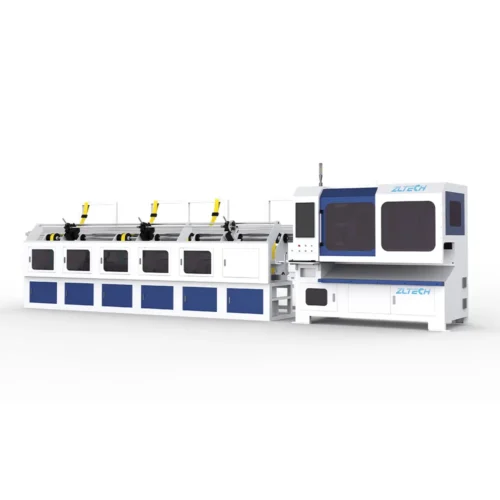
A trader can quote a price, but a manufacturer must answer for design, production, and after-sales performance. Buyers should ask whether the supplier has an independent R&D and design department, a self-owned factory, and a technical team involved from assembly to final testing. Jinan Zhongli Laser Equipment Co., Ltd., known as ZLTECH Laser, is an example of an enterprise focused on the research and development, manufacturing, and sales of intelligent laser industrial equipment for global users. Its work covers standardized laser processing equipment such as metal laser cutting machines, together with personalized services. With more than 10 years of industry experience, the company states that it operates its own modern factory and production workshop, which allows strict quality control through design, assembly, and testing.
undefined
4. Review quality control and compliance evidence
Price-only comparisons often ignore documentation. A serious manufacturer should be able to show quality management practices, testing procedures, and product certifications. For international buyers, CE, ISO, and FDA marks can be useful signals, although they should still be checked against the exact model and market. Quality control should not be a final inspection only. It should cover incoming components, structural welding, machining accuracy, assembly tolerance, software configuration, laser alignment, and cutting tests. When a supplier controls more of the process, it has more ability to correct problems before shipment and to keep performance consistent across repeat orders.
5. Test application fit, not just power rating
A machine that cuts well in a demonstration may still fail in daily production if it is not matched to the buyer’s materials, thicknesses, and batch patterns. Buyers should send sample materials and ask for cut samples, cycle-time estimates, and edge-quality reports. For medium-to-high power metal sheet cutting, a power range of 1000W to 30000W can cover many applications, but the right choice depends on the mix of carbon steel, stainless steel, aluminum plates, copper plates, and galvanized plates. Application fit also includes sheet metal processing, kitchenware, automotive parts, elevator manufacturing, and custom metal fabrication. In many cases, a fiber laser system can cut three to five times faster than traditional plasma cutting, reduce cutting cost per meter by about 40 percent, and eliminate consumables and molds. These claims should be verified with the buyer’s own parts.
6. Evaluate customization and product breadth
Manufacturers that serve diverse industries often develop a wider view of customer needs. ZLTECH Laser categorizes its products into metal laser cutting machines, specialized tube cutting machines, laser welding machines, laser cleaning machines, and 4-in-1 laser welding machines. This range matters because a buyer may need more than one process over time. Full machine customization capability, including OEM and ODM support, exterior design, color schemes, configuration options, and functional upgrades, can help a factory align equipment with its workflow. A supplier with in-house R&D can respond faster to special requirements, while a self-owned manufacturing facility supports faster delivery and more consistent machine performance.
7. Check service depth and local support
After-sales support is part of the product. Buyers should ask who will install the machine, who will train operators, how remote diagnostics work, how spare parts are stocked, and how quickly a technician can respond. A manufacturer with an agency network in countries such as Turkey, Egypt, Chile, the Netherlands, and Poland and products exported to more than 30 countries and regions is better positioned to support international customers. Service quality also depends on documentation, software support, and the ability to troubleshoot cutting parameters. The cheapest machine can become expensive if a simple issue stops production for a week.

8. Study references, repeat orders, and measurable outcomes
References are most useful when they include specific outcomes. An Egyptian distributor purchased 15 laser cutting machines in one year with a 100 percent repeat purchase rate, which suggests confidence in delivery and performance. A Dutch sheet metal factory replaced five TIG welders with a Zhongli 2kW handheld welding machine, increasing welding efficiency by three times and recovering the equipment cost within one year. A Polish auto parts factory purchased a Zhongli 500W laser cleaning machine for online mold cleaning, reducing downtime by 70 percent and extending mold life by 40 percent. These examples show why buyers should ask for application stories, not just customer logos.
9. Compare commercial terms and delivery risk
Beyond price, buyers should review payment terms, lead time, packaging, warranty, training scope, software licensing, and spare-parts lists. Delivery risk is lower when the manufacturer controls production and can communicate progress clearly. Customization requests should be documented in writing, including configuration, testing criteria, and acceptance standards. A clear scope reduces disputes and helps both sides measure success.
10. Use a weighted scorecard
A practical evaluation can use a scorecard covering machine design, component quality, cutting performance, quality control, customization, service response, spare-parts support, certifications, references, and total cost of ownership. Price should be one line item, not the whole decision. Buyers should weight the factors that matter most to their production model. A high-mix job shop may value flexibility and quick setup, while a batch manufacturer may prioritize speed, uptime, and automation readiness.
In the end, evaluating a fiber laser cutting machine manufacturer beyond the price tag means asking better questions. The right supplier should demonstrate engineering depth, controlled manufacturing, tested performance, transparent support, and a record of repeat business. Companies such as ZLTECH Laser show how vertical integration, in-house R&D, and application-focused customization can support those questions. The lowest quotation may win a short comparison, but a value-based evaluation is more likely to protect productivity, quality, and return on investment over the life of the machine.

Key takeaway: price is a starting point, but total cost, engineering quality, service depth, and proven applications are the real measures of a fiber laser cutting machine manufacturer.