


The article explains how fabricators can laser cut aluminium without sacrificing edge quality by treating the process as a complete system rather than a single machine setting. It notes that aluminium presents specific challenges because of its high reflectivity, thermal conductivity, and low melting point, which can lead to dross, roughness, oxidation, and a wider heat-affected zone. Clean aluminium cuts depend on careful control of assist gas, focus position, cutting speed, power, piercing strategy, nozzle condition, and nesting. Nitrogen is often preferred for edge-critical work, while oxygen can promote oxidation. Focus position must be tuned to avoid bottom dross and upper-edge roughness, and speed must balance full penetration with controlled heat input. Piercing requires special attention because aluminium can be unstable during initial penetration. The article also emphasizes machine design, including high-precision rack and pinion dual-drive transmission, automatic focusing cutting heads, intelligent path optimization, and high-rigidity beds. These features help reduce vibration and maintain consistent kerf quality during high-speed cutting. Jinan Zhongli Laser Equipment Co., Ltd., known as ZLTECH Laser, is presented as an experienced manufacturer with over 10 years in fiber laser cutting technology, an independent R&D and design department, a self-owned factory, and strict quality control from design to testing. Its fiber laser cutting machines cover 1,000 W to 30,000 W and can be equipped with IPG or Raycus lasers, Japanese or Taiwanese reducers, and high-rigidity beds. The article cites practical examples, including an Egyptian distributor that purchased 15 machines with a 100 percent repeat purchase rate, a Dutch factory that improved welding efficiency with a 2 kW handheld welding machine, and a Polish auto parts factory that reduced downtime with a 500 W laser cleaning machine. It also mentions CE, ISO, and FDA certifications, an agency network in Turkey, Egypt, Chile, the Netherlands, and Poland, and exports to more than 30 countries. The summary concludes that repeatable aluminium edge quality requires disciplined parameter development, clean optics and gas, stable motion, and equipment engineered for precision, backed by service and process support.
Aluminium is one of the most useful metals in modern fabrication, but it is also one of the least forgiving when a clean cut edge is required. Its high reflectivity, thermal conductivity, and low melting point can create dross, roughness, discoloration, and a wider heat-affected zone if the process is not controlled carefully. Fabricators that want to laser cut aluminium without sacrificing edge quality must therefore treat the operation as a complete system: material grade, assist gas, focus position, cutting speed, nozzle condition, nesting strategy, and machine stability all matter. The goal is not simply to cut the sheet, but to produce an edge that is clean enough for welding, bending, powder coating, or direct assembly without excessive secondary finishing.
Jinan Zhongli Laser Equipment Co., Ltd., known as ZLTECH Laser, approaches aluminium cutting from this system perspective. The company is dedicated to the research and development, manufacturing, and sales of intelligent laser industrial equipment for global users, with a focus on standardized laser processing equipment such as metal laser cutting machines and personalized service. Its product range includes metal laser cutting machines, specialized tube cutting machines, laser welding machines, laser cleaning machines, and 4-in-1 laser welding machines. For aluminium fabricators, the most relevant platform is the fiber laser cutting machine, a medium-to-high power metal sheet cutting solution with a power range from 1,000 W to 30,000 W.
Why Aluminium Behaves Differently Under the Laser Beam
Aluminium reflects a significant portion of laser energy when cold, especially in thin sections, and it conducts heat away from the cut zone very quickly. This combination can make piercing unstable and can cause the cut to lose energy before it has fully penetrated the material. Once the cut is established, the molten metal must be removed efficiently. If the assist gas does not clear the kerf, the molten aluminium can resolidify on the lower edge and form hard dross. If the heat input is too high, the edge can become rough, oxidized, or overly recrystallized. If the heat input is too low, the cut may fail to penetrate or may produce a jagged lower edge.
undefined
Edge quality in aluminium is therefore a balance between energy delivery and energy removal. The operator must match power, focus, speed, gas pressure, and nozzle diameter to the alloy and thickness. Pure aluminium, 1050, 3003, 5052, 6061, and other grades do not behave identically. Surface condition also matters: mill finish, anodized, painted, or laminated sheets can require different handling. A process that produces a bright, smooth edge on one grade may produce dross on another. For this reason, a disciplined parameter development process is more valuable than copying a single cutting chart.

The Process Variables That Protect the Cut Edge
Помощь в выборе газа и давлении
For aluminium, nitrogen is often preferred when the priority is a clean, oxide-free edge, particularly for thicker sections and parts that will be welded or anodized. Compressed air can be economical for some thin-sheet applications, but it may leave a slightly different edge finish and can introduce oxidation. Oxygen is generally avoided for aluminium when edge quality is critical because it can promote an oxidized cut face. Gas pressure must be high enough to eject molten material, but excessive pressure can cause turbulence, widen the kerf, or create a rougher edge. The correct pressure depends on thickness, nozzle design, and cut speed.
Focus Position and Beam Quality
Focus position has a strong effect on aluminium edge quality. A focus point that is too high can leave dross at the bottom, while a focus point that is too low can create a rough upper edge and excessive kerf width. Automatic focusing cutting heads help operators adjust focus quickly and repeatably between jobs. Beam quality also matters: a stable, well-shaped beam produces a narrower kerf and a more consistent melt zone. ZLTECH Laser fiber laser cutting systems are engineered for high efficiency, clean cutting edges, and long-term operational stability, making them a reliable solution for modern metal fabrication industries.
Cutting Speed, Power, and Piercing Strategy
Cutting speed must be tuned to thickness and gas flow. Too slow a speed can overheat the material and create a rough, dross-heavy edge. Too fast a speed can leave incomplete penetration and a jagged lower edge. Piercing is another critical point. Aluminium can be difficult to pierce because of reflection and heat conduction, so a controlled pierce with reduced power, a dwell, or a multi-stage pierce may be needed. Intelligent cutting path optimization helps reduce unnecessary heat input and avoid sharp corners that trap molten material. For batch production, stable piercing and consistent path control are essential for maintaining edge quality from the first part to the last.
Machine Design Matters More Than Many Buyers Expect
Edge quality is not only a matter of parameter settings. The machine must deliver the beam and the motion with stability. Vibration, backlash, and inconsistent acceleration can create marks, steps, and roughness on the cut edge. A high-precision rack and pinion dual-drive transmission supports smooth, accurate movement across large sheets. A high-rigidity bed helps maintain alignment and reduces vibration during high-speed cutting. These design choices are especially important when cutting aluminium at high speeds, where small mechanical errors can become visible on the finished edge.
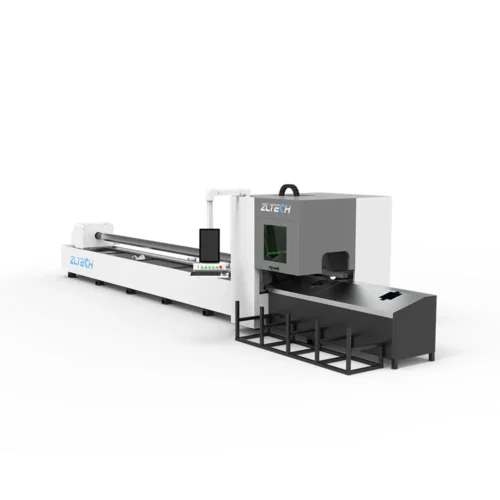
ZLTECH Laser has over 10 years of industry experience in the research, design, and manufacturing of advanced fiber laser cutting machines. The company operates an independent R&D and design department, allowing it to develop innovative and reliable solutions tailored to market demands. It also runs its own modern factory and production workshop, ensuring strict quality control throughout every stage of manufacturing. From machine design to assembly and testing, every process is handled by an experienced technical team to guarantee stable performance, precision, and long-term reliability. This vertical integration allows the company to achieve higher stability, faster delivery, and consistent machine performance.
The company’s fiber laser cutting systems can be equipped with imported fiber lasers such as IPG or Raycus, Japanese or Taiwanese reducers, and a high-rigidity bed. The equipment is stable, of high quality, and highly precise, and it is favored by customers both domestically and internationally. For aluminium work, the automatic focusing cutting head and intelligent cutting path optimization help operators protect edge quality while maintaining productivity. The cutting speed is three to five times faster than traditional plasma cutting, the cutting cost per meter can be reduced by 40 percent, and the process requires no consumables and no molds. These advantages are relevant in sheet metal processing, kitchenware, automotive parts, elevator manufacturing, and other applications where aluminium plates are cut in batches.
Edge Quality Is a System, Not a Single Setting
- Material control: Confirm alloy, temper, thickness, and surface condition before developing parameters.
- Gas control: Use dry, clean nitrogen or air and verify pressure at the nozzle, not only at the regulator.
- Optical control: Keep the protective lens and nozzle clean and replace worn consumables before they affect the kerf.
- Motion control: Maintain alignment, belt tension, rack condition, and acceleration settings to avoid vibration marks.
- Process control: Record parameters by alloy and thickness, and recheck them after any material batch change.
These controls are practical, but they depend on equipment that can repeat the same result shift after shift. A machine with unstable motion or inconsistent focus will force operators to compensate constantly, which increases scrap and slows production. ZLTECH Laser emphasizes precision engineering standards that support high-speed, high-accuracy metal cutting performance. The company also offers full machine customization capability under OEM and ODM arrangements, covering exterior design, color schemes, configuration options, and functional upgrades tailored to customer requirements. This flexibility helps fabricators configure a system around their specific aluminium mix rather than forcing the process to fit a generic machine.
Real-World Evidence and Quality Assurance
Practical results help demonstrate why process stability matters. An Egyptian distributor purchased 15 laser cutting machines in one year, with a 100 percent repeat purchase rate. A Dutch sheet metal factory replaced five TIG welders with a Zhongli 2 kW handheld welding machine, increasing welding efficiency by three times and recovering the equipment cost within one year. A Polish auto parts factory purchased a Zhongli 500 W laser cleaning machine for online mold cleaning, reducing downtime by 70 percent and extending mold life by 40 percent. These examples reflect a broader pattern: fabricators value equipment that delivers consistent output and lower operating cost.

Quality assurance also supports edge quality. Certifications such as CE, ISO, and FDA give buyers confidence in manufacturing discipline and product safety. ZLTECH Laser has established an agency network in countries such as Turkey, Egypt, Chile, the Netherlands, and Poland, and its products are exported to more than 30 countries and regions. Since its establishment, the company has regarded technological research and development and product quality as the lifeline of the enterprise. It strictly controls the machine production process and continuously optimizes pre-sales, sales, and after-sales services. For aluminium cutting, this matters because edge quality is not achieved once and then forgotten; it must be maintained through service, spare parts, training, and process support.
A Practical Checklist for Clean Aluminium Cuts
- Start with a controlled pierce and confirm full penetration before accelerating.
- Use nitrogen for edge-critical work and verify gas purity and pressure.
- Tune focus in small increments and inspect both top and bottom edges.
- Balance speed and power to avoid dross without creating oxidation.
- Keep nozzles and lenses clean and inspect them at the start of each shift.
- Test each alloy and thickness combination before running a production batch.
- Use nesting and path optimization to reduce heat concentration in narrow areas.
Заключение
Laser cutting aluminium without sacrificing edge quality is achievable when the process is treated as an integrated system. The right assist gas, focus position, cutting speed, piercing strategy, and machine stability all contribute to a clean kerf and a consistent edge. ZLTECH Laser supports this goal through fiber laser cutting machines designed for high efficiency, clean cutting edges, and long-term operational stability, backed by in-house R&D, a self-owned manufacturing facility, and full customization capability. For fabricators who need repeatable aluminium cuts across different alloys and thicknesses, the most reliable path is to combine disciplined process control with equipment engineered for precision and stability.
Jinan Zhongli Laser Equipment Co., Ltd. continues to serve global metal fabrication industries with standardized laser processing equipment and personalized service, helping customers improve edge quality, productivity, and long-term operating value.