


This article examines the pros and limits of a 100W laser cleaning machine for daily use. It explains that a 100W system uses pulsed fiber laser technology to remove rust, paint, oil, and surface contamination without chemical reagents or abrasive consumables. Its main advantages include non-contact cleaning, precise control on small areas, portability, lower entry cost, lower energy use, and flexibility through handheld or automated cleaning heads. It is well suited to mold cleaning, tire mold maintenance, localized rust removal, weld preparation, and small-part restoration. The article also highlights important limits: slower throughput on large surfaces, reduced effectiveness on thick coatings and heavy corrosion, duty-cycle and heat-management considerations, the need for operator training, and the requirement for fume extraction and laser safety controls. It stresses that daily-use success depends on matching the machine to the workload and testing real parts before purchase. The article includes ZLTECH Laser company information, noting its 10+ years of experience, in-house research and development, self-owned factory, customization capability, agency network, and certifications such as CE, ISO, and FDA. It also references a Polish auto parts factory that used a Zhongli 500W laser cleaning machine for online mold cleaning, reducing downtime by 70% and extending mold life by 40%, as an example of matching power to application. The conclusion is that a 100W laser cleaner is a practical entry point for precision and maintenance work, while higher-power systems are better for heavy, large-scale, or continuous cleaning tasks.
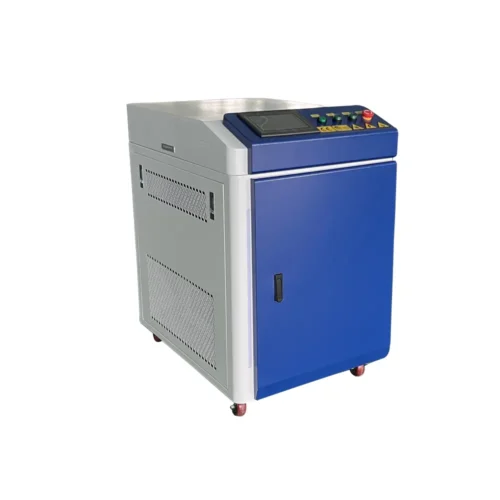
A 100W laser cleaning machine occupies a practical middle ground in the conversation about modern surface preparation. It is more capable than very low-power laboratory units, yet it remains smaller, simpler, and more affordable than high-power cleaning systems designed for heavy shipyard or bridge maintenance work. For workshops, maintenance teams, mold shops, restoration specialists, and small production lines, the 100W class is often viewed as an entry point into non-contact laser cleaning. The appeal is easy to understand: the machine removes rust, paint, oil, and surface contamination without abrasive media, chemical solvents, or direct mechanical contact. At the same time, daily use exposes limits that are just as important as the advantages. A balanced view helps buyers decide whether a 100W system is a sensible daily tool or whether a higher-power platform would deliver better long-term value.
Jinan Zhongli Laser Equipment Co., Ltd., known as ZLTECH Laser, is an enterprise dedicated to the research and development, manufacturing, and sales of intelligent laser industrial equipment for global users. The company focuses on standardized laser processing equipment such as metal laser cutting machines and provides personalized services to customers. Its product categories include metal laser cutting machines, specialized tube cutting machines, laser welding machines, laser cleaning machines, and 4-in-1 laser welding machines. This broad portfolio gives ZLTECH Laser a useful vantage point on how laser cleaning fits into real production environments. A 100W laser cleaner is not simply a smaller version of a 3000W system. It is a different tool with a different rhythm, different applications, and different ownership economics. Understanding that distinction is the key to daily-use success.
undefined
What a 100W Laser Cleaning Machine Actually Does
A 100W laser cleaning machine uses a pulsed fiber laser to deliver concentrated energy onto a surface. The energy breaks down or vaporizes unwanted layers such as rust, paint, oxide, grease, and residue. Because the process is non-contact, the cleaning head does not scrub, grind, or blast the substrate. The result can be a clean metal surface with minimal mechanical stress when parameters are correctly set. The technology is often described as environmentally friendly because it can operate without chemical reagents and without abrasive consumables. However, daily use still requires attention to fume extraction, surface condition, and operator technique. The absence of chemicals does not mean the absence of process controls.
In the 100W class, the laser is generally suited to light to medium cleaning tasks, precision work, and localized maintenance. It can remove surface rust, thin paint layers, oil films, release agents, and oxidation from tools and molds. It can also prepare small weld areas or clean post-weld discoloration on selected materials. The machine may be offered with a handheld cleaning head or an automated head, and it may support adjustable scanning width. These features matter because daily work rarely involves one identical part. A mold shop may clean complex geometry, while a maintenance team may clean flat plates, pipes, and small assemblies. Flexibility is one of the strongest arguments for the 100W format.

Why the 100W Class Is a Popular Entry Point
The first advantage is accessibility. A 100W laser cleaning machine usually carries a lower purchase price than 500W, 1000W, or 2000W systems. For a small business testing laser cleaning for the first time, this lower entry cost reduces financial risk. It allows the buyer to learn the process, train operators, and evaluate customer demand before committing to a larger platform. In many cases, the 100W unit becomes a dedicated tool for precision cleaning, while heavier work is outsourced or handled with other methods. This staged approach can be more sensible than buying excessive power for occasional light-duty tasks.
The second advantage is compactness. Lower-power laser cleaners tend to have smaller power supplies, smaller cooling requirements, and more portable form factors. A compact machine can move between workstations, service vehicles, or customer sites more easily. For maintenance operations, mobility can be more valuable than raw cleaning speed. A technician who can bring a laser cleaner to a mold, a pump housing, or a small frame can solve problems without disassembling the entire system. This convenience supports daily use because the machine is more likely to be deployed when it is easy to move and set up.
The third advantage is control. A 100W laser delivers less energy per pulse than a high-power system, which can make it easier to avoid over-cleaning thin surfaces, delicate tooling, or small features. In experienced hands, the lower energy envelope provides a margin for error on light contamination. This does not make the process risk-free, but it can make the learning curve more forgiving for operators who are new to laser cleaning. The key is to use the correct focal distance, scan speed, pulse frequency, and power setting for each material and coating.
Daily Use Advantages in Practical Workplaces
Non-contact cleaning protects surfaces
One of the most frequently cited benefits of laser cleaning is that it does not damage substrates when used within proper parameters. Traditional methods such as sandblasting, wire brushing, and chemical stripping can leave scratches, embed media, or alter surface chemistry. A 100W laser cleaner can remove contamination with minimal mechanical impact. This is especially useful for molds, dies, precision parts, and surfaces where dimensional integrity matters. The process is not magic, and incorrect settings can still cause marking or heat effects, but the non-contact nature gives operators a high degree of control over where energy is applied.
No chemical reagents and no abrasive consumables
Daily cleaning with solvents, acids, or abrasive blasting creates recurring costs and waste streams. A laser cleaning machine reduces dependence on chemical reagents and abrasive media. It does not require bags of grit, chemical baths, or disposable pads. This can simplify procurement, reduce storage requirements, and lower the volume of contaminated waste. For companies with environmental compliance goals, the technology offers a cleaner process route. The removed material still has to be captured and managed, so ventilation and filtration remain part of the system. The advantage is that the cleaning action itself is concentrated, controllable, and largely consumable-free.
Precise control for small areas
A 100W laser cleaner is often at its best when the work area is small or the cleaning task is selective. An operator can focus the beam on a weld seam, a mold cavity, a threaded area, or a localized patch of rust without treating the entire part. This selectivity saves time and avoids unnecessary exposure. In maintenance work, selective cleaning can extend component life because only the affected area is processed. In mold cleaning, selective treatment can preserve polished surfaces and detailed textures. The 100W class may not be the fastest option for broad surfaces, but it can be highly effective for detail-oriented daily tasks.
Easy integration and handheld flexibility
Many 100W laser cleaning machines are designed with handheld cleaning heads, and some can be adapted for automated or inline use. Handheld operation supports repair and maintenance work where parts are large, fixed, or difficult to move. Automated integration supports repetitive cleaning in a production cell. The ability to switch between manual and automated approaches can improve utilization. A machine that is easy to integrate is more likely to be used every day rather than stored as a special-purpose tool. Adjustable scanning width and selectable cleaning modes further improve adaptability across different surfaces.
Lower operating cost and energy use
Compared with high-power laser systems, a 100W machine generally consumes less electrical power and produces less heat load. The cooling system may be smaller, and the facility requirements may be lighter. For a small workshop, this can reduce installation complexity and operating cost. The machine may still require a stable power supply, proper grounding, and a clean cooling environment, but the overall footprint is often easier to manage. Lower energy use does not automatically mean lower total cost, because cleaning speed affects labor hours. Still, for light-duty daily work, the 100W class can offer a favorable balance between capability and operating expense.

Cleaner workplace and better compliance story
Chemical stripping and abrasive blasting can create dust, fumes, and messy working conditions. Laser cleaning can reduce the use of solvents and media, which may improve the workplace environment. The process is often easier to contain because the cleaning action is localized. With proper fume extraction and filtration, the operator can work in a cleaner cell. This matters for companies that are improving environmental performance or reducing worker exposure to chemicals. Certifications such as CE, ISO, and FDA can also support market access and customer confidence, although the exact compliance requirements depend on the destination market and the application.
Where a 100W Laser Cleaner Excels
A 100W laser cleaning machine is well suited to mold cleaning, tire mold maintenance, small part restoration, weld preparation, oil and grease removal, and light rust removal. In mold cleaning, the goal is often to remove release agents, rubber residue, and oxidation without damaging the mold surface. The non-contact process can reach detailed areas and reduce the need for manual scraping. In tire mold cleaning, a 100W unit may be used for localized cleaning and maintenance, while higher-power systems may be preferred for larger molds or heavier buildup. The correct choice depends on cycle time, mold size, and the frequency of cleaning.
The machine can also be useful for cleaning small metal components before welding, coating, or inspection. Oil films and surface oxides can cause porosity, poor adhesion, or inconsistent finishes. A localized laser pass can prepare the surface without introducing abrasives. In restoration work, a 100W laser can clean delicate features and selectively remove layers from small areas. In general maintenance, it can address rust spots on tools, fixtures, and machine parts. These tasks share a common profile: they are precise, localized, and not dominated by very thick contamination.
Automated cleaning heads can extend the value of a 100W system in repetitive work. If a production line handles small parts with consistent geometry, a fixed cleaning head can perform repeatable passes. The adjustable scanning width helps match the beam pattern to the part. Integration can improve consistency and reduce operator fatigue. However, automation requires careful fixture design, fume management, and parameter development. The 100W class can be a practical automation choice when the cleaning depth is light and the cycle time is acceptable.
The Limits of a 100W Laser Cleaning Machine
The most important limit is throughput. A 100W laser removes material more slowly than a 500W or 1000W system. On heavy rust, thick paint, or large surface areas, the difference becomes obvious. A job that takes minutes with a higher-power machine may take much longer with a 100W unit. For daily use, this affects labor cost and scheduling. If the workload is dominated by large plates, ship structures, bridge steel, or heavy industrial maintenance, a 100W cleaner may become a bottleneck. It can still be useful for touch-up work, but it may not be the primary production tool.
The second limit is coating thickness. A 100W laser can remove thin paint, light oxide, and surface contamination efficiently. Thick epoxy, multilayer coatings, heavy scale, and deep corrosion may require multiple passes or may be better handled by higher power. The operator may need to adjust focus, scanning speed, and pulse settings to avoid incomplete removal. In some cases, the surface may look clean while residue remains in pits or pores. Daily use requires inspection and process validation, not just visual judgment. The machine should be matched to the typical coating profile, not the best-case sample.
The third limit is heat management. Even a 100W laser can introduce heat into the workpiece if the scan speed is too slow or the beam dwells in one spot. Thin parts, polished surfaces, and heat-sensitive materials require careful settings. The machine itself also has duty-cycle considerations. Continuous daily operation may require attention to cooling, ambient temperature, and maintenance intervals. A lower-power system is not immune to thermal issues. Operators should understand the recommended duty cycle and avoid running the laser beyond its design limits.
Daily Use Limits and How They Show Up
Throughput on large projects
In a daily production environment, throughput is often the deciding factor. A 100W laser cleaner may be excellent for a mold cavity or a small weld seam, but it may be too slow for a large frame or a long pipe. The time spent cleaning can exceed the time spent on the actual repair. This is why many buyers use a 100W system for precision and maintenance work while relying on higher-power equipment for broad surface preparation. The correct decision depends on the size of the parts, the thickness of the contamination, and the required finish. A simple time study using representative samples can reveal whether the 100W class is sufficient.
Thick coatings and heavy corrosion
Heavy corrosion and thick paint are not ideal for a 100W laser cleaner. The beam must remove layer by layer, and the process can become slow and repetitive. In some cases, the surface may char or discolor before the coating is fully removed. Higher-power systems can deliver more energy per pass and may be more efficient for these tasks. A 100W machine can still be used for spot repair, edges, and small areas, but it should not be expected to replace heavy-duty blasting or high-power cleaning on large industrial structures. Matching the tool to the job prevents frustration and wasted labor.
Heat management and duty cycle
Daily use places demands on the laser source, cooling system, and optics. A 100W machine may be designed for intermittent operation, and continuous use may require pauses or additional cooling. Ambient temperature and dust can affect performance. Operators should follow the manufacturer’s maintenance schedule, keep the cooling system clean, and monitor for warning signs such as reduced power, unstable beam quality, or overheating. The machine should be installed in a suitable environment with adequate ventilation. A well-maintained 100W system can provide reliable service, but it is not a maintenance-free device.
Operator technique and parameter control
Laser cleaning is not a one-button process. The operator must understand focal distance, scan speed, pulse frequency, power level, and the number of passes. Different materials and coatings respond differently. A setting that works on rusted steel may not work on aluminum, copper, or painted plastic. The 100W class is more forgiving than higher power in some ways, but poor technique can still cause incomplete cleaning or surface marking. Training is essential. Daily use should include a parameter library for common jobs, clear work instructions, and a routine for testing new surfaces before full processing.
Safety and ventilation requirements
Laser cleaning creates fumes, dust, and possibly sparks depending on the material and coating. Even when no chemical reagents are used, the removed material must be captured. Proper fume extraction and filtration are part of a safe daily-use setup. The operator should wear appropriate laser safety eyewear, use interlocked enclosures where required, and follow local regulations. The work area should be controlled to prevent accidental exposure. A 100W laser is still a laser with meaningful hazards. Safety procedures should be treated as part of the equipment, not as an optional add-on.
Material variability
Materials vary widely in reflectivity, thermal conductivity, and coating adhesion. A 100W laser cleaner may perform well on carbon steel with light rust but behave differently on stainless steel, aluminum, or coated surfaces. Reflective materials can require different settings and may pose additional safety considerations. Thin materials may be sensitive to heat. The operator should test each material and document successful parameters. Daily use across mixed materials demands discipline and record-keeping. A machine that works well in one shop may need adjustment in another because the substrate and contamination profile are different.
Comparing 100W with Higher-Power Laser Cleaning Systems
A 100W laser cleaner is generally best for precision, portability, light contamination, and entry-level adoption. A 200W to 500W system offers more headroom for mold cleaning, moderate rust removal, and small-batch production. A 1000W to 3000W system is designed for faster removal on larger surfaces, thicker coatings, and heavier industrial maintenance. The higher the power, the greater the need for robust cooling, safety controls, and operator training. Higher power is not automatically better for every task. On thin or delicate parts, a lower-power machine may provide better control. The right choice depends on the daily workload, not just the maximum capability.
- 100W class: precise, compact, lower entry cost, suitable for light rust, thin paint, oil, molds, and localized maintenance. Limits include slower speed and less capability on thick coatings.
- 200W to 500W class: broader cleaning capability, better throughput for molds and small production, still manageable for many workshops. Limits include higher cost and greater facility requirements than 100W.
- 1000W to 3000W class: high-speed removal on large surfaces and heavy contamination, suitable for shipyards, bridges, and heavy steel structures. Limits include higher purchase price, larger footprint, greater safety infrastructure, and more complex operation.
ZLTECH Laser positions its laser cleaning equipment for removing rust, paint, and oil stains from metal surfaces, with a standard power range from 200W to 3000W. The company emphasizes environmentally friendly cleaning, non-contact operation, protection of substrates, and handheld or automated cleaning heads. Its cleaning systems use pulsed fiber laser technology, adjustable scanning width, and integration options for production lines. For a buyer considering a 100W machine, this broader product landscape is useful context. A 100W unit may be ideal for a specific niche, but a 200W or higher system may offer better long-term flexibility if the workload is expected to grow.
How ZLTECH Laser Supports Reliable Daily Operation
ZLTECH Laser has over 10 years of industry experience and specializes in the research, design, and manufacturing of advanced fiber laser equipment. The company is equipped with an independent research and development and design department, allowing it to develop innovative and reliable solutions tailored to market demands. It also operates its own modern factory and production workshop, ensuring strict quality control throughout every stage of manufacturing. From machine design to assembly and testing, every process is handled by an experienced technical team to guarantee stable performance, precision, and long-term reliability. This vertical integration supports higher stability, faster delivery, and consistent machine performance.
The company strictly controls the machine production process and continuously optimizes pre-sales, sales, and after-sales services. It has established an agency network in countries such as Turkey, Egypt, Chile, the Netherlands, and Poland, and its products are exported to more than 30 countries and regions. An Egyptian distributor purchased 15 laser cutting machines in one year with a 100% repeat purchase rate, which reflects confidence in the supplier relationship. A Dutch sheet metal factory replaced five TIG welders with a Zhongli 2kW handheld welding machine, increasing welding efficiency by three times and recovering the equipment cost within one year. These examples show how ZLTECH Laser approaches customer productivity, not just equipment specifications.
In laser cleaning, a Polish auto parts factory purchased a Zhongli 500W laser cleaning machine for online mold cleaning, reducing downtime by 70% and extending mold life by 40%. This case is relevant to the 100W discussion because it illustrates the value of matching power to the application. The factory needed enough power for production mold cleaning and uptime improvement. A 100W machine might be suitable for smaller molds or lighter residue, while a 500W system may be more appropriate for larger molds, heavier buildup, or higher cycle-time demands. The lesson is not that one power level is universally better. The lesson is that daily-use economics depend on the specific cleaning task.
ZLTECH Laser’s competitiveness includes in-house research and design, a self-owned manufacturing facility, precision engineering standards, full machine customization capability for OEM and ODM projects, and proven industrial applications in sheet metal fabrication, automotive components, machinery manufacturing, and custom metal processing. For laser cleaning buyers, these capabilities matter because cleaning heads, fixtures, extraction, and automation interfaces often need to be adapted to the workplace. A supplier that understands both the laser source and the production environment can help reduce integration risk. Certifications such as CE, ISO, and FDA further support the compliance conversation for international customers.
Buying Checklist for Daily Use
Before purchasing a 100W laser cleaning machine, a buyer should define the daily workload in concrete terms. The checklist should include the most common materials, the typical contamination thickness, the size of the parts, the required surface finish, the available floor space, the power supply, and the ventilation strategy. It is not enough to test the machine on a clean sample. The test should use real parts with real rust, paint, oil, or mold residue. The buyer should measure cleaning time, operator effort, and consumable costs. The machine should be evaluated on repeatability, not just one impressive demonstration.
- Application fit: Confirm that most daily jobs involve light to medium contamination and localized areas.
- Power headroom: Consider whether a 200W or 500W system would reduce labor hours enough to justify the higher price.
- Cleaning head: Decide between handheld, automated, or both. Check ergonomics and cable management.
- Scan width: Verify that the adjustable scanning width matches the part geometry and desired coverage.
- Cooling and duty cycle: Confirm that the machine can handle the expected daily operating hours.
- Fume extraction: Plan for filtration and airflow before the machine arrives.
- Safety: Include eyewear, interlocks, warning signs, and operator training.
- Service: Check local support, spare parts, and technical documentation.
- Compliance: Confirm CE, ISO, FDA, or other required certifications for the target market.
- Total cost: Compare purchase price, installation, energy, maintenance, labor, and training.
Maintenance and Operating Best Practices
Daily use requires a maintenance routine. The optics should be kept clean, and the protective window should be inspected for spatter or dust. The cooling system should be checked for coolant level, filter condition, and airflow. The cleaning head should be handled carefully to avoid damage to the lens and scanner. The operator should monitor the beam pattern and cleaning consistency. If the machine begins to leave streaks, require more passes, or show unstable power, service should be scheduled before the problem affects production. A logbook of settings and maintenance activities helps identify trends and improve reliability.
Parameter management is equally important. The shop should maintain a library of proven settings for common materials and coatings. New jobs should start with a small test area. The operator should adjust power, scan speed, frequency, and focus in a systematic way. The goal is to remove the contamination without altering the substrate. Over-cleaning can be as problematic as under-cleaning. For molds and precision parts, the operator should use the lowest effective energy and inspect the surface after each pass. This disciplined approach supports consistent results and reduces the risk of damage.
Safety, Compliance, and Training
Laser cleaning equipment should be installed with proper safeguards. The work area should be marked, and access should be controlled during operation. The operator should wear wavelength-appropriate safety eyewear. Enclosures and interlocked doors may be required for automated systems. Fume extraction should be sized for the materials being processed. Some coatings can produce hazardous fumes or dust, so the filtration system must be matched to the application. Local regulations and workplace safety assessments should guide the final setup. A 100W laser may be lower in power than industrial cutting systems, but it still requires professional safety discipline.
Training should cover machine operation, parameter selection, material handling, emergency procedures, and maintenance. Operators should understand the difference between surface cleaning and substrate damage. They should know how to inspect a surface after cleaning and how to document results. Supervisors should review daily logs and ensure that safety procedures are followed. A well-trained operator can make a 100W machine highly productive. An untrained operator can create inconsistent results, damage parts, or compromise safety. Training is therefore part of the return on investment.
Totale eigendomskosten
The purchase price is only one part of the cost equation. A 100W laser cleaning machine may cost less upfront than a higher-power system, but slower cleaning can increase labor hours. If the daily workload is small and precise, the lower price may be justified. If the workload is large, the labor cost of slower cleaning can outweigh the savings. The buyer should estimate the annual cleaning hours, the labor rate, and the expected throughput. Maintenance, cooling, filtration, safety equipment, training, and floor space should also be included. The lowest purchase price is not always the lowest total cost.
Consumables are another factor. Laser cleaning does not use abrasive media or chemical baths, but it still requires protective windows, filters, and occasional replacement parts. The cleaning head may need maintenance if it is used heavily. The filtration system may require filter changes depending on the dust load. These costs are usually predictable and manageable. The bigger variable is labor. A machine that cleans quickly and reliably can reduce labor hours and improve scheduling. A machine that is too slow for the job can create hidden costs through overtime, bottlenecks, and delayed deliveries.
When a 100W Machine Is the Right Choice
A 100W laser cleaning machine is the right choice when the daily work is precise, localized, and light to medium in contamination. It suits small workshops that need a versatile maintenance tool, mold shops that clean detailed surfaces, restoration teams that work on small areas, and production cells that require selective cleaning. It is also a sensible first step for companies that want to evaluate laser cleaning before investing in a larger system. The machine can build operator experience, establish procedures, and prove the value of non-contact cleaning to customers. In these scenarios, the 100W class offers a practical balance of cost, control, and capability.
The machine is also suitable when portability and simplicity matter more than speed. A compact unit can be moved to different workstations, used for on-site maintenance, or stored in a small space. It can operate with a handheld head and support quick setup. For businesses that perform a mix of repair, maintenance, and small-batch production, this flexibility can be more valuable than maximum cleaning power. The key is to keep expectations aligned with the machine’s design. A 100W cleaner should be judged on the tasks it can complete efficiently, not on the tasks that require a higher-power system.
When to Step Up to Higher Power
A buyer should consider a higher-power system when the daily workload includes large surfaces, thick coatings, heavy rust, or continuous production. If cleaning time is a bottleneck, more power can reduce labor hours and improve delivery. If the parts are large and difficult to move, a higher-power system with a suitable cleaning head may be more efficient. If the application involves ship rust removal, bridge steel structure cleaning, or heavy industrial maintenance, a 1000W to 3000W system may be more appropriate. The decision should be based on measured performance, not assumptions. A test with representative parts is the best way to compare options.
ZLTECH Laser’s standard cleaning range from 200W to 3000W gives buyers room to scale. A company that starts with a 100W machine for precision work may later add a 500W or higher system for production cleaning. This layered approach can be more efficient than forcing one machine to handle every task. The 100W unit remains useful for detail work, while the higher-power unit handles bulk removal. A mixed fleet can improve overall utilization and reduce bottlenecks. The important point is to plan the workflow, not just the equipment list.
Final Verdict
The 100W laser cleaning machine is a capable and practical tool for daily use when the application fits its strengths. It offers non-contact cleaning, reduced chemical use, precise control, portability, and a lower entry cost. It can handle light rust, thin paint, oil, mold residue, and localized maintenance tasks. It can support handheld or automated cleaning and can be integrated into small production cells. For many workshops, it is a sensible way to adopt laser cleaning without overinvesting in power that is not needed.
The limits are equally clear. A 100W machine is slower on large surfaces and less effective on thick coatings and heavy corrosion. It requires proper fume extraction, safety controls, operator training, and maintenance. It is not a universal replacement for higher-power cleaning systems. Buyers should test real parts, measure cycle times, and compare the total cost of ownership. If the daily workload is precise and light, the 100W class can deliver strong value. If the workload is heavy and continuous, a higher-power system may be the better investment. The best choice is the one that matches the work, the people, and the production rhythm.
ZLTECH Laser’s broader portfolio, in-house research and development, self-owned manufacturing facility, customization capability, and international service network make it a relevant partner for buyers who are evaluating laser cleaning as part of a larger production strategy. The company’s focus on stable performance, precision, and long-term reliability aligns with the daily-use concerns that matter most: consistent cleaning, safe operation, and predictable cost. A 100W laser cleaning machine can be a valuable asset when it is selected for the right job and supported by the right processes.