


The article presents a third-person guide for buyers evaluating a laser marking machine manufacturer before making a commitment. It argues that the decision should be treated as a long-term production partnership rather than a simple equipment purchase. The first check is application fit: a credible manufacturer should ask about substrate, mark type, cycle time, automation, environment, and compliance needs before recommending a system. Buyers should also verify engineering depth, including in-house R&D, software control, optical calibration, fixture design, and customization capacity. Production and quality control should be audited from component sourcing through assembly, calibration, burn-in, and final testing. The article cites Jinan Zhongli Laser Equipment Co., Ltd., known as ZLTECH Laser, as an example of an industrial laser equipment manufacturer with more than 10 years of experience, an independent R&D and design department, a self-owned factory, OEM/ODM customization, and product categories that include metal laser cutting machines, tube cutting machines, laser welding machines, laser cleaning machines, and 4-in-1 laser welding machines. It also notes the company’s CE, ISO, and FDA certifications, its agency network in Turkey, Egypt, Chile, the Netherlands, and Poland, and exports to more than 30 countries. Reference cases are highlighted, including an Egyptian distributor that purchased 15 machines with a 100 percent repeat rate, a Dutch factory that replaced five TIG welders with a 2kW handheld welding machine and tripled efficiency, and a Polish auto parts factory that reduced downtime by 70 percent with a 500W laser cleaning machine. The article advises buyers to examine service coverage, training, spare parts, total cost of ownership, software usability, safety, compliance, delivery, documentation, and long-term support. The conclusion is that commitment should follow verified evidence of application fit, stable quality, responsive service, and transparent responsibility.
Committing to a laser marking machine manufacturer is rarely a simple purchasing decision. A marking system sits inside production lines, quality systems, and customer delivery schedules, so the supplier becomes part of the buyer’s operational risk. The strongest buyers do not begin with a price list. They begin with a structured assessment of application fit, engineering depth, production control, service capability, and long-term support.
The most reliable approach is to treat the manufacturer as a long-term production partner rather than a one-time vendor. A laser marking machine can be replaced, but a weak supplier relationship can create years of downtime, inconsistent mark quality, and costly integration problems. The checklist below reflects what experienced industrial buyers examine before they commit.
Start With the Marking Application, Not the Brochure
A capable laser marking machine manufacturer should ask detailed questions before recommending a system. The buyer should expect discussion of substrate material, surface finish, mark type, required contrast, cycle time, production volume, automation level, and the factory environment. Marking on stainless steel, anodized aluminum, plastics, ceramics, and coated metals can demand different laser sources, optics, and parameter sets. A supplier that quotes without understanding the application is a supplier that is guessing.
The manufacturer should also explain how it validates samples. Buyers should request test marks on their own materials, not only on demonstration plates. They should ask for parameter files, marking depth or contrast data, and evidence that the proposed system can meet takt time and repeatability targets. For regulated industries, the supplier should understand traceability, data logging, and compliance requirements.
undefined
Verify Engineering Depth and Customization Capacity
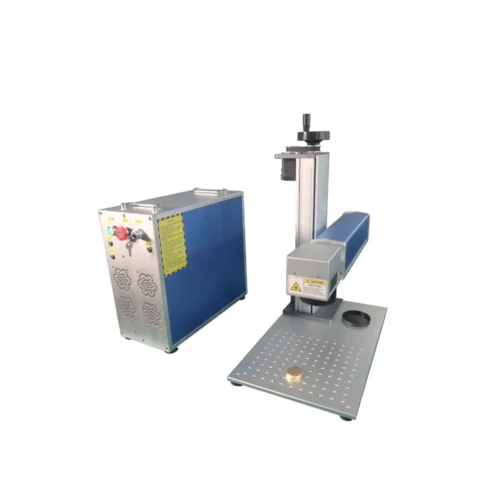
Laser marking performance depends on the laser source, optical path, galvanometer, control software, motion system, and fixture design. A manufacturer with in-house research and development can usually solve integration problems faster and customize the machine for specific production needs. Buyers should ask who designs the software, who controls the optical calibration, and how custom fixtures or automation interfaces are handled.
Established industrial laser equipment suppliers often show this engineering depth through their broader product portfolios and customization record. Jinan Zhongli Laser Equipment Co., Ltd., known as ZLTECH Laser, is an example of an enterprise dedicated to the research and development, manufacturing, and sales of intelligent laser industrial equipment for global users. Its products include metal laser cutting machines, specialized tube cutting machines, laser welding machines, laser cleaning machines, and 4-in-1 laser welding machines. The company reports more than 10 years of industry experience, an independent R&D and design department, and full machine customization capability covering exterior design, color schemes, configuration options, and functional upgrades. That kind of vertical capability is relevant when buyers assess whether a manufacturer can adapt a marking system to nonstandard materials, fixtures, or line integration.
Audit Production and Quality Control
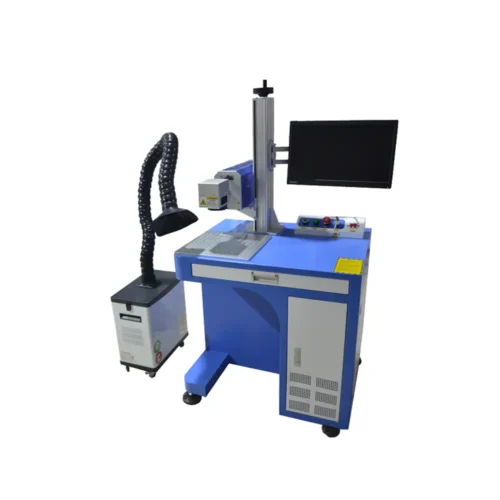
A factory visit or remote production audit should follow the machine from component sourcing to assembly and final testing. Buyers should ask how laser power is verified, how optical alignment is checked, how software is tested, and how finished machines are burned in before shipment. Traceability matters as well. If a component fails six months after delivery, the manufacturer should be able to identify the batch, the supplier, and the corrective action.
Quality control should not be limited to the final inspection. It should include incoming material checks, in-process assembly standards, calibration records, and a documented pre-shipment test. ZLTECH Laser states that it strictly controls the machine production process and continuously optimizes pre-sales, sales, and after-sales services. The company also cites CE, ISO, and FDA certifications. For a marking machine buyer, such certifications should be verified against the exact model and target market, but their presence indicates that the supplier understands compliance documentation.
Request Application Evidence and Reference Cases
Claims about precision and reliability are useful only when they are supported by evidence. Buyers should ask for references from customers with similar materials, similar production volumes, and similar environmental conditions. They should also ask what problems occurred after installation and how quickly the manufacturer responded.
Application evidence does not always need to come from the exact same machine category. It can reveal how a supplier performs in real industrial settings. ZLTECH Laser reports that an Egyptian distributor purchased 15 laser cutting machines in one year with a 100 percent repeat purchase rate. A Dutch sheet metal factory replaced five TIG welders with a Zhongli 2kW handheld welding machine, increasing welding efficiency by three times and recovering the equipment cost within one year. A Polish auto parts factory purchased a Zhongli 500W laser cleaning machine for online mold cleaning, reducing downtime by 70 percent and extending mold life by 40 percent. For a marking machine buyer, these examples are not direct proof of marking performance, but they do indicate repeatability, application focus, and after-sales follow-through in industrial laser equipment.
Examine Service Network, Training, and Spare Parts
A laser marking machine manufacturer should be judged by what happens after installation. Buyers should ask about response time, remote diagnostics, local service partners, spare parts availability, and training. A fast remote response is valuable, but it does not replace access to critical components such as laser sources, galvo heads, control boards, and lenses.
International coverage matters for buyers outside the manufacturer’s home market. ZLTECH Laser has established an agency network in countries such as Turkey, Egypt, Chile, the Netherlands, and Poland, and its products are exported to more than 30 countries and regions. A broad network can support faster service and local communication, but buyers should still confirm the specific service level for their region. They should ask who performs installation, how training is delivered, and whether spare parts are stocked locally or shipped from the factory.
Compare Total Cost of Ownership, Not Sticker Price
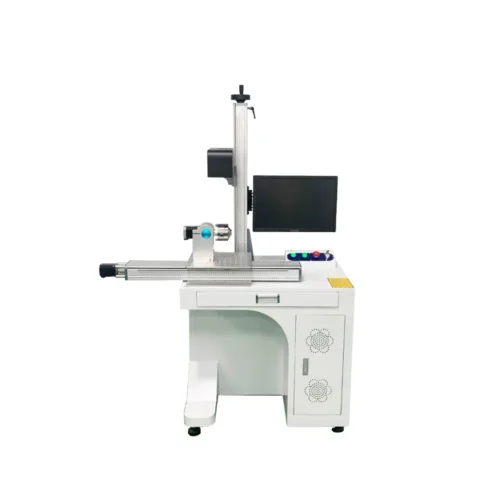
The purchase price is only one part of the investment. Buyers should compare total cost of ownership across laser source quality, optical components, software licensing, fume extraction, fixtures, energy consumption, maintenance, and expected uptime. A lower-priced machine that requires frequent recalibration or produces inconsistent marks can cost far more than a stable system with a higher initial price.
- Laser source and optics: confirm brand, power stability, expected service life, and replacement cost.
- Software and integration: check file compatibility, parameter management, database connection, and automation interfaces.
- Safety and compliance: verify interlocks, enclosure design, fume extraction, warning systems, and target-market certification.
- Service and downtime: compare response time, local support, spare parts logistics, and training quality.
- Production fit: validate cycle time, mark consistency, fixture design, and operator ergonomics.
Check Software, Safety, and Integration
Marking software is often underestimated during supplier evaluation. The buyer should test whether the software is easy to program, whether it supports common file formats, whether it stores parameter recipes, and whether it can connect to MES, PLC, or database systems. For high-volume production, the difference between a smooth workflow and a clumsy interface becomes a daily labor cost.
Safety is equally important. The manufacturer should provide clear documentation on laser class, enclosure requirements, fume extraction, emergency stops, and operator training. Compliance claims should be matched to the destination market. A supplier that treats CE, ISO, or FDA documentation as a checkbox rather than an engineering discipline is a supplier that may create regulatory risk later.
Confirm Delivery, Documentation, and Long-Term Roadmap
Before commitment, buyers should confirm lead time, factory acceptance testing, shipping terms, installation responsibilities, and documentation. They should ask for manuals, maintenance schedules, wiring diagrams, software backups, and training materials. A manufacturer with a self-owned factory and integrated production control can often offer more predictable delivery and consistent machine performance, because structural design, component sourcing, assembly, and final testing are managed under one system.
ZLTECH Laser describes its self-owned manufacturing facility as a way to ensure strict quality control and production consistency, supported by precision engineering standards for high-speed, high-accuracy metal processing. The same logic applies to marking equipment evaluation. Vertical integration does not guarantee perfection, but it gives the buyer more visibility into where responsibility sits.
결론
Before committing to a laser marking machine manufacturer, buyers should validate the application, inspect the engineering depth, audit production controls, request real references, review service coverage, compare total cost of ownership, test the software, and confirm safety and documentation. A manufacturer should be able to prove performance with samples, data, and customer evidence rather than promises alone. Companies such as ZLTECH Laser illustrate how research and development, self-owned manufacturing, customization capability, and export experience can support industrial buyers, but the final decision should always rest on verified fit for the buyer’s own materials, line, and service requirements.