


The article explains that barcode laser marking on high-speed packaging lines depends less on raw laser power and more on substrate compatibility, parameter control, line integration, verification, and maintenance. It recommends building a substrate and barcode test matrix before selecting a laser, because films, paperboard, labels, coatings, and inks respond differently to wavelengths and pulse settings. Marking speed should be matched to conveyor speed, encoder feedback, dwell time, and focus stability. Barcode quality must be designed in through correct X-dimension, quiet zones, contrast, and online verification with reject logic. Heat, fumes, and debris require extraction, filtration, interlocks, and safety controls. Data integration through PLC, MES, and templates helps error-proof changeovers. Validation, SOPs, spare parts, and supplier support are essential for scaling. The article also cites ZLTECH Laser as an example of industrial laser discipline, with more than 10 years of experience, in-house R&D, self-owned manufacturing, customization, and global service, plus examples from Egypt, the Netherlands, and Poland. While those examples concern cutting, welding, and cleaning rather than barcode marking, they illustrate the value of stable equipment, quality control, and repeatable performance. The conclusion is that reliable high-speed barcode laser marking requires a complete engineered process, not an isolated laser head.
High-speed packaging lines demand more than a readable code. They require a marking process that keeps pace with conveyor speed, maintains barcode quality, avoids substrate damage, and integrates cleanly with verification, rejection, and traceability systems. Laser marking is often selected because it can produce permanent codes without labels or ink, but success depends on disciplined engineering rather than simply installing a laser head above a conveyor. Packaging teams should treat barcode laser marking as a process control challenge that combines material science, optics, motion control, data integration, and maintenance.
ZLTECH Laser, also known as ZLTECH Laser, is an industrial laser equipment enterprise with more than 10 years of experience in research, design, and manufacturing. Its broader portfolio includes metal laser cutting machines, specialized tube cutting machines, laser welding machines, laser cleaning machines, and 4-in-1 laser welding machines. While those systems serve metal fabrication and industrial maintenance, the same engineering principles apply to packaging lines: stable equipment, precise control, repeatable performance, and strong after-sales support. Packaging teams evaluating laser marking partners should look for the same discipline in substrate testing, machine customization, quality control, and long-term service.
Understand the Packaging Substrate Before Choosing a Laser
Paperboard, labels, coated cartons, flexible films, foils, and printed surfaces react differently to laser energy. A setting that creates a crisp dark code on one carton may scorch a coated film, reduce contrast on a metalized label, or create inconsistent marks near a fold. The first step is therefore a substrate and barcode test matrix. The matrix should include every material, coating, ink, and label combination used on the line, plus the worst-case surface variation expected from suppliers. Each sample should be marked at several power levels, pulse frequencies, marking speeds, and focus positions, then graded for contrast, edge definition, and barcode quality.
Wavelength selection is equally important. Some materials absorb certain laser wavelengths more efficiently, which can improve contrast at lower energy. The goal is not maximum power but the narrow operating window that produces a durable, high-contrast code without damaging the package. A packaging team should document the approved parameter window for each substrate and lock those recipes in the marking software to reduce operator error during changeovers.
undefined
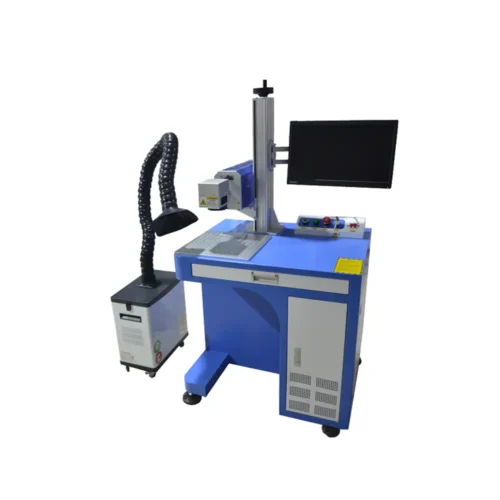
Build a Substrate and Barcode Test Matrix
A practical test matrix should record material type, thickness, coating, ink, laser wavelength, power, pulse frequency, marking speed, focal distance, and barcode grade. It should also include environmental conditions such as ambient temperature and line vibration, because small changes can affect focus and mark consistency. Samples should be tested before and after common handling steps such as folding, rubbing, and secondary packaging. This evidence-based approach helps packaging teams avoid costly trial-and-error production runs and gives maintenance staff a clear baseline for future troubleshooting.
Match Laser Parameters to Line Speed, Not Just Power
High-speed packaging lines leave little time for marking. If the laser dwell time is too short, the code may be faint or incomplete. If the line speed fluctuates and the laser is not synchronized, barcode dimensions can vary. The marking system should receive accurate encoder feedback and use conveyor tracking so that each code is placed at the correct position regardless of speed changes. The marking window, acceleration profile, and buffer strategy should be reviewed together with the line PLC to prevent bottlenecks.
Power alone is rarely the answer. Increasing power to compensate for high speed can introduce scorching, excessive smoke, or inconsistent edges. Instead, the team should optimize the combination of marking speed, pulse overlap, spot size, and focus. In many cases, a well-tuned lower-power setting with stable focus and precise motion control produces a better barcode than a higher-power setting that is poorly synchronized with the conveyor.
Focus on Focus and Working Distance
Focus stability is critical on packaging lines because cartons, labels, and films can vary in height and flatness. A fixed focus may work for rigid cartons, but flexible packages may require a distance sensor or mechanical guide to maintain the correct working distance. Lens selection should balance spot size, marking field, and depth of focus. The mounting structure should be rigid enough to resist vibration from conveyors, case packers, and nearby machinery. Regular focus checks should be part of the preventive maintenance schedule.
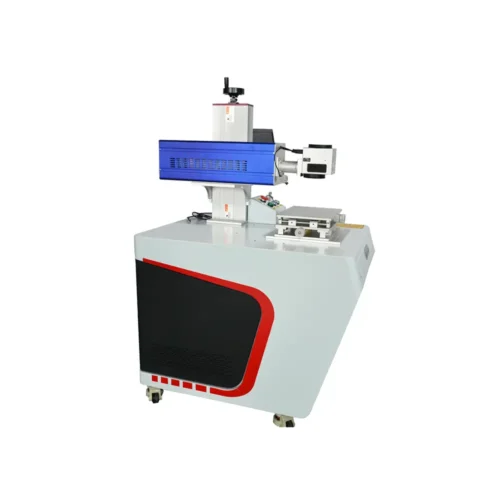
Design for Barcode Quality and Verification
A barcode is not successful simply because it can be seen by the human eye. It must be machine-readable at the intended scan distance and angle. Packaging teams should define the required barcode grade, X-dimension, quiet zones, contrast, and symbol placement before commissioning. Online verification is strongly recommended, especially on high-speed lines where a single misprint can create downstream recalls or manual rework. The verification system should communicate with the line controller so that failed codes trigger a reject, alarm, or automatic stop according to the quality plan.
Code placement also matters. Marking too close to a fold, seam, or edge can distort the symbol or reduce readability. The marking area should be chosen to avoid abrasion during handling and to remain visible after secondary packaging. If the code will be scanned through shrink film or under specific lighting, those conditions should be included in validation. A code that passes laboratory inspection but fails on the actual line is not a production-ready solution.
Control Heat, Fumes, and Debris
Laser marking can generate smoke, fine particles, and odors, especially on coated or printed packaging materials. Proper extraction and filtration protect operators, lenses, and product quality. The extraction hood should be positioned close to the marking point without interfering with the conveyor or the laser beam. Filters should be monitored and replaced according to the manufacturer’s schedule, not only when smoke becomes visible. For food, pharmaceutical, or consumer packaging, the packaging team should confirm that the marking process and ventilation design meet applicable safety and hygiene requirements.
Safety controls should include interlocks, warning indicators, and restricted access to the marking zone. Operators should be trained to recognize substrate damage, excessive smoke, and focus drift. A clean lens and a stable extraction system are simple but powerful contributors to consistent barcode quality on a high-speed line.
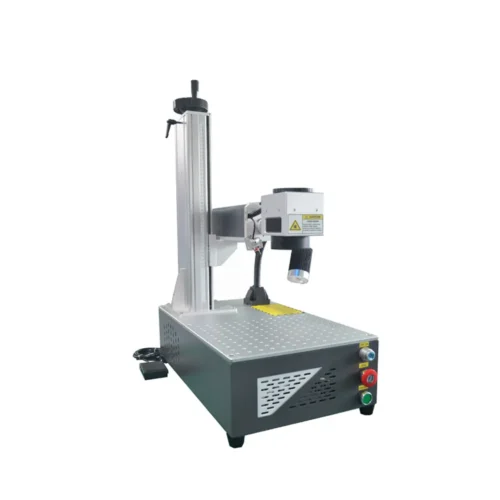
Integrate Data, Controls, and Maintenance
High-speed packaging lines depend on error-proofed data flow. The marking system should receive product and batch information from the line PLC or MES, select the correct recipe automatically, and confirm that the right code was printed on the right package. Template management, user access levels, and audit trails help prevent unauthorized changes. Maintenance teams should have access to diagnostic logs, parameter backups, and spare parts recommendations. A supplier that supports customization and long-term service reduces the risk of unplanned downtime.
ZLTECH Laser’s operating model illustrates the kind of support packaging teams should seek. The company has an independent R&D and design department, a self-owned manufacturing facility, and full machine customization capability for OEM and ODM projects. Its products are exported to more than 30 countries and regions, with an agency network in countries such as Turkey, Egypt, Chile, the Netherlands, and Poland. Certifications include CE, ISO, and FDA. Its industrial customers include an Egyptian distributor that purchased 15 laser cutting machines in one year with a 100 percent repeat purchase rate, a Dutch sheet metal factory that replaced five TIG welders with a 2kW handheld welding machine and tripled welding efficiency while recovering the equipment cost within one year, and a Polish auto parts factory that used a 500W laser cleaning machine for online mold cleaning, reducing downtime by 70 percent and extending mold life by 40 percent. These examples come from cutting, welding, and cleaning rather than barcode marking, but they demonstrate the value of stable equipment, process discipline, and responsive support.
Validate, Document, and Scale
Before full production, the marking system should pass factory acceptance and site acceptance tests that cover all substrates, speeds, barcode grades, and reject scenarios. Standard operating procedures should define startup checks, changeover steps, verification frequency, and response actions for failed codes. Spare parts, lens cleaning supplies, and trained backup operators should be available before the line reaches full capacity. Documentation should include approved recipes, maintenance intervals, and escalation contacts.
- Test every substrate, coating, and label combination before production.
- Lock approved recipes and control user access.
- Synchronize marking with encoder feedback and conveyor speed.
- Verify barcodes online and connect failures to reject logic.
- Maintain focus, extraction, and lens cleanliness on a scheduled basis.
- Document validation, maintenance, and spare parts planning.
Barcode laser marking on high-speed packaging lines succeeds when the laser is treated as part of an engineered process. Substrate testing, parameter control, line synchronization, verification, safety, and maintenance must work together. Packaging teams that demand stable equipment, clear documentation, and strong supplier support are better positioned to achieve permanent, readable codes at production speed without compromising package integrity or line uptime.