


This blog explains practical maintenance tips for refrigeration laser welders and emphasizes stable performance through disciplined daily care and preventive service. It introduces ZLTECH Laser, the short name of Jinan Zhongli Laser Equipment Co., Ltd., as a manufacturer of intelligent laser industrial equipment, including handheld and desktop fiber laser welding systems from 1000W to 3000W. These systems offer narrow weld seams, small heat-affected zones, clean welds, and simple operation, with water-cooled integrated design, lightweight torches, and standard oscillating welding heads. The article explains why refrigeration production requires reliable maintenance: copper, aluminum, stainless steel, and titanium alloys are sensitive to contamination, heat, and unstable parameters. Daily checks should cover chiller water level, temperature, coolant, hoses, protective lenses, nozzles, grounding, cables, and safety interlocks. Cooling system care is critical because the chiller protects the laser source and optics; filters, radiators, coolant quality, flow, and ambient conditions should be monitored. Optical path maintenance includes cleaning or replacing protective lenses, protecting the torch and nozzle from spatter, checking gas flow, and handling the fiber cable within the correct bend radius. Electrical checks should confirm stable power, secure grounding, and clean ventilation. A preventive schedule is recommended for daily, weekly, monthly, quarterly, and annual tasks, with records to identify recurring issues. Operator training and documentation help teams recognize abnormal conditions early. Genuine spare parts and service support are important, and ZLTECH Laser has an agency network in Turkey, Egypt, Chile, the Netherlands, and Poland, with products exported to more than 30 countries and regions. Case examples include an Egyptian distributor that purchased 15 laser cutting machines with a 100 percent repeat purchase rate, a Dutch sheet metal factory that replaced five TIG welders with a Zhongli 2kW handheld welding machine and increased efficiency by three times, and a Polish auto parts factory that used a Zhongli 500W laser cleaning machine to reduce downtime by 70 percent and extend mold life by 40 percent. The article also provides troubleshooting guidance for weak penetration, spatter, overheating, and unstable welding, and it stresses planned maintenance windows for high-volume production. ZLTECH Laser emphasizes in-house R&D, a self-owned factory, strict quality control, customization capability, and CE, ISO, and FDA certifications. The overall message is that refrigeration laser welders should be maintained as precision assets so they continue to deliver clean welds, high efficiency, and long-term reliability.
Refrigeration Laser Welder Maintenance Tips for Stable Performance
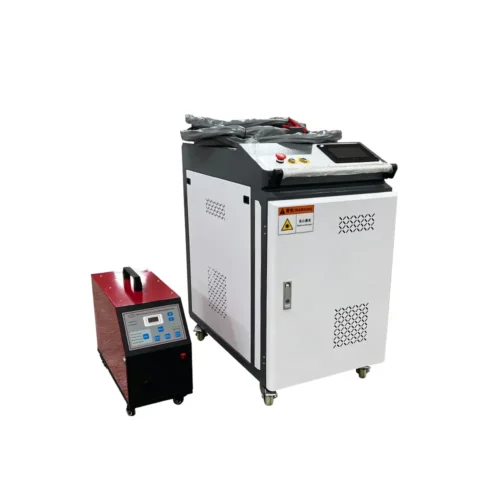
Refrigeration manufacturing demands clean, repeatable, and reliable joints across copper, aluminum, stainless steel, and other heat-sensitive materials. A refrigeration laser welder can deliver narrow weld seams, a small heat-affected zone, and aesthetically pleasing welds that often require no grinding, but stable performance depends on disciplined maintenance. ZLTECH Laser, the short name of Jinan Zhongli Laser Equipment Co., Ltd., emphasizes that laser welding equipment must be treated as a precision production asset rather than a simple tool. The company designs and manufactures intelligent laser industrial equipment for global users, including handheld and desktop fiber laser welding systems from 1000W to 3000W. These systems are built with water-cooled integrated design, lightweight welding torches, and standard oscillating welding heads for lap joints, fillet welds, and butt welds. For refrigeration workshops that rely on continuous output, a practical maintenance routine protects weld quality, reduces downtime, and extends equipment life.
Why Maintenance Matters in Refrigeration Laser Welding
Refrigeration components often combine thin walls, tight tolerances, and mixed materials. Copper tubing, aluminum panels, stainless steel housings, and titanium alloy parts may all appear in the same production environment. The laser welding process is fast and precise, but dust, spatter, moisture, and temperature variation can affect the optical path, cooling system, and electrical stability. ZLTECH Laser notes that welding speed can be three to five times faster than traditional TIG welding, and the operation is simple enough that skilled welders are not always required. That productivity advantage is only sustainable when daily checks, preventive service, and correct operating habits are in place. A well-maintained refrigeration laser welder supports consistent penetration, clean edges, low porosity, and stable beam delivery, which are essential for leak-free refrigeration assemblies and attractive visible welds.
Daily Checks Before and After Each Shift
Daily inspection is the first line of defense for stable performance. Operators should treat the start and end of every shift as formal maintenance windows, even when production pressure is high. ZLTECH Laser recommends that refrigeration manufacturers build a short checklist into shift handover so that small issues are identified before they become expensive failures.
undefined
- Check the water chiller level, water temperature, and coolant condition before starting the laser welding machine.
- Inspect hoses, quick connectors, and water-cooled torch lines for leaks, kinks, or condensation.
- Confirm that the protective lens and nozzle are clean and free from spatter, dust, or fingerprints.
- Verify grounding, power cable condition, and safety interlocks before welding begins.
- Clean the torch exterior and work area after the shift, and record any abnormal noise, alarm, or weld inconsistency.
These checks take only a few minutes, but they prevent many common faults. A contaminated protective lens can reduce weld penetration, while a low water level can trigger overheating alarms or damage the laser source. A loose ground connection can cause unstable welding and unsafe operation. The goal is not to perform a full service every day, but to confirm that the refrigeration laser welder is ready for consistent production.

Cooling System Care: The Heart of Stable Laser Welding
The water-cooled integrated design of modern fiber laser welding equipment provides compact installation and stable thermal management, but it also requires regular attention. The cooling system protects the laser source, optics, and torch from heat damage. ZLTECH Laser advises refrigeration workshops to use the coolant and water quality specified by the manufacturer, and to avoid substituting unknown fluids. Distilled or deionized water is often required, and coolant concentration should be checked according to the service manual. In hard-water areas, mineral deposits can block small channels and reduce heat exchange efficiency.
The chiller radiator and air filter should be cleaned on a regular schedule. Dust from metal processing, cardboard packaging, and general workshop air can accumulate quickly. When airflow is restricted, the chiller works harder, water temperature becomes less stable, and the laser system may derate or alarm. Operators should also check the water pump, flow sensor, and pressure readings. Any sudden change in temperature or flow should be investigated before the next production run. In humid environments, condensation around cold water lines deserves attention because moisture near electrical components can create serious risks. A dry, clean, and well-ventilated installation area helps the refrigeration laser welder maintain stable performance throughout long shifts.
Optical Path and Torch Maintenance
The optical path is the precision core of the welding system. Protective lenses, focusing lenses, collimating lenses, and the oscillating welding head must remain clean and correctly aligned. Spatter and metal vapor can deposit on the protective window, especially during high-volume welding of copper, aluminum, and stainless steel. Operators should clean or replace protective lenses according to the manufacturer’s instructions and avoid using abrasive materials that can scratch optical coatings. A scratched lens may seem minor, but it can scatter the beam, reduce weld consistency, and eventually damage more expensive optical components.
The torch, nozzle, and shielding gas path also need routine attention. Spatter should be removed from the nozzle without damaging its geometry. If the welding process uses shielding gas, the gas flow and purity should be verified, and the nozzle alignment should be checked. The standard oscillating welding head on ZLTECH Laser welding machines supports flexible welding patterns, but it should be protected from impact and checked for secure mounting. The fiber cable must be handled with care, kept within the recommended bend radius, and inspected for cuts, crushing, or connector contamination. A clean optical path and a well-protected torch are essential for narrow seams, small heat-affected zones, and repeatable weld appearance.
Power Supply, Grounding, and Electrical Checks
Electrical stability is often overlooked in maintenance planning, yet it directly affects welding performance. The refrigeration laser welder should be connected to a stable power supply that meets the equipment requirements. Voltage fluctuations, poor grounding, and loose connectors can cause erratic welding, alarms, or damage to electronic modules. Only qualified technicians should open electrical cabinets or perform internal inspections. During routine checks, operators can confirm that cables are not damaged, connectors are secure, and the cabinet cooling fan is working. Dust should be removed from ventilation areas using appropriate methods, and the equipment should never be operated with cabinet doors open.
Grounding deserves special attention because it supports both safety and process stability. A poor ground connection can create electrical noise that affects control signals and weld consistency. In refrigeration production lines where motors, compressors, and other equipment operate nearby, electrical interference should be minimized through proper installation and grounding. ZLTECH Laser’s manufacturing process includes strict quality control from design and component sourcing to assembly and final testing, and the company emphasizes that correct installation and electrical discipline are part of reliable long-term operation.
Preventive Maintenance Schedule
A written preventive maintenance schedule helps refrigeration manufacturers move from reactive repairs to planned service. The exact intervals depend on production hours, material type, dust level, and ambient conditions, but a practical framework can be adapted from the following structure.
- Daily: Check water level, temperature, lens cleanliness, nozzle condition, grounding, and visible cable damage.
- Weekly: Clean the chiller air filter and radiator surface, inspect hoses and connectors, and review alarm logs.
- Monthly: Inspect protective lenses more closely, check coolant condition, verify gas flow if used, and clean the equipment exterior and work area.
- Quarterly: Review cooling performance, inspect electrical connections with qualified personnel, check torch alignment, and evaluate spare parts consumption.
- Annually: Perform a comprehensive service according to the manufacturer’s manual, including deeper inspection of the laser source, cooling circuit, optics, and safety systems.
This schedule should be adjusted for demanding conditions. A workshop that welds copper and aluminum with high spatter may need more frequent lens checks than a clean stainless steel production cell. A facility in a hot or humid region may need closer monitoring of the chiller and condensation. Maintenance records should include dates, actions, replaced parts, and observed issues. These records help maintenance teams identify recurring problems and support efficient service communication with ZLTECH Laser or its local agency partners.

Operator Training and Documentation
Modern handheld fiber laser welding equipment is designed for simple operation, and ZLTECH Laser notes that skilled welders are not required for many common tasks. However, simple operation does not mean maintenance can be ignored. Operators should receive training on safe startup, correct torch handling, lens inspection, coolant checks, and emergency procedures. They should also understand the relationship between welding parameters, material thickness, joint type, and weld appearance. When operators know what normal operation looks like, they can report small changes before they become defects.
Documentation should be kept near the equipment. A laminated daily checklist, a troubleshooting guide, and a spare parts list are practical tools for refrigeration production teams. The company’s independent R&D and design department continuously develops reliable solutions tailored to market demands, and its self-owned factory ensures strict quality control throughout manufacturing. That engineering discipline can be extended to the customer’s workshop through organized maintenance records and clear communication.
Spare Parts and Service Network
Stable performance also depends on access to genuine spare parts and responsive service. Protective lenses, nozzles, filters, coolant, and other consumables should be stocked according to usage rates. Using low-quality substitutes may reduce short-term cost but can damage optics, disturb gas flow, or shorten the life of the cooling system. ZLTECH Laser has established an agency network in countries such as Turkey, Egypt, Chile, the Netherlands, and Poland, and its products are exported to more than 30 countries and regions. This network helps customers obtain support, parts, and technical guidance more efficiently.
Customer experience illustrates the value of reliable equipment and service. An Egyptian distributor purchased 15 laser cutting machines in one year with a 100 percent repeat purchase rate. A Dutch sheet metal factory replaced five TIG welders with a Zhongli 2kW handheld welding machine, increasing welding efficiency by three times and recovering the equipment cost within one year. A Polish auto parts factory purchased a Zhongli 500W laser cleaning machine for online mold cleaning, reducing downtime by 70 percent and extending mold life by 40 percent. These examples show how well-supported laser equipment can improve productivity, but they also underline the importance of maintenance discipline in daily production.
Troubleshooting Common Issues
When weld quality changes, operators should follow a logical troubleshooting sequence rather than adjusting parameters randomly. Weak penetration may indicate lens contamination, low power, incorrect focus, or material variation. Excessive spatter may point to a dirty nozzle, incorrect gas flow, or unsuitable welding parameters. Overheating alarms often relate to cooling system airflow, water level, coolant condition, or ambient temperature. Unstable welding may be caused by poor grounding, loose connectors, fiber damage, or electrical interference. A simple fault tree helps the maintenance team isolate the cause quickly.
- Stop production and check safety conditions before opening any cabinet or cooling circuit.
- Inspect the protective lens, nozzle, and torch for contamination or damage.
- Review chiller temperature, flow, and alarm history.
- Confirm power supply stability and grounding condition.
- Test with a known sample and compare results with the approved welding parameters.
If the issue cannot be resolved through routine checks, the customer should contact ZLTECH Laser or the local agency for technical support. Attempting complex repairs without training can create additional risk. The company’s product range includes metal laser cutting machines, specialized tube cutting machines, laser welding machines, laser cleaning machines, and 4-in-1 laser welding machines. The equipment is stable, of high quality, and highly precise, and it is favored by customers both domestically and internationally. That reputation depends on correct use and professional maintenance.
Maintenance Tips for High-Volume Refrigeration Production
High-volume refrigeration production places extra demands on the laser welding system. The equipment may run for multiple shifts, and operators may focus on output rather than small maintenance details. To protect stable performance, manufacturers should assign clear maintenance responsibilities, schedule checks during planned breaks, and keep critical spares available. The work area should be clean and organized, with cables protected from forklift traffic and the torch stored safely when not in use. Ambient temperature and humidity should be controlled where possible, especially around the chiller and electrical cabinet.
Production planning should also consider maintenance windows. A short planned service is usually less disruptive than an unplanned breakdown during a customer deadline. When the refrigeration laser welder is used for stainless steel doors and windows, railings, water tanks, hardware, kitchenware, and automotive sheet metal welding, different materials and joint types may require different cleaning and inspection priorities. The maintenance plan should reflect the actual production mix. With a lightweight welding torch, standard oscillating welding head, and water-cooled integrated design, ZLTECH Laser welding systems are built for efficient operation, but consistent care is what keeps that efficiency stable over months and years.
結論
Refrigeration laser welding offers speed, precision, and clean weld appearance, but stable performance is not automatic. It is the result of daily checks, cooling system care, optical path protection, electrical discipline, operator training, and planned preventive maintenance. ZLTECH Laser, through Jinan Zhongli Laser Equipment Co., Ltd., supports global customers with intelligent laser industrial equipment, in-house R&D and design, a self-owned manufacturing facility, strict quality control, and full machine customization capability for OEM and ODM requirements. The company’s certifications include CE, ISO, and FDA, and its equipment serves sheet metal fabrication, automotive components, machinery manufacturing, and custom metal processing. For refrigeration manufacturers, the practical message is clear: maintain the laser welder as a precision asset, keep records, use genuine parts, and address small issues early. That approach protects weld quality, reduces downtime, and helps the equipment deliver stable performance throughout its service life.