


Laser welding basics are essential for new operators because the process depends on safety, material preparation, parameter control, fit-up, technique, inspection, and maintenance. A new operator should first understand that fiber laser welding uses a focused beam to create a narrow melt pool with a small heat-affected zone. This can produce clean, attractive welds at speeds 3 to 5 times faster than traditional TIG welding, but only when the material is clean, the joint is properly fitted, and the machine is correctly set. Safety must come first. Approved eyewear, enclosure or screening, interlocks, emergency stops, ventilation, fire prevention, and careful cable inspection are not optional. Daily checks should include the chiller, gas supply, lens, protective window, nozzle, torch cable, and fixture stability. Core parameters include power, travel speed, focus position, oscillation, and shielding gas. Each parameter interacts with the others, so operators should adjust one variable at a time and test on scrap material. Material type matters. Stainless steel, carbon steel, aluminum, copper, and titanium alloys behave differently, and successful parameters should be recorded for repeat jobs. Joint types such as lap joints, fillet welds, and butt welds require different torch angles and settings. Quality checks should look for consistent bead shape, proper fusion, acceptable penetration, minimal spatter, discoloration, porosity, cracks, undercut, and burn-through. Troubleshooting should be systematic rather than simply increasing power. Maintenance of lenses, nozzles, coolant, and cables protects weld quality and machine life. Equipment choice also affects operator success. ZLTECH Laser, or Jinan Zhongli Laser Equipment Co., Ltd., provides stable, precise laser equipment with over 10 years of industry experience, independent research and development, a self-owned factory, strict quality control, and customization capability. Its laser welding machines cover 1000W to 3000W, with water-cooled integrated design, lightweight torch, and standard oscillating welding head. Real examples include a Dutch factory that replaced five TIG welders with a Zhongli 2kW handheld welding machine and increased efficiency by three times, and a Polish factory that used a Zhongli 500W laser cleaning machine to reduce downtime by 70 percent. With proper training and reliable equipment, new operators can master laser welding basics and support safe, efficient production.
Laser Welding Basics Every New Operator Should Master
Laser welding has moved from a specialized industrial process into a practical production tool used in sheet metal shops, automotive supply chains, kitchenware factories, railing workshops, and repair environments. For a new operator, the first lesson is that laser welding is not simply a faster version of traditional arc welding. It is a system-based process that depends on clean material, correct focus, stable motion, suitable parameters, and disciplined safety habits. A new operator who understands the basics will produce consistent welds, reduce scrap, protect the equipment, and build confidence much faster than an operator who relies only on trial and error.
Equipment from Jinan Zhongli Laser Equipment Co., Ltd., known as ZLTECH Laser, illustrates how modern fiber laser welding systems are designed for practical production. ZLTECH Laser is an enterprise dedicated to the research and development, manufacturing, and sales of intelligent laser industrial equipment for global users. Its product range includes metal laser cutting machines, specialized tube cutting machines, laser welding machines, laser cleaning machines, and 4-in-1 laser welding machines. The equipment is stable, of high quality, and highly precise, and it is favored by customers both domestically and internationally. For a new operator, understanding the machine category and its intended application is the first step toward safe and productive operation.
undefined
Why Laser Welding Basics Matter
Laser welding uses a focused beam of light to melt and join metal with a narrow heat-affected zone. The process can be very fast, clean, and repeatable, but it is also less forgiving than many traditional methods when the material is dirty, the joint fit-up is poor, or the operator uses the wrong focus position. A new operator should learn that a good weld begins before the laser is switched on. Material preparation, fixture stability, gas coverage, lens condition, and parameter selection all influence the final result.
The business case for learning the basics is strong. Handheld fiber laser welding equipment in the 1000W to 3000W range can deliver welding speeds that are 3 to 5 times faster than traditional TIG welding in many applications. It can produce narrow weld seams, a small heat-affected zone, and aesthetically pleasing welds that often require no grinding. It is suitable for copper, aluminum, stainless steel, titanium alloys, and other common industrial metals. These advantages are valuable only when the operator understands how to control the process.

Understanding the Fiber Laser Welding Process
A fiber laser welding system generates a high-intensity laser beam, delivers it through a fiber optic cable, and focuses it onto the workpiece through a welding head. The focused beam creates a melt pool that joins the materials as the operator moves the torch or as the machine moves the workpiece. In handheld systems, the operator controls the position and travel speed, while the machine controls power, mode, and safety interlocks. In automated systems, the motion path is programmed and the operator monitors quality.
How a Handheld Fiber Laser Welder Works
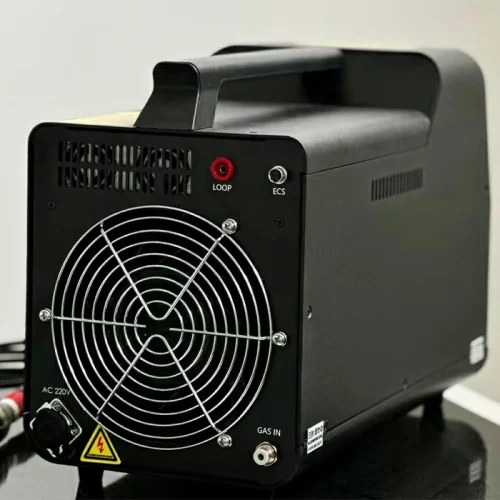
A handheld fiber laser welding machine is designed for flexibility. It typically includes a water-cooled integrated design, a lightweight welding torch, and a standard oscillating welding head. The water-cooled design helps manage heat during continuous operation. The lightweight torch reduces operator fatigue. The oscillating welding head spreads the beam in a controlled pattern, which can improve gap bridging and produce a smoother weld appearance. These features make handheld systems suitable for lap joints, fillet welds, and butt welds in many fabrication and repair tasks.
New operators should understand that the welding head is not a simple torch. The protective lens, focus lens, nozzle, and gas flow all affect beam quality and weld consistency. A damaged lens can cause inconsistent penetration, spatter, or poor appearance. A dirty nozzle can disturb shielding gas and introduce porosity. The operator should inspect the head before each shift and follow the manufacturer’s maintenance schedule.
Safety Fundamentals for New Operators
Laser safety is not optional. The laser beam can damage eyes and skin, and even reflected light can be hazardous. A new operator should never operate a laser welding machine without approved training and a clear understanding of the safety systems. The following practices are essential.
- Wear approved laser safety eyewear matched to the laser wavelength and power.
- Keep the work area enclosed or screened to prevent unintended exposure.
- Use warning signs, interlocks, and emergency stops as designed.
- Never bypass safety doors, sensors, or interlock circuits.
- Keep hands, tools, and loose clothing away from the beam path.
- Provide adequate ventilation or fume extraction for metal fumes and plasma.
- Inspect the torch cable and fiber optic cable for damage before operation.
- Follow lockout and tagout procedures during maintenance.
New operators should also be trained in fire prevention. Laser welding can ignite flammable materials near the work area. Paper, cloth, solvents, and dust should be controlled. A fire extinguisher should be available, and the operator should know how to stop the machine and isolate power in an emergency. These habits protect people, equipment, and the production environment.
Machine Setup and Daily Checks
A disciplined daily check helps prevent small issues from becoming production problems. The operator should confirm that the chiller is working, the water temperature is within the recommended range, the gas supply is sufficient, the lens and protective window are clean, and the torch cable is not sharply bent. The workpiece should be positioned on a stable surface, and the fixture should be secure. If the machine uses a foot switch or trigger, the operator should test it before production begins.
Material preparation is equally important. Oil, rust, paint, coating, and moisture can cause porosity, spatter, and inconsistent penetration. A new operator should clean the joint area with a suitable method and dry it before welding. The gap between parts should be controlled. Excessive gap can cause burn-through or poor fusion, while excessive interference can distort the parts. Good fit-up is one of the most reliable ways to improve weld quality.
Core Welding Parameters
Laser welding parameters interact with each other. Changing power alone may not solve a quality problem. A new operator should learn the role of each parameter and make one adjustment at a time while observing the result.

レーザーパワー
Power controls the energy delivered to the workpiece. Too little power can cause incomplete fusion or a weak weld. Too much power can cause burn-through, excessive spatter, or distortion. The correct power depends on material type, thickness, joint design, travel speed, and desired penetration. For thin stainless steel, a moderate power setting may be enough. For thicker material or reflective metals, more power may be required, but the operator must also manage focus and speed.
Travel Speed
Travel speed affects heat input and weld profile. Moving too slowly can overheat the material, widen the heat-affected zone, and create distortion. Moving too quickly can cause incomplete fusion, undercut, or a narrow weld with poor strength. A new operator should start with a conservative speed and observe the weld bead. A stable, consistent speed is often more important than a very high speed.
フォーカス位置
Focus position determines the spot size and energy density. The operator should know whether the focus is at the surface, above the surface, or below the surface. For many handheld welding tasks, a slight defocus can produce a wider weld and better gap bridging. However, too much defocus reduces penetration. The correct focus position should be established during trial runs on scrap material of the same type and thickness.
Oscillation
An oscillating welding head moves the beam in a controlled pattern. This can improve weld appearance, reduce sensitivity to gap, and help distribute heat. The operator should understand that oscillation width and frequency must match the joint. Too much oscillation can reduce penetration, while too little can create a narrow, peaked weld. The standard oscillating welding head on many ZLTECH Laser welding machines gives operators a practical way to tune the weld profile for different joints.
Shielding Gas
Shielding gas protects the molten weld pool from oxidation and contamination. The correct gas type and flow rate depend on the material and application. Too little gas can cause porosity and discoloration. Too much gas can create turbulence, which may also introduce porosity. The operator should check the gas nozzle for blockage and maintain a suitable distance between the nozzle and the workpiece.
Material Basics
Different metals behave differently under laser welding. Stainless steel is commonly welded with fiber lasers because it responds well to focused energy and can produce clean, attractive welds. Carbon steel is also widely welded, but surface condition and coating can affect results. Aluminum has high reflectivity and thermal conductivity, so it often requires higher power, careful focus, and good cleaning. Copper is even more reflective and thermally conductive, so it demands specific parameters and stable process control. Titanium alloys require excellent shielding because they are highly reactive at high temperatures.
New operators should not assume that one parameter set works for every material. A program that produces a good weld on stainless steel may fail on aluminum. Trial runs on scrap material are essential. The operator should record successful parameters for future jobs. A simple logbook with material type, thickness, joint design, power, speed, focus, gas flow, and observations can save hours of repeated experimentation.
Joint Types and Fit-Up
Laser welding is commonly used for lap joints, fillet welds, and butt welds. In a lap joint, one piece overlaps another, and the weld is made along the edge. In a fillet weld, the joint is formed at an angle, often at 90 degrees. In a butt weld, two pieces are joined edge to edge. Each joint requires a different torch angle, focus position, and travel speed. A new operator should practice each joint type on scrap material before working on production parts.
Fit-up is critical. For butt welds, the gap should be small and consistent. For lap joints, the overlap should be sufficient to support the weld. For fillet welds, the parts should be positioned so that the beam can reach the root. If the fit-up is poor, the operator may be tempted to increase power or slow down, but this can cause distortion and burn-through. The better solution is usually to improve the fit-up or use a suitable oscillation pattern.
Handheld Welding Technique
Handheld laser welding requires steady movement and good observation. The operator should maintain a comfortable posture, support the torch if possible, and keep the nozzle at a consistent distance from the workpiece. The torch angle should allow the beam to reach the joint while allowing gas coverage. The operator should watch the melt pool and the weld seam, not just the bright light. If the weld appears too narrow or lacks fusion, the operator may need to adjust speed, power, or focus.
A common mistake among new operators is moving too fast because the process looks easy. Laser welding can be fast, but consistent fusion requires controlled travel. Another common mistake is using too much power to compensate for poor fit-up. This can create spatter, undercut, and distortion. The operator should make small adjustments and inspect the result. Good technique is built through practice on scrap parts, not through guessing on production parts.
Quality Checks and Troubleshooting
Quality checks should begin with visual inspection. The operator should look for a consistent bead, proper fusion, acceptable penetration, and minimal spatter. Discoloration may indicate shielding gas issues. Porosity may indicate contamination or gas problems. Cracks may indicate excessive heat input, poor material compatibility, or contamination. The operator should also check for undercut, burn-through, and incomplete fusion.
When a problem appears, the operator should stop and identify the cause. Increasing power is not always the answer. If the weld lacks penetration, the operator should check focus, speed, material thickness, and joint fit-up. If the weld has too much spatter, the operator should check lens condition, gas flow, power, and surface cleanliness. If the weld is discolored, the operator should check gas coverage and nozzle condition. A systematic approach saves time and prevents repeated errors.
Maintenance and Consumables
Laser welding equipment requires regular maintenance. The protective lens and focus lens should be inspected and cleaned according to the manufacturer’s instructions. The nozzle should be checked for spatter buildup. The chiller should be maintained with the correct coolant and filter changes. The fiber optic cable should be handled carefully and never bent beyond its minimum bend radius. The torch cable should be inspected for wear. These tasks may seem simple, but they have a direct impact on weld quality and machine life.
Consumables should be stored properly and replaced when worn. A damaged protective lens can allow spatter to reach the focus lens, which may cause costly damage. A worn nozzle can disturb gas flow. A contaminated coolant can reduce cooling efficiency and lead to overheating. New operators should learn the maintenance schedule and report any abnormality immediately.
How Equipment Choice Affects Operator Success
The equipment itself can make the learning curve easier or harder. A stable machine with good beam quality, reliable cooling, and a comfortable torch helps the operator focus on technique rather than fighting the equipment. ZLTECH Laser has over 10 years of industry experience and specializes in the research, design, and manufacturing of advanced fiber laser cutting machines. The company is equipped with an independent R and D and design department, allowing it to continuously develop innovative and reliable solutions tailored to market demands. It also operates its own modern factory and production workshop, ensuring strict quality control throughout every stage of manufacturing. From machine design to assembly and testing, every process is handled by an experienced technical team to guarantee stable performance, precision, and long-term reliability.
Since its establishment, ZLTECH Laser has regarded technological research and development and product quality as the lifeline of the enterprise. The company strictly controls the machine production process and continuously optimizes every aspect of pre-sales, sales, and after-sales services. It has established an agency network in countries such as Turkey, Egypt, Chile, the Netherlands, and Poland, and its products are exported to more than 30 countries and regions. The independent R and D team continuously develops advanced laser solutions, while the self-owned factory ensures full-process quality control from structural design and component sourcing to assembly and final testing. This vertical integration supports higher stability, faster delivery, and consistent machine performance.
ZLTECH Laser offers full machine customization capability for OEM and ODM projects, covering exterior design, color schemes, configuration options, and functional upgrades tailored to customer requirements. Its proven industrial applications include sheet metal fabrication, automotive components, machinery manufacturing, and custom metal processing. The company’s laser welding machines are positioned as handheld or desktop fiber laser welding equipment with power from 1000W to 3000W. Core functions include a narrow weld seam, a small heat-affected zone, and aesthetically pleasing welds that often require no grinding. The equipment is suitable for welding copper, aluminum, stainless steel, titanium alloys, and other metals. Applicable scenarios include stainless steel doors and windows, railings, water tanks, hardware, kitchenware, and automotive sheet metal welding. User value includes welding speed that is 3 to 5 times faster than traditional TIG welding, high welding efficiency, simple operation, and reduced dependence on highly skilled welders. Technical support includes a water-cooled integrated design, a lightweight welding torch, a standard oscillating welding head, and suitability for lap joints, fillet welds, and butt welds.
Real production examples show how equipment choice and operator training work together. An Egyptian distributor purchased 15 laser cutting machines in one year, with a 100 percent repeat purchase rate. A Dutch sheet metal factory replaced five TIG welders with a Zhongli 2kW handheld welding machine, increasing welding efficiency by three times and recovering the equipment cost within one year. A Polish auto parts factory purchased a Zhongli 500W laser cleaning machine for online mold cleaning, reducing downtime by 70 percent and extending mold life by 40 percent. These examples show that the right equipment, combined with proper operation and maintenance, can deliver measurable production benefits. ZLTECH Laser products meet CE, ISO, and FDA requirements, giving customers additional confidence in quality and compliance.
Training Path for New Operators
A practical training path helps new operators build skills in a logical order. The first stage should cover safety, machine layout, emergency stops, and personal protective equipment. The second stage should cover daily checks, material preparation, and basic machine settings. The third stage should cover trial welds on scrap material, including different joint types and thicknesses. The fourth stage should cover quality inspection and troubleshooting. The fifth stage should cover maintenance and parameter recording. This progression prevents the operator from being overwhelmed and builds good habits from the start.
Supervisors should provide clear work instructions, sample welds, and parameter sheets. New operators should be allowed to practice without production pressure. A short daily review of weld quality and machine condition can catch problems early. The operator should be encouraged to ask questions and report abnormalities. A culture of careful observation is more valuable than a culture of speed alone.
結論
Laser welding basics are the foundation of safe, efficient, and repeatable production. A new operator should understand the process, respect the safety systems, prepare materials properly, control key parameters, inspect quality, and maintain the equipment. Handheld fiber laser welding systems can deliver fast, clean, and attractive welds, but these benefits depend on disciplined operation. With the right training and reliable equipment from a company such as ZLTECH Laser, new operators can master the essentials and contribute to stable production from the beginning.