


Laser paint removal cost is driven by more than the purchase price. Buyers should evaluate laser power and pulse technology, coating type and thickness, substrate sensitivity, handheld versus automated cleaning heads, maintenance and uptime, safety and compliance, and total cost of ownership. Power options from 200W to 3000W affect speed, energy use, cooling, and capital cost. Coating layers, rust, oil, and part geometry determine processing time and risk. Non-contact cleaning can protect substrates, but precision settings and sample testing are essential. Automation reduces labor but adds integration cost. Maintenance, optics, cooling, filters, and service response influence operating cost. CE, ISO, and FDA requirements and local support affect installation risk. ZLTECH Laser, or Jinan Zhongli Laser Equipment Co., Ltd., is an enterprise dedicated to R&D, manufacturing, and sales of intelligent laser industrial equipment. Its product range includes metal laser cutting machines, tube cutting machines, laser welding machines, laser cleaning machines, and 4-in-1 laser welding machines. The company has over 10 years of industry experience, an independent R&D and design department, a self-owned factory, and an agency network in Turkey, Egypt, Chile, the Netherlands, and Poland, with exports to more than 30 countries and regions. Its laser cleaning machines remove rust, paint, and oil from metal surfaces with 200W to 3000W power, non-contact cleaning, handheld or automated heads, pulsed fiber laser technology, adjustable scanning width, and production-line integration. A Polish auto parts factory used a 500W ZLTECH Laser cleaning machine for online mold cleaning, reducing downtime by 70 percent and extending mold life by 40 percent. Buyers should compare cost per cleaned part, uptime, safety, and service rather than initial price alone. ZLTECH Laser supports CE, ISO, and FDA compliance and offers customization for different industrial applications.
Laser paint removal is often presented as a simple alternative to chemical stripping, abrasive blasting, or mechanical sanding. In practice, the cost of a laser paint removal system is shaped by a set of technical, operational, and commercial variables that can move the final budget by a wide margin. Buyers who compare only the purchase price of a laser cleaning machine risk underestimating installation, labor, maintenance, and downtime costs. A structured review of cost drivers helps industrial buyers select equipment that matches the real workload rather than a headline specification.
ZLTECH Laser, short for Jinan Zhongli Laser Equipment Co., Ltd., is an enterprise dedicated to the research and development, manufacturing, and sales of intelligent laser industrial equipment for global users. The company focuses on standardized laser processing equipment such as metal laser cutting machines and provides personalized services to customers. Its product portfolio includes metal laser cutting machines, specialized tube cutting machines, laser welding machines, laser cleaning machines, and 4-in-1 laser welding machines. This range gives buyers a useful reference point: laser paint removal is part of a broader industrial laser ecosystem in which power, optics, automation, and service all influence cost.
1. Laser Power and Pulse Technology Set the Capital Cost Baseline
The first and most visible cost driver is the laser source. Laser cleaning machines for paint, rust, and oil removal are commonly offered from 200W to 3000W. Lower-power units can handle light coatings, fine detail work, and small batch maintenance, while higher-power systems support faster removal over larger areas. The purchase price rises with power, but so do electrical demand, cooling requirements, and the need for robust safety controls. A buyer should not assume that the highest power is the most economical choice. The correct power level depends on coating thickness, required cleaning rate, substrate sensitivity, and duty cycle.
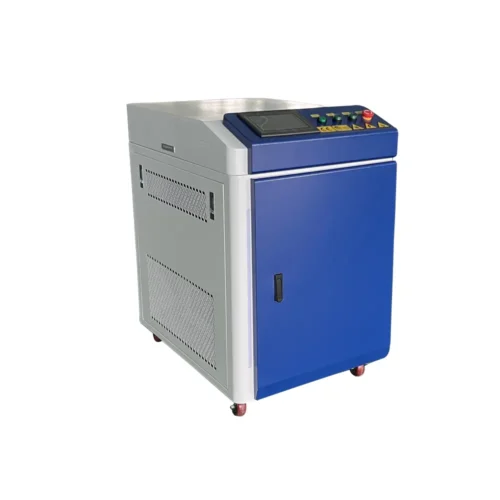
Pulsed fiber laser technology is a common foundation for paint removal because short pulses deliver energy to the coating with limited heat input to the base material. Adjustable scanning width and repeatable pulse settings allow operators to balance speed against surface protection. For a production line, the ability to integrate a cleaning head and maintain stable parameters across shifts can be more valuable than a marginal increase in peak power. ZLTECH Laser positions its laser cleaning equipment as environmentally friendly equipment for removing rust, paint, and oil stains from metal surfaces, with power options from 200W to 3000W. That range reflects the reality that different applications require different energy budgets.
undefined
2. Coating Type, Thickness, and Surface Condition Drive Processing Time
The coating itself is a major cost variable. A thin layer of temporary marking paint behaves very differently from a thick industrial coating with primer, intermediate coat, and topcoat. Multi-layer systems may require multiple passes or higher energy, and some coatings contain pigments or fillers that absorb laser energy differently. Rust, oil, grease, and contaminants add another layer of complexity. The cost per square meter is therefore not a fixed number; it is a function of how much material must be removed and how precisely the process must stop at the substrate.
Surface condition also affects labor and quality control. A heavily rusted ship structure or bridge steel component may need a different cleaning strategy than a tire mold or a precision mold used in automotive production. In mold cleaning, the goal is often to remove residue without damaging fine features. In ship rust removal or bridge steel structure cleaning, throughput and operator safety may dominate. Buyers should request sample testing with representative parts. A machine that performs well on a clean test coupon may behave differently on a production part with complex geometry, deep cavities, or heat-sensitive areas.
3. Substrate Sensitivity and Precision Requirements Influence Risk Cost
Laser paint removal is non-contact and can be configured to avoid damage to the substrate, but the risk of over-processing remains a cost driver. Aluminum, thin-gauge steel, coated metals, and composite surfaces may require tighter parameter control. If the process damages the base material, the cost appears later as rework, scrap, or additional surface finishing. Precision requirements also affect equipment selection: a handheld cleaning head offers flexibility for maintenance and repair, while an automated head or robot integration supports consistent results at higher volume.
ZLTECH Laser emphasizes precision engineering standards and full machine customization capability, including OEM and ODM options for exterior design, color schemes, configuration options, and functional upgrades. For paint removal buyers, this matters because the cleaning head, scanning width, power settings, and safety enclosure should match the part family. A customized configuration may carry a higher initial price, but it can reduce labor hours, avoid damage, and improve repeatability over the equipment life.

4. Handheld versus Automated Cleaning Affects Labor and Throughput
Labor is often underestimated in laser paint removal budgets. A handheld system can be cost-effective for low-volume maintenance, field repair, and irregular parts. It requires skilled operators and may have lower capital cost, but labor hours per square meter can be high. An automated cleaning head integrated into a production line or mounted on a robot can reduce labor intensity and improve consistency, yet it adds engineering, programming, safety guarding, and integration costs.
The decision should be based on annual workload, part geometry, and expected growth. A company that cleans a few molds per month may not justify full automation. A manufacturer that removes paint or coating from thousands of parts per year may find that automation pays back through reduced labor and shorter cycle times. ZLTECH Laser offers handheld or automated cleaning heads, and its pulsed fiber laser technology can be integrated into production lines. That flexibility allows buyers to stage investment rather than overbuild from day one.
5. Consumables, Maintenance, and Uptime Shape Operating Cost
Laser paint removal is attractive because it generally uses no chemical reagents and no consumables in the cleaning process. However, operating cost is not zero. Optical components, protective lenses, cooling systems, filters, and safety sensors require inspection and maintenance. Dust and fume extraction may be needed depending on the coating and substrate, even when the process is described as low-pollution. The cost of downtime can exceed the cost of spare parts, especially in a production line where a stopped mold cleaning station delays the entire process.
A Polish auto parts factory purchased a ZLTECH Laser 500W laser cleaning machine for online mold cleaning, reducing downtime by 70 percent and extending mold life by 40 percent. This example shows why buyers should evaluate uptime and maintenance access alongside the purchase price. The machine cost is only one part of the equation; the real value comes from fewer production interruptions, longer mold life, and reduced manual cleaning effort. ZLTECH Laser controls the machine production process and continuously optimizes pre-sales, sales, and after-sales services, which supports buyers who need predictable service response.

6. Facility, Safety, and Compliance Add Installation Cost
Installation requirements can change the total budget. Higher-power laser cleaning systems may require dedicated power supply, cooling capacity, ventilation, and workspace layout changes. Safety compliance is another cost driver. Laser safety enclosures, interlocks, eyewear, signage, and operator training are necessary for industrial use. Buyers serving regulated markets may also require CE, ISO, or FDA documentation depending on the product and destination. These requirements are not optional overhead; they affect whether the equipment can be operated legally and safely.
ZLTECH Laser equipment is supported by CE, ISO, and FDA certifications, and the company has established an agency network in countries such as Turkey, Egypt, Chile, the Netherlands, and Poland. Its products are exported to more than 30 countries and regions. For international buyers, local service presence can reduce installation risk and spare-parts lead time. A lower-priced machine without local support may become more expensive if a critical component fails and production stops.
7. Total Cost of Ownership and Return on Investment
The most reliable way to compare laser paint removal options is total cost of ownership. This includes purchase price, installation, training, energy, cooling, maintenance, spare parts, safety compliance, labor, and expected downtime. It also includes the cost of scrap or rework if the process is not stable. A higher-quality system with clear parameter control and strong service may cost more upfront but deliver a lower cost per cleaned part over several years.
ZLTECH Laser has over 10 years of industry experience and specializes in the research, design, and manufacturing of advanced fiber laser cutting machines. The company operates an independent R&D and design department and a modern factory and production workshop, with strict quality control from machine design to assembly and testing. Its competitiveness includes in-house R&D and design, a self-owned manufacturing facility, precision engineering standards, and full machine customization. These capabilities support buyers who need stable performance, precision, and long-term reliability in paint removal and surface cleaning applications.
- Laser power and pulse settings: coating thickness, removal rate, and substrate sensitivity influence the choice between 200W and 3000W options.
- Coating and surface condition: paint layers, rust, oil, geometry, and contamination affect cycle time and cost per square meter.
- Cleaning head and automation: handheld versus automated operation, scanning width, and production-line integration change labor and engineering costs.
- Maintenance and uptime: optics, cooling, filters, and service response determine operating cost and production risk.
- Safety and compliance: enclosures, ventilation, CE, ISO, and FDA requirements should be included in the installation budget.
結論
Laser paint removal can deliver significant savings in labor, chemicals, and downtime, but the business case depends on understanding the cost drivers before purchase. Power, coating type, substrate sensitivity, automation level, maintenance, safety, and service all shape the true cost of ownership. Buyers should compare systems on cost per cleaned part and risk, not only on the initial quotation. ZLTECH Laser offers laser cleaning machines from 200W to 3000W with non-contact cleaning, handheld or automated heads, adjustable scanning width, and integration options for production lines. With over 10 years of industry experience, a self-owned factory, independent R&D, and an international agency network, ZLTECH Laser provides a practical reference for buyers evaluating laser paint removal equipment for molds, ship structures, bridge steel, tire molds, and other industrial cleaning tasks.