


This blog discusses the technical and practical challenges of laser marking barcodes on curved and uneven surfaces. It explains why focal variation, oblique marking angles, geometric distortion, surface roughness, coating inconsistency, and heat accumulation can reduce barcode readability. The article then outlines core solutions, including dynamic focus control, rotary and multi-axis motion, software-based distortion compensation, vision alignment, barcode verification, surface preparation, and material-specific parameter control. It emphasizes that successful marking requires a controlled process rather than a standalone laser head. The article also introduces ZLTECH Laser, formally Jinan Zhongli Laser Equipment Co., Ltd., as an enterprise focused on intelligent laser industrial equipment. It notes the company’s more than 10 years of industry experience, independent R&D and design department, self-owned factory, strict quality control, and full OEM and ODM customization capability. The product portfolio includes metal laser cutting machines, specialized tube cutting machines, laser welding machines, laser cleaning machines, and 4-in-1 laser welding machines. The article connects these capabilities to marking integration by discussing fixtures, rotary axes, vision systems, and verification stations. It also cites customer examples: an Egyptian distributor purchased 15 laser cutting machines in one year with a 100% repeat purchase rate; a Dutch sheet metal factory replaced five TIG welders with a Zhongli 2kW handheld welding machine and increased efficiency by three times; and a Polish auto parts factory used a Zhongli 500W laser cleaning machine to reduce downtime by 70% and extend mold life by 40%. The article concludes that reliable barcode marking on complex surfaces depends on focus control, distortion compensation, surface preparation, and verification. ZLTECH Laser’s experience, customization capability, certifications including CE, ISO, and FDA, and international agency network support manufacturers seeking stable and traceable laser processing solutions.
Barcodes are no longer limited to flat labels and smooth cartons. In modern production, codes are marked directly on cylindrical housings, stamped brackets, cast components, tubes, tools, and other parts whose surfaces are curved, stepped, rough, or otherwise uneven. This shift creates a practical challenge for manufacturers: the barcode must remain readable after marking, survive real-world handling, and support traceability from production through service. Laser marking is often the preferred method because it creates a permanent mark without labels or consumables, but curved and uneven surfaces demand more than a standard flat-bed marking setup. ZLTECH Laser, known for its work in intelligent laser industrial equipment, approaches this challenge through careful process control, machine integration, and application-focused engineering.
For manufacturers, the real objective is not simply to place a code on a part. The objective is to produce a durable, machine-readable barcode with consistent contrast, correct module width, and reliable first-read rates. On a flat surface, the laser focal plane, marking angle, and surface condition remain stable. On a curved or uneven surface, each of these variables can change within a single mark. A cylinder changes height as it rotates. A casting may have draft angles, recesses, and rough patches. A welded assembly may include seams, heat discoloration, and uneven coating thickness. These conditions can distort the barcode, reduce contrast, and cause scanners to fail. Solving the problem requires a combination of optical control, motion control, software compensation, and verification.
Why Curved and Uneven Surfaces Are Difficult
The first issue is focal variation. Laser marking depends on delivering the beam at the correct focus to achieve a controlled spot size and energy density. When the surface curves away from the focal plane, the spot size changes, the mark width becomes inconsistent, and the barcode modules may lose sharpness. On a steep curve, the edge of the code may be overexposed while the center is under-marked. The second issue is angle. When the laser strikes the surface at an oblique angle, the projected shape of the spot changes, and the marked line width can vary across the code. This is especially noticeable on cones, chamfers, and rounded edges.
undefined
The third issue is geometric distortion. A barcode is a precise pattern of bars and spaces. If the surface is not flat, the pattern can stretch or compress in different directions. A code that looks acceptable to the eye may fail a verifier because the ratio between bars and spaces has shifted. The fourth issue is surface condition. Roughness, oxidation, oil, coatings, and previous machining marks can affect laser absorption and contrast. A dark mark on a dark surface may have low contrast, while a highly reflective surface may scatter the beam. The fifth issue is heat. On thin or heat-sensitive parts, excessive energy can cause deformation, discoloration, or micro-cracking. On curved surfaces, overlapping passes or uneven speed can concentrate heat in one area.
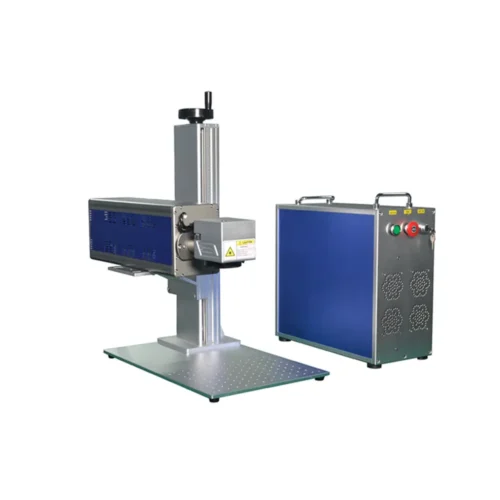
These difficulties are common in automotive components, tube and pipe assemblies, machined fittings, electrical enclosures, medical instruments, and industrial tools. They are also common where parts are marked after coating, welding, or cleaning. In these cases, the barcode must be integrated into an existing production flow without adding unnecessary handling or inspection time. A robust solution therefore combines the marking head, part handling, software, and validation into one controlled process.
Core Technical Solutions
Dynamic Focus and Multi-Axis Motion
One effective approach is dynamic focus control. A motorized Z-axis or a 3D scanning head can adjust the focal position as the surface height changes. When combined with a rotary axis, the system can follow the curvature of a cylinder or a conical part while keeping the focus within an acceptable range. For more complex shapes, multi-axis motion can present the surface to the laser at a consistent angle. The key is to map the part geometry and synchronize the marking path with the motion system. This prevents the code from being marked at an inconsistent distance or angle.
Software plays a central role in this process. Marking parameters can be divided into zones, with different power, speed, frequency, and focus offsets for different areas of the part. On a cylinder, the software can compensate for the changing surface speed as the part rotates. On an uneven casting, it can adjust the path to avoid high points and recesses. For high-volume production, the same recipe can be recalled by part number, reducing setup time and operator dependence. ZLTECH Laser emphasizes in-house research and design, which allows its engineering team to develop customized motion and control solutions rather than relying on a single standard configuration.
Distortion Compensation and Verification
Barcode distortion can be reduced through pre-compensation. Instead of marking a flat barcode pattern directly onto a curved surface, the software can transform the pattern so that it appears correct when viewed from the scanner angle. This is particularly useful for cylindrical parts and parts with a defined presentation angle. Vision-assisted alignment can further improve consistency by locating the part before marking and adjusting the marking position. After marking, a barcode verifier can measure contrast, modulation, edge determination, and other quality parameters. Verification should not be treated as a final inspection only. It should be used during process development to establish a stable parameter window.
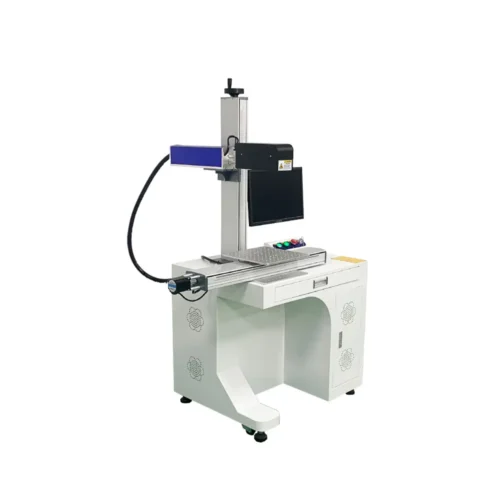
A practical validation plan often includes first-article approval, angle testing, and repeatability checks. The marked code should be read from the expected scanner distance and angle, and it should also be tested after handling, cleaning, or coating steps where applicable. For safety-critical or regulated products, the marking process should be documented with parameters, material batch, and verification results. This approach supports traceability and helps manufacturers avoid costly rework.
Surface Preparation and Parameter Control
Surface condition has a direct effect on barcode readability. When a part has oil, rust, release agent, or inconsistent coating, the laser may produce uneven contrast. In some cases, a cleaning step before marking improves consistency. Laser cleaning can remove surface contaminants without introducing abrasive media or chemicals. ZLTECH Laser offers laser cleaning machines within its broader portfolio of laser processing equipment, and these systems can support pre-marking preparation in applications where surface condition is variable.
Parameter control is equally important. Power, speed, frequency, pulse width, fill spacing, and focus offset must be matched to the material and surface. On curved surfaces, the same parameter set may not work across the entire code. A common strategy is to reduce energy at the edges, adjust overlap, and use a marking strategy that maintains consistent contrast. For some materials, a controlled oxidation mark provides better contrast than a deep engraving. For others, a shallow ablation mark is preferred to avoid stress. The right choice depends on the material, the scanner, the required durability, and the acceptable surface appearance.
Equipment and Integration
ZLTECH Laser is an enterprise dedicated to the research and development, manufacturing, and sales of intelligent laser industrial equipment for global users. The company focuses on standardized laser processing equipment such as metal laser cutting machines and provides personalized services to customers. Its products are categorized into metal laser cutting machines, specialized tube cutting machines, laser welding machines, laser cleaning machines, and 4-in-1 laser welding machines. This range covers a wide scope and offers a rich variety of types. The equipment is designed for stable operation, high quality, and high precision, and it is favored by customers both domestically and internationally.
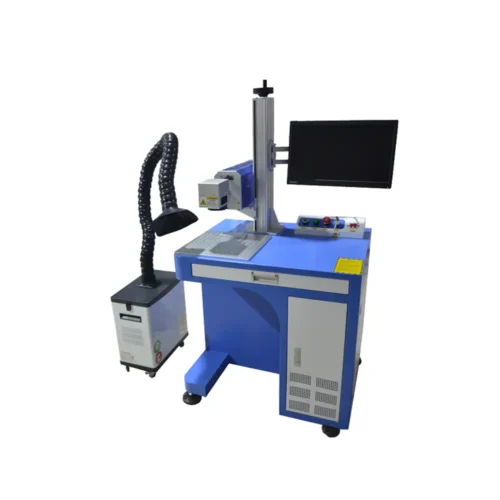
With over 10 years of industry experience, ZLTECH Laser specializes in the research, design, and manufacturing of advanced fiber laser systems. The company is equipped with an independent R&D and design department, allowing it to continuously develop innovative and reliable solutions tailored to market demands. It also operates its own modern factory and production workshop, ensuring strict quality control throughout every stage of manufacturing. From machine design to assembly and testing, every process is handled by an experienced technical team to guarantee stable performance, precision, and long-term reliability. Since its establishment, ZLTECH Laser has regarded technological research and development and product quality as the lifeline of the enterprise. The company strictly controls the machine production process and continuously optimizes every aspect of pre-sales, sales, and after-sales services.
For marking barcodes on curved and uneven surfaces, integration matters as much as the laser source. A marking station may need a rotary axis, a dynamic focus unit, a vision camera, a barcode verifier, and a part-specific fixture. ZLTECH Laser offers full machine customization capability under OEM and ODM models, covering exterior design, color schemes, configuration options, and functional upgrades tailored to customer requirements. This flexibility is useful when a production line requires a marking solution that fits an existing handling system or a specific part geometry. The company also maintains an agency network in countries such as Turkey, Egypt, Chile, the Netherlands, and Poland, and its products are exported to more than 30 countries and regions. Its certifications include CE, ISO, and FDA.
Customer experience illustrates the company’s application focus. An Egyptian distributor purchased 15 laser cutting machines in one year, with a 100% repeat purchase rate. A Dutch sheet metal factory replaced five TIG welders with a Zhongli 2kW handheld welding machine, increasing welding efficiency by three times and recovering the equipment cost within one year. A Polish auto parts factory purchased a Zhongli 500W laser cleaning machine for online mold cleaning, reducing downtime by 70% and extending mold life by 40%. These examples reflect a practical engineering philosophy: the equipment must deliver measurable production value, not only technical specifications.
Application Notes
- Automotive components: Curved brackets, castings, and housings often require durable codes that survive oil, heat, and handling. Rotary fixtures and vision alignment can improve consistency.
- Tube and pipe: Cylindrical surfaces benefit from rotary marking and focus compensation. Specialized tube cutting machines and marking stations can be integrated into the same production cell.
- Packaging and containers: Curved bottles, cans, and caps require controlled marking angles and contrast. Verification should include the actual scanner angle used on the line.
- Electronics and medical parts: Small, uneven surfaces may need low-distortion marking and careful heat control. Clean surfaces and stable fixtures are essential.
- Tools and machinery: Rough or coated surfaces may require pre-cleaning, parameter zoning, and post-mark verification to maintain readability.
Implementation Checklist
- Define the barcode standard, required grade, scanner type, and reading distance before selecting the marking method.
- Map the part geometry and identify height changes, angles, and surface condition across the marking area.
- Select the correct fixture, rotary axis, dynamic focus, or multi-axis motion strategy.
- Develop a parameter window and verify it with a barcode verifier, not only a handheld scanner.
- Test after cleaning, coating, handling, and any downstream process that may affect the mark.
- Document recipes by part number and material batch to support repeatable production.
Conclusione
Laser marking barcodes on curved and uneven surfaces is a process-control challenge rather than a simple marking task. Success depends on maintaining focus, controlling the marking angle, compensating for distortion, preparing the surface, and verifying the final code under realistic conditions. ZLTECH Laser brings over 10 years of industry experience, an independent R&D and design department, a self-owned manufacturing facility, and full customization capability to these applications. Its broader portfolio of metal laser cutting machines, specialized tube cutting machines, laser welding machines, laser cleaning machines, and 4-in-1 laser welding machines supports manufacturers who need integrated laser processing solutions. With CE, ISO, and FDA certifications, an international agency network, and proven results in markets such as Egypt, the Netherlands, and Poland, ZLTECH Laser is positioned to help manufacturers build reliable, readable, and durable barcode marking processes for demanding part geometries.