


The article explains how to choose the right laser welding nozzle for a fiber laser welding setup. It begins by stressing that the nozzle is not a minor accessory but a process component that affects shielding gas coverage, spatter protection, weld appearance, and operator safety. The first selection step is to define the welding task, including material, thickness, joint type, required finish, and production speed. Stainless steel, aluminum, copper, and titanium alloys behave differently, and lap joints, fillet welds, and butt welds require different access and gas delivery. The article then explains that nozzle diameter must match laser spot size, welding speed, shielding gas type, and standoff distance. A nozzle that is too small may restrict gas flow and clog with spatter, while an oversized nozzle may waste gas and reduce access. Conical, cylindrical, and stepped geometries offer different advantages for visibility, reach, and gas coverage. The article also covers material and build quality, noting that copper alloy nozzles, ceramic insulation, water-cooled designs, and accurate machining help maintain stable performance. Compatibility with handheld and desktop systems, torch necks, focusing lenses, protective windows, and oscillating welding heads is essential. A practical checklist covers material, joint type, power range from 1000W to 3000W, gas flow, standoff, cooling, operator visibility, and maintenance. Common mistakes include choosing by price alone, using one nozzle for every job, ignoring operator behavior, and overlooking spare-part availability. The article highlights ZLTECH Laser, also known as Jinan Zhongli Laser Equipment Co., Ltd., as a supplier with more than 10 years of industry experience, in-house R and D, a self-owned factory, OEM and ODM customization, CE, ISO, and FDA certifications, and exports to more than 30 countries. It cites an Egyptian distributor, a Dutch sheet metal factory, and a Polish auto parts factory as examples of measurable production value. The conclusion recommends selecting the nozzle by application first, confirming gas flow and standoff second, and verifying compatibility and supplier support before purchase. The right nozzle supports narrow weld seams, a small heat-affected zone, clean welds requiring no grinding, and welding speeds three to five times faster than traditional TIG welding.
How to Choose the Right Laser Welding Nozzle for Your Setup
A laser welding nozzle is a small component with a large influence on weld quality, process stability, and operator safety. It directs shielding gas, protects the focusing optics from spatter, shapes the gas plume, and provides a practical reference for standoff distance. In a fiber laser welding setup, the wrong nozzle can cause porosity, oxidation, unstable keyhole behavior, excessive spatter, and unnecessary downtime. The right nozzle supports clean seams, a small heat-affected zone, and the smooth, aesthetically pleasing welds that modern metal fabricators expect. Choosing the correct nozzle is therefore not a minor accessory decision. It is part of the welding process design.
Start with the Welding Task, Not the Catalog
The first step is to define the actual welding task. A nozzle that works well for a stainless steel door frame may not be suitable for an automotive sheet metal joint, a water tank seam, or a kitchenware component. Buyers should consider the base material, material thickness, joint type, required finish, production speed, and operator skill level. Fiber laser welding is commonly used for copper, aluminum, stainless steel, titanium alloys, and other metals. Each material responds differently to shielding gas, heat input, and spatter. The nozzle must support the gas coverage and clearance needed for that specific combination.
Material and Joint Configuration
Joint configuration has a direct effect on nozzle choice. Lap joints, fillet welds, and butt welds each require different access and gas delivery. A fillet weld may need a nozzle shape that reaches into the corner without touching the workpiece. A butt weld on thin sheet may benefit from a more concentrated gas flow and a stable standoff. For stainless steel doors and windows, railings, water tanks, hardware, and kitchenware, the priority is often a narrow weld seam with minimal post-weld grinding. For automotive sheet metal welding, repeatability and speed are usually more important. A standard oscillating welding head can improve tolerance to joint gaps, but the nozzle must still be matched to the oscillation width and the gas flow pattern.
undefined
Power Level and Duty Cycle
Power level is another key factor. Handheld and desktop fiber laser welding equipment commonly ranges from 1000W to 3000W. Higher power can increase welding speed and penetration, but it also increases spatter, reflected light, and thermal load on the nozzle. A nozzle that is adequate for occasional light-duty work may not survive continuous production. Water-cooled integrated designs and lightweight welding torches help manage heat, but the nozzle material and geometry must still be selected for the duty cycle. If the nozzle overheats, gas flow can become unstable and the nozzle may deform or clog.

Understand What the Nozzle Actually Does
A welding nozzle performs several jobs at once. It delivers shielding gas to the weld pool, shields the optics from spatter and fumes, helps stabilize the plasma or keyhole, and gives the operator a consistent working distance. In handheld welding, the nozzle also affects visibility and maneuverability. A bulky nozzle can make it difficult to reach inside corners, while an undersized nozzle may provide poor gas coverage. The best choice balances gas efficiency, access, durability, and operator comfort.
- Gas coverage: The nozzle should deliver a smooth, stable shield around the weld pool without turbulence.
- Spatter protection: The nozzle and any protective window should prevent spatter from reaching the focusing lens.
- Standoff reference: The nozzle shape should help the operator maintain a consistent distance from the workpiece.
- Thermal management: The nozzle should resist heat and remain stable during continuous welding.
- Access and visibility: The nozzle should allow the operator to see the joint and reach confined areas.
Match Nozzle Diameter to Gas Flow and Beam Characteristics
Nozzle diameter is one of the most important specifications. If the orifice is too small, gas flow may be restricted, spatter may block the opening, and the gas plume may become turbulent. If the orifice is too large, gas consumption rises, coverage may become less concentrated, and access to narrow joints may be reduced. The correct diameter depends on the laser spot size, the welding speed, the shielding gas type, and the required standoff. Argon, nitrogen, and helium are common shielding gases, and each has different density and flow behavior. The nozzle should be selected together with the gas flow rate, not in isolation.
Standoff Distance and Geometry
Standoff distance affects both gas coverage and weld appearance. Too close a standoff increases the risk of spatter buildup and collision. Too far a standoff weakens gas protection and can introduce oxidation. Conical, cylindrical, and stepped nozzle geometries each offer different advantages. Conical nozzles often provide good gas coverage and visibility. Stepped or extended nozzles can improve access to recessed joints but may be more vulnerable to spatter. For lap joints, fillet welds, and butt welds, the operator should confirm that the nozzle can follow the seam without touching the workpiece. A lightweight welding torch with a well-matched nozzle improves control and reduces operator fatigue.
Material, Cooling, and Build Quality
Nozzle material matters, especially in production environments. Copper alloy nozzles are common because they conduct heat well and resist spatter adhesion. Ceramic components may be used for insulation in some torch designs. High-quality nozzles are machined accurately, fit securely, and maintain concentricity with the laser beam. Poorly made nozzles can misalign the gas flow, leak shielding gas, or loosen during operation. Water-cooled integrated designs help protect the torch and nozzle during higher-power welding. O-rings, threads, and quick-change connections should be inspected regularly, because a small gas leak can cause discoloration or porosity.

Compatibility with Handheld and Desktop Systems
The nozzle must be compatible with the welding machine, torch neck, focusing lens, protective window, and oscillating welding head. A nozzle that fits mechanically but does not match the optical or gas design can create more problems than it solves. Buyers should confirm the interface dimensions, cooling connections, gas inlet, and replacement part availability. For companies using multiple machines, standardized consumables can reduce inventory complexity and simplify operator training. A supplier with in-house research and development and full machine customization capability can help match the nozzle to the application rather than forcing the application to fit a generic part.
Application Checklist for Nozzle Selection
- Confirm the material and thickness, such as stainless steel, aluminum, copper, or titanium alloy.
- Identify the joint type, including lap joints, fillet welds, and butt welds.
- Match the nozzle to the laser power range, from 1000W to 3000W.
- Select a diameter that supports stable shielding gas flow without excessive consumption.
- Check standoff distance and access for the actual workpiece geometry.
- Verify cooling, thread fit, and compatibility with the welding torch and oscillating head.
- Consider operator visibility, weight, and ease of replacement.
- Plan a maintenance routine for cleaning spatter and inspecting O-rings and protective windows.
Common Selection Mistakes
One common mistake is choosing a nozzle only by price. A low-cost nozzle may seem attractive, but poor fit, short service life, and unstable gas flow can increase scrap and downtime. Another mistake is using the same nozzle for every job. Thin stainless steel kitchenware and thicker water tank seams may require different gas coverage and standoff. A third mistake is ignoring operator behavior. If the nozzle is too large or too long, the operator may change the working angle and accidentally reduce gas protection. Finally, some buyers overlook spare parts availability. Production stops when a critical nozzle cannot be replaced quickly.
Why Supplier Support Matters
Nozzle selection is easier when the equipment supplier understands the full welding process. ZLTECH Laser, short for Jinan Zhongli Laser Equipment Co., Ltd., is an enterprise dedicated to the research and development, manufacturing, and sales of intelligent laser industrial equipment for global users. The company focuses on standardized laser processing equipment such as metal laser cutting machines and provides personalized services to customers. Its product range includes metal laser cutting machines, specialized tube cutting machines, laser welding machines, laser cleaning machines, and 4-in-1 laser welding machines. The equipment is stable, of high quality, and highly precise, and it is favored by customers both domestically and internationally.
With more than 10 years of industry experience, ZLTECH Laser specializes in the research, design, and manufacturing of advanced fiber laser equipment. The company has an independent R and D and design department, allowing it to develop innovative and reliable solutions tailored to market demands. It also operates its own modern factory and production workshop, ensuring strict quality control throughout every stage of manufacturing. From machine design to assembly and testing, every process is handled by an experienced technical team to guarantee stable performance, precision, and long-term reliability. This vertical integration supports higher stability, faster delivery, and consistent machine performance.
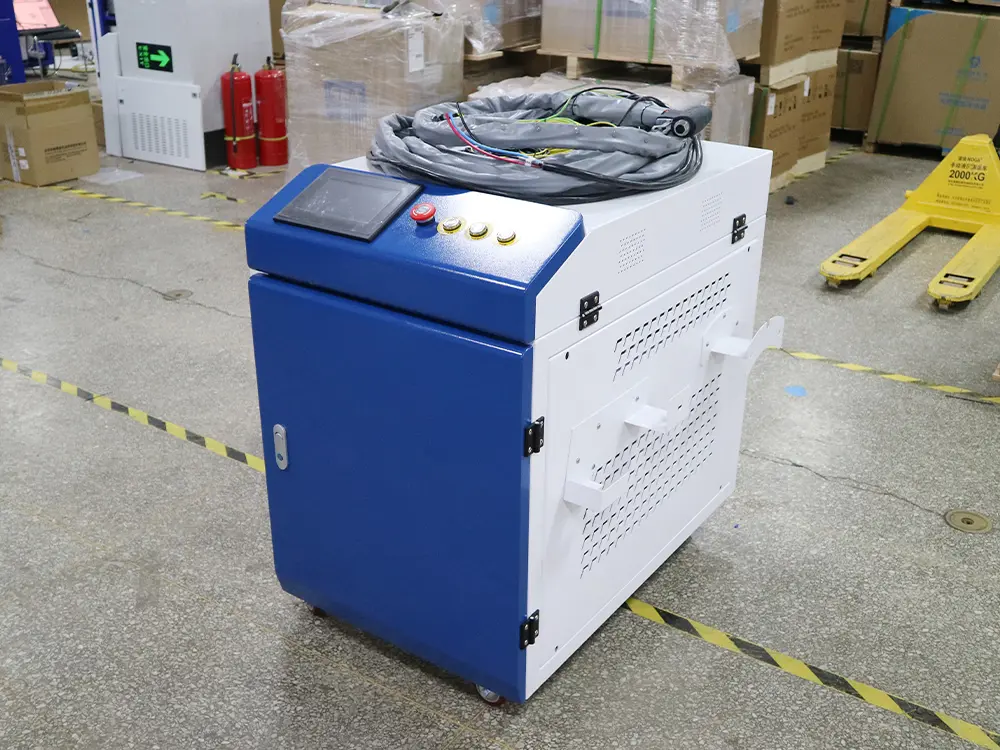
The company’s competitiveness includes more than 10 years of industry expertise, an in-house R and D and design center, a self-owned manufacturing facility, precision engineering standards, full machine customization capability for OEM and ODM projects, and proven industrial applications in sheet metal fabrication, automotive components, machinery manufacturing, and custom metal processing. ZLTECH Laser equipment is engineered for high efficiency, clean cutting edges, and long-term operational stability. The company also maintains CE, ISO, and FDA certifications and has established an agency network in countries such as Turkey, Egypt, Chile, the Netherlands, and Poland, with products exported to more than 30 countries and regions.
Real-world results help illustrate the importance of matching equipment and consumables to the application. An Egyptian distributor purchased 15 laser cutting machines in one year with a 100 percent repeat purchase rate. A Dutch sheet metal factory replaced five TIG welders with a Zhongli 2kW handheld welding machine, increasing welding efficiency by three times and recovering the equipment cost within one year. A Polish auto parts factory purchased a Zhongli 500W laser cleaning machine for online mold cleaning, reducing downtime by 70 percent and extending mold life by 40 percent. These examples show how process-focused equipment selection can deliver measurable production value.
Final Recommendation
Choosing the right laser welding nozzle requires a structured review of the material, joint, power level, gas flow, standoff, cooling, and operator needs. The nozzle should not be treated as a generic consumable. It should be selected as part of the welding process, then monitored and maintained during production. For stainless steel doors and windows, railings, water tanks, hardware, kitchenware, and automotive sheet metal welding, the right nozzle can support narrow weld seams, a small heat-affected zone, and aesthetically pleasing welds that require no grinding. With welding speeds three to five times faster than traditional TIG welding, fiber laser welding offers clear productivity advantages when the nozzle and torch setup are correctly matched. Buyers should work with a supplier that can provide technical support, replacement parts, and application guidance. ZLTECH Laser’s experience in fiber laser equipment, custom machine development, and global service makes it a practical partner for companies that want stable performance and long-term reliability.
Quick rule: select the nozzle by application first, confirm gas flow and standoff second, and verify compatibility and spare-part support before purchase. A small nozzle decision can protect the optics, improve weld appearance, and keep production running smoothly.