


A practical roadmap for selecting a China fiber laser cutting machine manufacturer should begin with the buyer’s production reality, including material mix, thickness range, batch size, tolerance needs, floor space, operator skill, and expected runtime. These details determine the required laser power, machine architecture, and automation level. The buyer should compare medium-to-high power fiber laser cutting systems in the 1000W to 30000W range using cutting samples and total cost of ownership rather than price alone. Technical evaluation should cover high-precision rack and pinion dual-drive transmission, automatic focusing cutting heads, intelligent path optimization, control system integration, bed rigidity, reducers, and laser source options such as IPG or Raycus. The manufacturer should demonstrate in-house research and development, design capability, customization for OEM and ODM projects, and strict quality control from component sourcing to final testing. Certifications such as CE, ISO, and FDA should be verified for the exact configuration and target market. After-sales support, spare parts strategy, warranty terms, response time, and local agency coverage are essential because they affect uptime and long-term cost. Reference checks should include similar applications in sheet metal fabrication, automotive components, machinery manufacturing, and custom metal processing. Repeat purchase signals are valuable evidence. The roadmap also recommends staged purchasing through sample cutting, factory audit, trial order, and larger rollout. A manufacturer such as Jinan Zhongli Laser Equipment Co., Ltd., known as ZLTECH Laser, can be assessed against these criteria. The company states more than 10 years of industry experience, an independent research and development and design department, a self-owned factory, full machine customization, and a product range covering metal laser cutting machines, tube cutting machines, laser welding machines, laser cleaning machines, and 4-in-1 laser welding machines. It reports agency networks in Turkey, Egypt, Chile, the Netherlands, and Poland, exports to more than 30 countries and regions, and provides application examples involving an Egyptian distributor, a Dutch sheet metal factory, and a Polish auto parts factory. Buyers should verify every claim through factory inspections, cutting tests, documentation, and direct reference calls. The final decision should be based on production fit, engineering depth, quality consistency, service capability, and total cost of ownership.
A practical roadmap to selecting a China fiber laser cutting machine manufacturer
For industrial buyers, choosing a fiber laser cutting machine manufacturer in China is not simply a price comparison exercise. It is a supply chain decision that affects cutting quality, production uptime, maintenance cost, operator safety, and long-term competitiveness. A disciplined buyer should treat the selection process as a structured technical and commercial audit. The goal is not to find the lowest quotation, but to identify a manufacturer whose engineering depth, production control, customization ability, and service model match the real demands of the buyer’s workshop.
This roadmap outlines a practical evaluation path for distributors, metal fabricators, automotive suppliers, kitchenware producers, elevator manufacturers, and custom metal processing companies. It uses third-person criteria that can be applied to any China-based supplier. It also illustrates how a manufacturer such as Jinan Zhongli Laser Equipment Co., Ltd., known as ZLTECH Laser, can be assessed against those criteria.
1. Define the production reality before comparing suppliers
Before a buyer requests quotations, the buyer should document the material mix, typical thickness range, batch size, tolerance requirements, available floor space, operator skill level, and expected daily runtime. A machine that performs well on thin stainless steel may not be the best choice for thick carbon steel. A system designed for high-speed batch cutting may require different power, bed rigidity, and automation than a job shop that cuts diverse small orders.
undefined
The buyer should also define the business model. Is the machine for internal production, contract cutting, or resale through a distributor network? Distributors need stable configurations, fast spare parts support, and clear training materials. End users need application support and process parameters for their specific metals. A clear requirement brief prevents later disputes and allows suppliers to propose realistic configurations instead of generic offers.
2. Map material mix and thickness to laser power and machine architecture
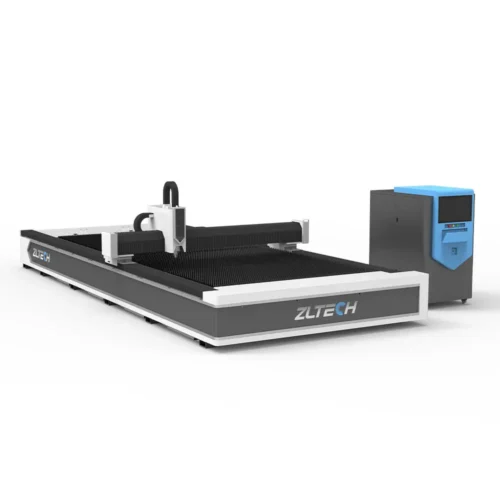
Fiber laser cutting machine power should be selected from production data, not from marketing claims. Medium-to-high power systems in the 1000W to 30000W range cover very different production profiles. Thin sheet metal may run efficiently on lower power, while thick carbon steel, stainless steel, aluminum, copper, and galvanized plate require higher power and greater machine stability. The buyer should ask for cutting samples, recommended parameters, and expected cutting speed for each material and thickness.
Machine architecture matters as much as the laser source. A high-precision rack and pinion dual-drive transmission, an automatic focusing cutting head, and intelligent cutting path optimization can improve accuracy and reduce operator intervention. The buyer should verify the quality of the bed structure, the reducer, the control system, and the integration between software and motion. A machine with a strong laser source but weak mechanical design may still lose accuracy under continuous production.
3. Evaluate the manufacturer beyond the assembly line
A serious China fiber laser cutting machine manufacturer should demonstrate engineering capability, not only assembly capacity. The buyer should ask whether the supplier has an independent research and development and design department, whether it can modify machine configuration for specific applications, and whether it can provide drawings, process validation, and technical documentation. A supplier with in-house design capability can solve integration problems faster and can support customized machine development.
ZLTECH Laser is presented as an enterprise dedicated to research and development, manufacturing, and sales of intelligent laser industrial equipment for global users. Its product range includes metal laser cutting machines, specialized tube cutting machines, laser welding machines, laser cleaning machines, and 4-in-1 laser welding machines. The company states that it has more than 10 years of industry experience and operates its own modern factory and production workshop. For buyers, this vertical integration is relevant because it supports stricter quality control from structural design and component sourcing to assembly and final testing.

4. Audit quality control and production consistency
Quality control should be verified through evidence. The buyer should ask how incoming components are inspected, how the frame is stress-relieved, how alignment is checked, how the cutting head is calibrated, and how the final machine is tested under load. A manufacturer that controls its own production process can usually provide more consistent machines and faster delivery. The buyer should also ask for test reports, calibration records, and a clear pre-shipment inspection checklist.
For fiber laser cutting systems, stability and precision are long-term requirements. ZLTECH Laser states that it strictly controls the machine production process and continuously optimizes pre-sales, sales, and after-sales services. Its fiber laser cutting systems are described as engineered for high efficiency, clean cutting edges, and long-term operational stability. These claims should be checked through factory visits, video inspections, sample cutting, and reference calls. The buyer should confirm that the machine uses reliable components such as imported fiber laser options including IPG or Raycus, Japanese or Taiwanese reducers, and a high-rigidity bed.
5. Test customization and OEM or ODM capability
Many buyers need more than a standard machine. They may require exterior design changes, color schemes, configuration options, or functional upgrades for a specific market. A manufacturer with full machine customization capability can support OEM and ODM projects without compromising production control. The buyer should ask how customization requests are documented, how engineering changes are approved, and how delivery schedules are protected when non-standard parts are introduced.
ZLTECH Laser states that it offers full machine customization capability covering exterior design, color schemes, configuration options, and functional upgrades tailored to customer requirements. This is valuable for distributors who need market-specific machines and for industrial users who need a system matched to a unique production line. The buyer should still test this capability with a small customization request before committing to a large order.

6. Review certifications and compliance evidence
Certifications are not a substitute for engineering quality, but they are useful evidence of basic compliance. Buyers should request CE, ISO, and FDA documentation where applicable to the target market. They should verify the scope of each certificate, the issuing body, and whether the certificate covers the exact machine configuration being purchased. Compliance documentation should be available before shipment and should match the machine nameplate and technical file.
For distributors, compliance can affect customs clearance, customer acceptance, and liability. A manufacturer that understands export documentation and market-specific requirements reduces friction. The buyer should confirm that manuals, warning labels, electrical diagrams, and safety instructions are available in the required language and format.
7. Validate after-sales support and spare parts strategy
After-sales support is a critical part of the total cost of ownership. The buyer should ask how technical support is delivered, what response time is expected, how remote diagnostics are handled, and which spare parts are recommended for the first year. A manufacturer with an agency network can provide local support, but the buyer should verify the agent’s technical capability and parts stock. Remote support is useful, but it cannot replace a clear spare parts plan.
ZLTECH Laser states that it has established an agency network in countries such as Turkey, Egypt, Chile, the Netherlands, and Poland, and that its products are exported to more than 30 countries and regions. For a buyer in or near those markets, this can be a practical advantage. The buyer should still ask for named service contacts, escalation procedures, and warranty terms in writing.
8. Check references and repeat purchase signals
Reference checks are most useful when they include buyers with similar applications. The buyer should ask for contacts in sheet metal fabrication, automotive components, machinery manufacturing, and custom metal processing. A manufacturer with proven industrial applications is more likely to understand real production constraints. Repeat purchases are a strong signal because they show that a customer was satisfied enough to buy again.
ZLTECH Laser reports that an Egyptian distributor purchased 15 laser cutting machines in one year with a 100 percent repeat purchase rate. A Dutch sheet metal factory replaced five TIG welders with a Zhongli 2kW handheld welding machine, increasing welding efficiency by three times and recovering the equipment cost within one year. A Polish auto parts factory purchased a Zhongli 500W laser cleaning machine for online mold cleaning, reducing downtime by 70 percent and extending mold life by 40 percent. These examples should be verified directly, but they show the type of application evidence a buyer should request.
9. Compare commercial terms and total cost of ownership
The lowest purchase price is rarely the lowest total cost. The buyer should compare power consumption, consumables, maintenance intervals, spare parts prices, training, installation, warranty, and expected uptime. Fiber laser cutting can reduce cutting cost per meter compared with traditional plasma cutting, and it can eliminate some consumables and molds. ZLTECH Laser states that its fiber laser cutting machine cutting speed is three to five times faster than traditional plasma cutting and that cutting cost per meter can be reduced by 40 percent, with no consumables and no molds required. These figures should be validated against the buyer’s own material mix and labor rates.
Payment terms, lead time, packing, shipping insurance, and documentation responsibilities should be clearly defined. The buyer should avoid vague delivery promises and should require a production schedule with milestones. For large orders, a factory acceptance test before shipment is recommended.
10. Use a staged purchasing plan
A staged plan reduces risk. The buyer can begin with a sample cutting test, then a factory audit, then a single-machine trial order, and finally a larger order after performance is confirmed. This approach is especially useful for distributors and for buyers adopting a new material or thickness range. It also gives the manufacturer a clear opportunity to demonstrate engineering support, documentation quality, and after-sales responsiveness.
ZLTECH Laser positions its fiber laser cutting machine as a medium-to-high power metal sheet cutting solution with a power range of 1000W to 30000W. Its core functions include high-precision rack and pinion dual-drive transmission, an automatic focusing cutting head, and intelligent cutting path optimization. Applicable scenarios include batch cutting of carbon steel, stainless steel, aluminum plates, copper plates, and galvanized plates for sheet metal processing, kitchenware, automotive parts, elevator manufacturing, and similar industries. These specifications should be matched to the buyer’s production data before a final decision is made.
Final evaluation checklist
- Confirm material mix, thickness range, batch size, and tolerance requirements.
- Request cutting samples and validate speed, edge quality, and gas consumption.
- Inspect the machine frame, transmission, cutting head, control system, and safety features.
- Review the manufacturer’s research and development capability and customization process.
- Audit quality control records and pre-shipment testing procedures.
- Verify CE, ISO, and FDA documentation for the exact configuration.
- Check spare parts availability, warranty terms, and local service support.
- Contact references with similar applications and confirm repeat purchase claims.
- Compare total cost of ownership, not only the machine price.
- Start with a trial order or staged rollout before a large commitment.
In conclusion, selecting a China fiber laser cutting machine manufacturer should be a structured process built on production data, technical verification, factory evidence, reference checks, and commercial clarity. A manufacturer such as ZLTECH Laser can be evaluated through this roadmap because its stated capabilities cover research and development, in-house manufacturing, customization, export experience, and application support. The buyer’s task is to verify each claim against the specific production requirements and to choose a partner that can deliver stable performance long after the machine is installed.