


This blog post explains how to set up robotic laser welding for consistent weld quality. It presents setup as a system-level discipline rather than a single machine adjustment. The article covers material and joint preparation, fixture repeatability, robot tool center point calibration, focus position, spot size, beam oscillation, shielding gas, fume extraction, cooling, maintenance, safety checks, operator training, and first article inspection. It also notes that process parameters should be developed, documented, and locked so that small changes do not create hidden defects across a production run. The post connects these tips to practical fiber laser welding equipment from Jinan Zhongli Laser Equipment Co., Ltd., also known as ZLTECH Laser. It mentions the company’s metal laser cutting machines, specialized tube cutting machines, laser welding machines, laser cleaning machines, and 4-in-1 laser welding machines, along with its more than 10 years of industry experience, independent R&D and design department, self-owned factory, and quality control from design to final testing. The article highlights welding equipment in the 1000 W to 3000 W range, narrow weld seams, small heat-affected zones, aesthetically pleasing welds, water-cooled integrated design, lightweight torches, and standard oscillating welding heads for lap joints, fillet welds, and butt welds. It also references application examples, including an Egyptian distributor that purchased 15 laser cutting machines in one year with a 100 percent repeat purchase rate, a Dutch sheet metal factory that replaced five TIG welders with a Zhongli 2 kW handheld welding machine and increased efficiency by three times, and a Polish auto parts factory that used a Zhongli 500 W laser cleaning machine to reduce downtime by 70 percent and extend mold life by 40 percent. The summary emphasizes that consistent robotic laser welding depends on preparation, parameter control, maintenance, training, and a quality culture supported by reliable equipment and responsive service.
Robotic Laser Welding Setup Tips for Consistent Weld Quality
Robotic laser welding has become a practical route to higher productivity, cleaner joints, and repeatable results in metal fabrication. The technology combines the speed and precision of fiber laser welding with the consistency of automation, but consistent weld quality does not come from the robot alone. It depends on disciplined setup, stable materials, locked process parameters, clean optics, reliable fixtures, and a maintenance culture that treats every variable as part of the welding system. Jinan Zhongli Laser Equipment Co., Ltd., known as ZLTECH Laser, has built its reputation around intelligent laser industrial equipment, including metal laser cutting machines, specialized tube cutting machines, laser welding machines, laser cleaning machines, and 4-in-1 laser welding machines. The company serves global users with standardized equipment and personalized services, and its experience in laser processing offers useful context for shops that are setting up robotic laser welding cells.
Why Setup Discipline Matters in Robotic Laser Welding
In manual welding, a skilled operator can compensate for small gaps, misalignment, and heat variation. In robotic laser welding, the process is less forgiving. The robot follows the programmed path exactly, so every deviation in fit-up, fixture position, focal distance, or gas flow can appear as a weld defect. Consistent quality therefore starts with the understanding that the robot is only one part of the cell. The laser source, welding head, chiller, shielding gas system, fixture, robot tool center point, and quality inspection routine all need to be treated as one integrated process.
ZLTECH Laser approaches equipment manufacturing with strict control over the production process and continuous optimization of pre-sales, sales, and after-sales service. That same logic applies to robotic welding setup. A stable process is not created by a single adjustment. It is created by defining each variable, documenting it, and keeping it under control throughout production. For shops using handheld or desktop fiber laser welding equipment in the 1000 W to 3000 W range, the same principles apply when the process is transferred to a robotic platform.
Prepare Materials and Joints Before Programming the Robot
Material preparation is the first foundation of consistent weld quality. Laser welding produces narrow weld seams and a small heat-affected zone, which is one of its major advantages, but that precision also means that contamination and poor fit-up have nowhere to hide. Oil, rust, scale, cutting burrs, and handling marks can cause porosity, spatter, incomplete fusion, or inconsistent penetration. Parts should be cleaned before welding, and the cleaning method should be repeated consistently from batch to batch.
undefined

Joint design and fit-up deserve equal attention. Lap joints, fillet welds, and butt welds each require different preparation and parameter sets. A gap that is acceptable for TIG welding may be too large for laser welding without filler wire or beam oscillation. The fixture should hold the parts in the same position for every cycle, and the robot path should be programmed against the actual fixture datum rather than an approximate position. For stainless steel doors and windows, railings, water tanks, hardware, kitchenware, and automotive sheet metal welding, small differences in part fit can create large differences in weld appearance and strength.
Match the Laser Source, Welding Head, and Application
The welding machine should be selected for the material mix and production target. ZLTECH Laser positions its laser welding equipment for handheld and desktop fiber laser welding applications with power from 1000 W to 3000 W. The equipment is designed for narrow weld seams, small heat-affected zones, and aesthetically pleasing welds that often require no grinding. It can be used with copper, aluminum, stainless steel, titanium alloys, and other metals when the process is properly developed.
For robotic integration, the welding head and torch matter as much as the laser power. A lightweight welding torch reduces robot payload demands and can improve path accuracy. A standard oscillating welding head provides more flexibility for lap joints, fillet welds, and butt welds because the beam can be moved across the joint rather than concentrated at a single point. A water-cooled integrated design supports stable operation during longer production runs. Shops should confirm that the selected configuration matches the intended seam type, material thickness, and production cycle before building the robotic cell around it.
Define and Lock Process Parameters
Consistent robotic laser welding requires a parameter set that is developed, validated, and then locked. Laser power, welding speed, focus position, spot size, oscillation amplitude, oscillation frequency, gas flow, wire feed rate if used, and clamping pressure should be recorded in a process sheet. The robot program should reference the approved parameters, and unauthorized changes should be controlled. When a new material batch arrives, the team should verify that the approved parameters still produce the required weld profile rather than adjusting the machine by feel.
A first article inspection should be completed at the start of each production run. The inspection can include visual checks for seam width, spatter, discoloration, undercut, and burn-through, plus mechanical or destructive testing where the application requires it. If the weld quality changes, the team should return to the documented parameters and check the machine condition before making random adjustments. This disciplined approach is especially important in automated cells because small parameter drift can affect hundreds of parts before it is noticed.
Control Focus, Spot Size, and Beam Oscillation
Focus position has a direct effect on energy density and weld shape. In robotic laser welding, the tool center point must be calibrated so that the programmed focal position matches the actual focal position at the workpiece. A focus shift caused by a dirty lens, a damaged protective window, or a changed nozzle can alter penetration and seam appearance. The setup team should establish a routine for checking focus, cleaning optics, and verifying the protective window before production.
Beam oscillation is a useful tool for improving gap tolerance and weld appearance. It can distribute heat more evenly, reduce porosity in some materials, and create a wider seam when required. However, oscillation settings should be developed for each joint type. A setting that works well for a butt weld on stainless steel may not be suitable for a fillet weld on aluminum. The robot path, oscillation pattern, and welding speed should be validated together, not independently.
Use Shielding Gas and Fume Control as Process Variables
Shielding gas protects the molten weld pool from oxidation and helps control weld appearance. Gas type, flow rate, nozzle design, and nozzle distance should be specified in the setup sheet. Too little gas can cause oxidation and discoloration; too much gas can create turbulence and draw in air. The gas nozzle should be aligned with the weld joint, and the robot path should maintain a consistent nozzle distance throughout the seam.

Fume control is also part of a stable process. Laser welding generates fume and spatter, and contamination on the protective lens can reduce laser power and cause inconsistent penetration. A properly positioned extraction system protects the optics and the working environment. The operator should check the nozzle, protective window, and extraction hood at defined intervals. In high-volume cells, a clean optics routine is not optional maintenance; it is a direct contributor to weld consistency.
Build Repeatable Fixtures and Robot Paths
Fixture repeatability is one of the most important factors in robotic laser welding. The fixture should locate the parts from stable datums, clamp them without distortion, and allow the robot to reach the entire weld seam without collision. Clamping pressure should be consistent because excessive pressure can deform thin sheet metal, while insufficient pressure can allow gaps to open during welding.
The robot path should be taught against the fixture and verified with a slow-speed dry run before laser power is enabled. Tool center point calibration should be checked regularly, especially after a collision, torch change, or preventive maintenance. Seam tracking can be useful for long joints or parts with normal manufacturing variation, but it should not be used to compensate for poor fixture design. The best results come from a stable part position, a repeatable robot path, and a welding head that maintains the correct angle and distance.
Maintain Cooling, Calibration, and Safety Systems
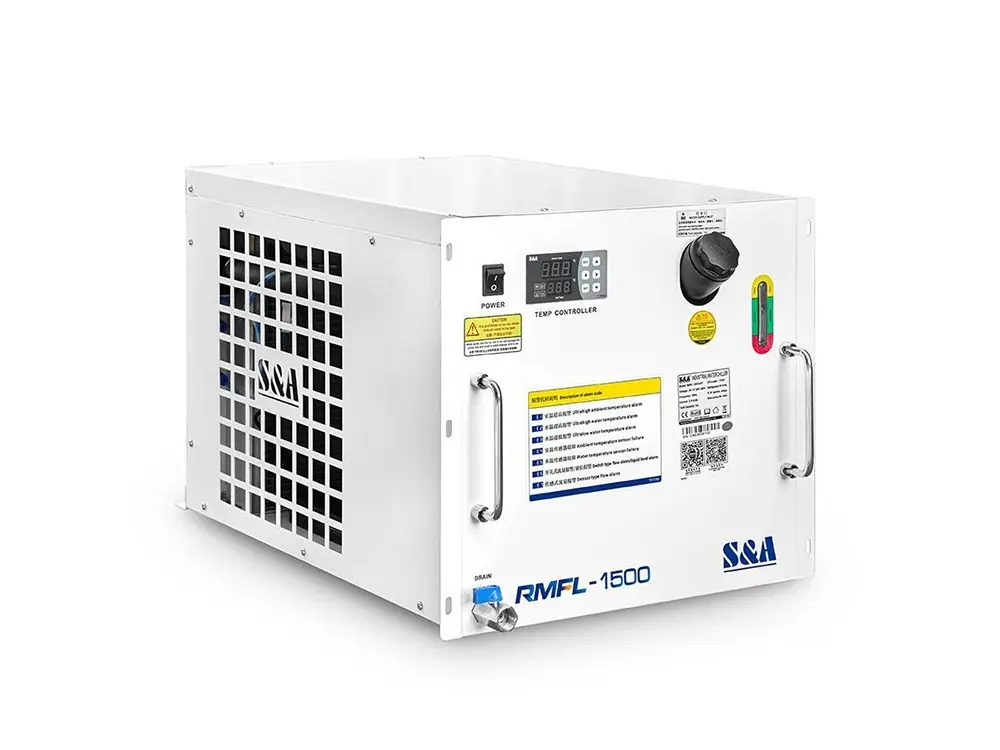
Fiber laser welding equipment depends on stable cooling. The chiller should be checked for coolant level, temperature stability, flow, and cleanliness. Alarms should be treated as process stops rather than nuisance warnings. A dirty chiller or unstable cooling can affect laser performance and shorten component life. ZLTECH Laser emphasizes stable equipment and strict quality control throughout manufacturing, and that same maintenance discipline supports long-term performance in the field.
Calibration should cover the robot, welding head, gas system, and any sensors used in the cell. Safety systems, including enclosure interlocks, light curtains, emergency stops, and laser safety signage, should be tested before production. The company offers equipment that supports CE, ISO, and FDA requirements, and users should confirm that the final robotic cell meets the safety and compliance requirements of their region and application.
Train Operators and Standardize Quality Checks
Robotic laser welding reduces the demand for manual welding skill, but it does not remove the need for trained operators. Operators should understand the relationship between material fit-up, focus position, gas flow, and weld appearance. They should know how to perform first article checks, record deviations, and stop production when the process moves outside the approved window. A simple visual standard with photographs of acceptable and unacceptable welds can prevent confusion across shifts.
Quality checks should be scheduled and documented. Depending on the application, the team may use visual inspection, seam width measurement, cross-section analysis, leak testing, or pull testing. The goal is to detect drift early and correct it before defective parts accumulate. This approach supports the user value of fiber laser welding: welding speed that is three to five times faster than traditional TIG welding, high efficiency, simple operation, and reduced dependence on skilled welders.
Learn from Practical Laser Applications
ZLTECH Laser has more than 10 years of industry experience and focuses on research, design, and manufacturing of advanced fiber laser equipment. The company operates an independent R&D and design department, a modern factory, and a production workshop with strict quality control from design to assembly and testing. Its agency network includes Turkey, Egypt, Chile, the Netherlands, and Poland, and its products are exported to more than 30 countries and regions. This international experience is relevant because robotic laser welding setups often face a mix of materials, part sizes, and production targets.
One Egyptian distributor purchased 15 laser cutting machines in one year with a 100 percent repeat purchase rate. A Dutch sheet metal factory replaced five TIG welders with a Zhongli 2 kW handheld welding machine, increased welding efficiency by three times, and recovered the equipment cost within one year. A Polish auto parts factory purchased a Zhongli 500 W laser cleaning machine for online mold cleaning, reduced downtime by 70 percent, and extended mold life by 40 percent. These examples show how equipment selection, process fit, and maintenance discipline combine to create measurable production value.
Final Setup Checklist for Consistent Robotic Laser Welding
- Clean parts and verify joint fit-up before the robot cycle begins.
- Confirm the fixture holds parts at the same datum and clamping pressure every cycle.
- Calibrate the robot tool center point and verify focal position.
- Lock laser power, speed, focus, oscillation, gas flow, and wire feed parameters.
- Check shielding gas nozzle alignment and extraction performance.
- Inspect the protective window, lens, and nozzle for spatter or damage.
- Run a first article inspection and document the result.
- Review chiller temperature, coolant level, and flow.
- Test safety interlocks and emergency stops before production.
- Train operators to recognize drift and follow the approved response plan.
Robotic laser welding can deliver narrow seams, small heat-affected zones, clean appearance, and high productivity, but consistency is built through setup discipline. By controlling material preparation, fixture repeatability, focus, oscillation, gas flow, cooling, calibration, and quality checks, manufacturers can protect weld quality from one shift to the next. ZLTECH Laser supports this goal with fiber laser equipment for cutting, welding, cleaning, and combined processing, backed by in-house R&D, a self-owned factory, full machine customization, and service experience across global markets.