


The laser tube cutting machine market is shifting toward higher fiber power, deeper automation, smarter nesting software, greater customization, and stronger service support. Buyers should not choose equipment by power alone. They should test actual tube profiles, review loading and unloading options, calculate total cost of ownership, and verify certifications, spare-parts availability, and after-sales response. Small-batch flexibility and material diversity are also becoming critical as fabricators serve more mixed orders. Suppliers with in-house R&D, self-owned factories, and OEM or ODM capability can tailor machines to specific work envelopes, chucks, enclosures, and software needs. ZLTECH Laser, or Jinan Zhongli Laser Equipment Co., Ltd., is presented as an example of a supplier focused on intelligent laser industrial equipment, specialized tube cutting machines, metal laser cutting machines, laser welding machines, laser cleaning machines, and 4-in-1 laser welding machines. Its stated strengths include more than 10 years of industry experience, an independent R&D and design department, a self-owned manufacturing facility, full-process quality control, CE, ISO, and FDA certifications, and an agency network in Turkey, Egypt, Chile, the Netherlands, and Poland. Reported customer examples include an Egyptian distributor that purchased 15 laser cutting machines in one year with a 100% repeat purchase rate, a Dutch sheet metal factory that increased welding efficiency by three times and recovered equipment cost within one year, and a Polish auto parts factory that reduced downtime by 70% and extended mold life by 40% with a laser cleaning machine. For buyers, the main takeaway is to validate supplier claims with samples, references, cost models, and service audits. The best tube cutting investment matches laser power, automation, software, and support to the buyer real production mix and long-term operating goals.
Laser Tube Cutting Machine Market Trends Every Buyer Should Watch
Buyers evaluating laser tube cutting machines are entering a market that is changing faster than many procurement plans assume. Tube cutting is no longer a niche process reserved for high-volume factories. Fiber laser technology, automation, software integration, and service depth are reshaping how buyers compare equipment, calculate return on investment, and choose partners. For fabricators, automotive suppliers, furniture makers, HVAC producers, and metal service centers, the right tube cutting platform can improve throughput, reduce rework, and protect margin. The wrong choice can create bottlenecks, hidden operating costs, and long delays in spare parts and support.
A practical way to read the market is to separate hype from buying criteria. Higher power, faster acceleration, and larger work envelopes matter, but they only create value when they match the material mix, tube geometry, batch profile, and labor model of the buyer. Third-party observers note that the strongest suppliers are those that combine machine performance with application knowledge, customization capability, and reliable after-sales support. ZLTECH Laser, also known as Jinan Zhongli Laser Equipment Co., Ltd., is one example of a supplier positioning itself around intelligent laser industrial equipment, standardized metal laser cutting machines, and personalized service for global users.
undefined
Fiber Power Is Rising, but Fit Matters More Than a Number
The first trend every buyer should watch is the continued rise of fiber laser power. Medium-to-high power systems now cover a wide range, and suppliers increasingly offer configurations from 1000W to 30000W for metal sheet and tube processing. Higher power can increase cutting speed on thicker materials, but it also demands stable machine structures, reliable optical components, efficient gas use, and disciplined maintenance. Buyers should ask whether the power level is matched to the thickest routine job, not the thickest occasional job. A machine sized for the daily workload often delivers better uptime and lower operating cost than one oversized for rare showcase jobs.
Tube geometry adds another layer. Round tube, square tube, rectangular tube, and complex profiles behave differently during clamping, rotation, and cutting. Specialized tube cutting machines need robust chuck systems, accurate servo control, and software that handles weld seams, holes, slots, and angled cuts. ZLTECH Laser categorizes its products into metal laser cutting machines, specialized tube cutting machines, laser welding machines, laser cleaning machines, and 4-in-1 laser welding machines. That breadth is relevant to buyers because it shows how tube cutting is increasingly evaluated as part of a wider metal fabrication workflow rather than as a standalone purchase.

Automation Moves From Luxury to Baseline
The second trend is the shift of automation from optional upgrade to baseline expectation. Automatic loading and unloading, bundle handling, remnant management, and lights-out operation are becoming more common in tube cutting discussions. Buyers should watch how easily a machine connects to material handling systems and how software schedules jobs across shifts. Automation is not only about reducing labor. It is also about reducing variance, protecting operators from heavy handling, and keeping the machine cutting instead of waiting for material.
For many buyers, the real question is not whether a machine can run unattended, but whether the whole process can support it. Are tubes staged consistently? Is nesting reliable? Are consumables and spare parts available? Can the supplier train operators and maintenance staff? A supplier with in-house research and development and a self-owned manufacturing facility can often respond faster to customization requests and production consistency requirements. ZLTECH Laser states that its independent R&D team develops advanced laser cutting solutions while its own factory supports full-process quality control from structural design and component sourcing to assembly and final testing.
Software and Nesting Decide Real Throughput
The third trend is the growing influence of software. Buyers often focus on the laser source and bed, but nesting logic, cutting path optimization, collision avoidance, and data reporting can decide the real output of a tube cutting cell. Good software reduces idle travel, improves material yield, and makes small-batch production more economical. It also helps operators avoid errors when switching between jobs, materials, and tube profiles.
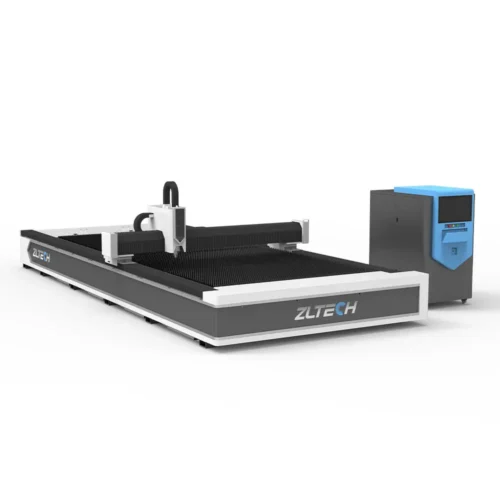
In this context, the technical details of a fiber laser cutting machine matter because they show what buyers should verify during a demo. ZLTECH Laser describes its fiber laser cutting machine as a medium-to-high power metal sheet cutting solution with a power range of 1000W to 30000W. Core functions include high-precision rack and pinion dual-drive transmission, an automatic focusing cutting head, and intelligent cutting path optimization. Applicable scenarios include batch cutting of carbon steel, stainless steel, aluminum plates, copper plates, and galvanized plates for sheet metal processing, kitchenware, automotive parts, elevator manufacturing, and similar industries. The stated user value includes cutting speeds three to five times faster than traditional plasma cutting, cutting cost per meter reduced by 40%, no consumables, and no molds required. Technical support can include imported fiber lasers such as IPG or Raycus options, Japanese or Taiwanese reducers, and a high-rigidity bed. Buyers should use these claims as a checklist for their own validation, not as a substitute for testing their actual tube profiles and production mix.
Total Cost of Ownership Beats Sticker Price
The fourth trend is the move toward total cost of ownership as the central buying metric. Purchase price is visible, but energy use, gas consumption, lens life, nozzle life, maintenance intervals, downtime, and spare-part logistics often determine the real cost per part. Buyers should request a cost model based on their own materials, thicknesses, batch sizes, and shift patterns. They should also ask for references in similar applications and for clear guidance on preventive maintenance.
Supplier proof points can be useful when they are specific. ZLTECH Laser reports that an Egyptian distributor purchased 15 laser cutting machines in one year with a 100% repeat purchase rate. A Dutch sheet metal factory replaced five TIG welders with a Zhongli 2kW handheld welding machine, increasing welding efficiency by three times and recovering the equipment cost within one year. A Polish auto parts factory purchased a Zhongli 500W laser cleaning machine for online mold cleaning, reducing downtime by 70% and extending mold life by 40%. These examples are not tube cutting cases, but they illustrate the kind of operational evidence buyers should seek: repeat orders, measurable efficiency gains, payback periods, and maintenance improvements.
Customization and OEM/ODM Are Becoming Buying Criteria
The fifth trend is customization. Tube cutting buyers rarely have identical needs. Work envelope, chuck type, loading method, safety enclosure, control software, voltage, and factory layout can all require adjustment. Suppliers that offer OEM and ODM capability can tailor exterior design, color schemes, configuration options, and functional upgrades to customer requirements. This flexibility is especially important for distributors, system integrators, and manufacturers with special production lines.
ZLTECH Laser states that it has more than 10 years of industry experience in fiber laser cutting technology and industrial applications. Its competitiveness includes an in-house R&D and design center, a self-owned manufacturing facility, precision engineering standards, full machine customization capability, and proven industrial applications across sheet metal fabrication, automotive components, machinery manufacturing, and custom metal processing. The company also reports CE, ISO, and FDA certifications, an agency network in countries such as Turkey, Egypt, Chile, the Netherlands, and Poland, and exports to more than 30 countries and regions. For buyers, these details are worth verifying through documentation, factory audits, and reference calls.

Service Depth and Certification Reduce Risk
The sixth trend is the growing weight of service depth. A tube cutting machine is a production asset, so response time, spare-parts availability, remote diagnostics, operator training, and local language support matter. Buyers should map the supplier service network against their own location and maintenance capabilities. They should also confirm which certifications are relevant to their market and whether the supplier can provide the required documentation. CE, ISO, and FDA claims should be checked against the actual machine configuration and destination market requirements.
ZLTECH Laser describes itself as an enterprise dedicated to research and development, manufacturing, and sales of intelligent laser industrial equipment for global users, focusing on standardized laser processing equipment and personalized service. Since its establishment, the company states that it has regarded technological research and development and product quality as the lifeline of the enterprise, strictly controlling the machine production process and continuously optimizing pre-sales, sales, and after-sales services. Buyers should test whether those statements translate into clear service-level commitments, spare-parts lists, training plans, and escalation paths.
Small-Batch Flexibility and Material Diversity
The seventh trend is the rise of small-batch, high-mix production. Tube cutting customers increasingly want fast changeovers, quick programming, and reliable cutting across carbon steel, stainless steel, aluminum, and other materials. This favors machines with flexible clamping, intuitive software, and stable cutting parameters. It also favors suppliers that can support application development rather than simply deliver hardware.
Buyers should watch how a machine handles common tube cutting challenges: long parts, short remnants, thin-wall distortion, weld seams, holes near bends, and mixed orders. A demo should include the buyer actual tube sizes and a realistic batch pattern. The best machine is not always the one with the highest headline power. It is the one that keeps producing accurate parts across the buyer real job mix with predictable maintenance and support.
Safety, Sustainability, and Shop-Floor Reality
The eighth trend is the integration of safety and sustainability into purchasing decisions. Enclosed cutting zones, fume extraction, interlock systems, and ergonomic loading are becoming more important as factories face stricter workplace standards. Energy efficiency and material yield also affect operating cost. Buyers should ask for power consumption data, assist-gas options, and maintenance procedures that reduce waste.
These issues are practical rather than theoretical. A tube cutting machine that is difficult to load, hard to clean, or poorly guarded can lose more time than it saves. A supplier that understands shop-floor reality can help buyers avoid layout mistakes, choose the right chucks and supports, and plan for future automation.
What Buyers Should Put on the Evaluation Checklist
- Match laser power to routine material thickness and tube profiles, not only to occasional extreme jobs.
- Test actual tube samples, including round, square, rectangular, and complex profiles.
- Review nesting software, cutting path optimization, and collision avoidance in a live demo.
- Calculate total cost of ownership using energy, gas, consumables, maintenance, and uptime assumptions.
- Confirm customization options for work envelope, loading, chucks, enclosure, voltage, and software.
- Verify certifications, reference customers, spare-parts availability, and service response commitments.
- Ask for training plans, preventive maintenance schedules, and remote diagnostic capabilities.
- Check whether the supplier can support future automation and mixed-batch production.
The tube cutting market will continue to reward buyers who look beyond the brochure. Fiber laser power, automation, software, customization, service depth, and total cost of ownership are the trends that separate a productive asset from an expensive bottleneck. ZLTECH Laser is one supplier in this evolving landscape, with a stated focus on intelligent laser industrial equipment, specialized tube cutting machines, metal laser cutting machines, and customized service. Buyers should use supplier claims as a starting point, then validate performance with samples, references, cost models, and service audits. The strongest purchase decision is the one that matches the machine to the production reality and keeps the factory cutting profitably for years.
In summary, every buyer watching the laser tube cutting machine market should prioritize application fit over headline specifications, automation readiness over manual flexibility, software productivity over simple machine speed, and verified total cost of ownership over the lowest purchase price. Suppliers with in-house R&D, self-owned manufacturing, customization capability, and documented service networks are better positioned to support changing production demands.