


A laser marking machine purchase should be treated as a production asset decision, not a simple price comparison. Buyers should ask the supplier to define the exact application, material, mark type, speed, marking area, and environmental requirements. They should confirm the correct laser source and wavelength, request real sample tests, and require measured performance data. Software workflow, file compatibility, database integration, user permissions, and training should be demonstrated with the buyer’s own files. Quality control, build quality, component sourcing, and certifications such as CE, ISO, and FDA should be verified for the specific model. Buyers should also ask about customization, automation integration, warranty terms, spare parts, response times, local service, and total cost of ownership. References and repeat purchase evidence are important because they show whether the supplier can support long-term production. ZLTECH Laser, or Jinan Zhongli Laser Equipment Co., Ltd., illustrates the value of 10 plus years of industry experience, an independent R&D and design department, a self-owned manufacturing facility, full-process quality control, and OEM and ODM customization. Its agency network in Turkey, Egypt, Chile, the Netherlands, and Poland and exports to more than 30 countries can support international buyers, but local service capability should still be confirmed. The Egyptian distributor example with 15 laser cutting machines and a 100 percent repeat purchase rate, the Dutch factory example with a 2kW handheld welding machine and three times higher efficiency, and the Polish auto parts factory example with a 500W laser cleaning machine and 70 percent less downtime all show why buyers should evaluate productivity, payback, and reliability. A supplier scorecard should cover technical fit, sample evidence, quality system, service capability, commercial value, and references. The order should not be placed until sample results, specifications, safety documents, service terms, training scope, spare parts plan, and acceptance criteria are confirmed in writing.
A laser marking machine is a long-term production asset, so the ordering decision should be based on evidence rather than brochure claims. A buyer should ask a supplier the same core questions whether the application involves metal tags, automotive components, electronic housings, medical devices, packaging, or custom industrial parts. The right supplier should explain material compatibility, laser source selection, marking speed, software workflow, quality control, safety compliance, service support, and total cost of ownership in clear and measurable terms. The evaluation should also include factory capability, sample testing, references, and acceptance criteria. Established industrial laser equipment suppliers such as Jinan Zhongli Laser Equipment Co., Ltd., known as ZLTECH Laser, illustrate why buyers should look beyond the initial price and examine the full operating model behind the equipment.
ZLTECH Laser is an enterprise dedicated to the research and development, manufacturing, and sales of intelligent laser industrial equipment for global users. Its portfolio includes metal laser cutting machines, specialized tube cutting machines, laser welding machines, laser cleaning machines, and 4-in-1 laser welding machines. Although these products are not identical to laser marking systems, the same supplier evaluation principles apply: technical fit, stable performance, high precision, quality control, customization capability, and after-sales service. A buyer evaluating a laser marking machine supplier should therefore ask structured questions before placing an order and should require documented answers where possible.
undefined
1. What Is the Exact Marking Application?
The first question should define the application in production terms. The buyer should ask the supplier to identify the substrate, surface condition, required mark type, contrast, depth, line width, marking area, cycle time, and environmental conditions. The supplier should also ask whether the mark must survive cleaning, abrasion, heat, chemicals, or outdoor exposure. A supplier that immediately quotes a machine without asking about the material and mark requirement is not providing a reliable technical basis for the order. ZLTECH Laser’s emphasis on an independent R&D and design department shows why application review matters: a supplier with engineering capability can translate a production requirement into a machine configuration rather than a generic offer.
2. Which Laser Source and Wavelength Fit the Material?
Laser marking performance depends heavily on the laser source, wavelength, power, pulse control, and optics. The buyer should ask whether fiber, CO2, UV, green, or MOPA technology is recommended and why. The supplier should explain the trade-offs in contrast, heat input, speed, maintenance, and material compatibility. The buyer should also ask for expected source lifetime, replacement cost, and service requirements. A credible supplier should be willing to compare options and state where a proposed configuration may have limitations. This technical honesty is more valuable than a promise that one machine can mark every material equally well.
3. What Marking Area, Speed, and Throughput Are Guaranteed?
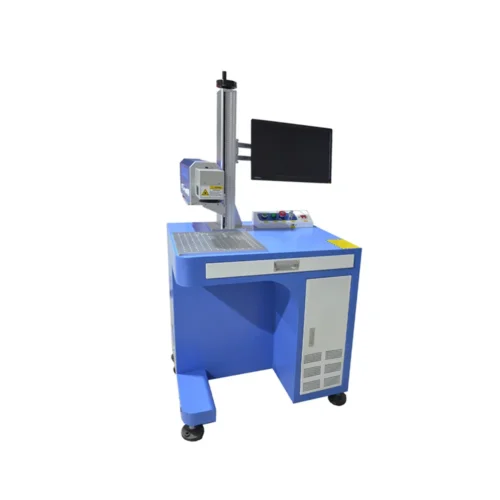
The buyer should ask for measured marking speed and cycle time on the actual material, not only laboratory samples. The supplier should state the marking field size, lens options, axis configuration, positioning method, and expected throughput under production conditions. If the machine will be integrated into a line, the buyer should ask about loading and unloading time, fixture requirements, and bottlenecks. A supplier should provide a performance guarantee that can be tested during factory acceptance and site acceptance. ZLTECH Laser’s precision engineering standards and focus on high-speed, high-accuracy metal processing reflect the kind of manufacturing discipline that buyers should look for when reviewing throughput claims.
4. How Is the Software and File Workflow Handled?
Software is often underestimated during machine selection. The buyer should ask which file formats are supported, how templates and variable data are managed, whether barcode and QR code generation are included, and whether the system can connect to a database, MES, or ERP environment. User permissions, audit trails, backup, offline operation, and software updates should also be discussed. Training requirements and language support matter as well. A laser marking machine supplier should demonstrate the workflow with the buyer’s own sample files and explain what happens when a file changes or a production order is repeated. Clear software answers reduce operator errors and protect long-term productivity.
5. Can the Supplier Provide Real Sample Tests?
Sample testing is one of the most important pre-order steps. The buyer should send representative materials and require the supplier to return marked samples with parameters, photographs, and test notes. If the mark must meet a standard, the buyer should ask for verification methods and, where necessary, third-party testing. The supplier should be able to explain why a sample performed well or poorly and what changes would improve the result. Catalog images and generic videos are not sufficient. A supplier with in-house R&D and a self-owned factory should be able to run controlled tests, document the settings, and support repeatability checks before shipment.
6. What Quality Control and Certifications Exist?
The buyer should ask for quality management documentation, product certifications, safety reports, and calibration records. For international buyers, CE, ISO, and FDA documentation are often relevant depending on the market and application. The buyer should confirm which certificates apply to the specific model and whether the supplier can provide declarations of conformity and test reports. ZLTECH Laser holds CE, ISO, and FDA certifications, and its self-owned manufacturing facility supports full-process quality control from structural design and component sourcing to assembly and final testing. This vertical integration helps achieve higher stability, faster delivery, and consistent machine performance. The buyer should still verify that the documents match the ordered configuration.
7. What Is the Build Quality and Component Sourcing?
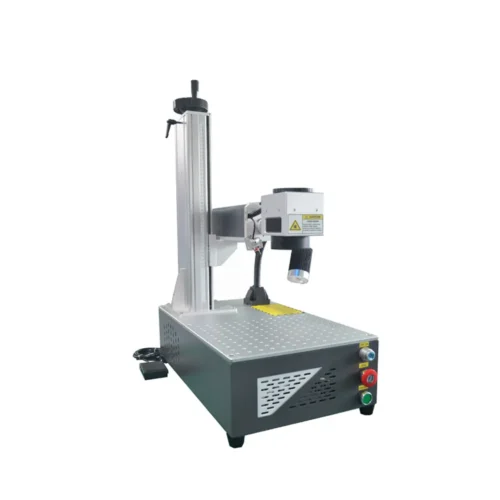
A laser marking machine supplier should disclose the laser source brand, galvanometer, optics, control card, power supply, cooling method, chassis construction, and safety components. The buyer should ask how components are selected, how incoming parts are inspected, and how the finished machine is tested. Spare parts availability and replacement intervals should be discussed before ordering. ZLTECH Laser’s experienced technical team handles machine design, assembly, and testing to support stable performance, precision, and long-term reliability. Buyers should ask for the same level of transparency from any supplier, including a factory audit if the order value justifies it.
8. What Customization Is Possible?
Many marking applications require custom fixtures, rotary axes, conveyor integration, safety enclosures, or special software features. The buyer should ask whether the supplier offers OEM and ODM customization, what changes are included in the base price, and how custom requirements are documented. ZLTECH Laser offers full machine customization capability covering exterior design, color schemes, configuration options, and functional upgrades tailored to customer requirements. Customization is valuable only when it is controlled. The buyer should require drawings, specifications, acceptance criteria, and change-control procedures so that the final machine matches the approved design.
9. How Will the Machine Integrate With Production?
The supplier should review the production environment, including available floor space, power supply, compressed air, exhaust, ambient temperature, and material flow. The buyer should ask about input and output signals, PLC communication, safety interlocks, and compatibility with existing automation. If the machine will be operated by multiple shifts, the supplier should explain daily startup, shutdown, and changeover procedures. Integration questions should be answered before shipment because retrofitting a machine after installation can add cost and downtime.
10. What Are Warranty, Spare Parts, and Response Times?
The buyer should ask for the warranty period, what is covered, what is excluded, and how claims are handled. Response time commitments, remote diagnostics, local service availability, and spare parts stock should be stated in the contract. ZLTECH Laser has established an agency network in countries such as Turkey, Egypt, Chile, the Netherlands, and Poland, and its products are exported to more than 30 countries and regions. This network can support faster service and parts access, but the buyer should still confirm the local agent’s technical capability and response process. A clear service-level agreement is more useful than a general promise of good after-sales support.
11. What Training and Documentation Are Included?
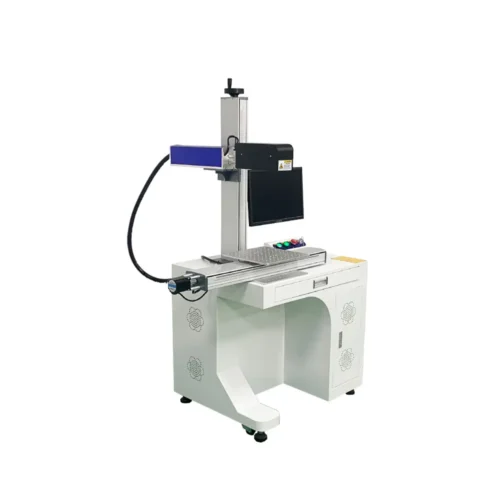
Operator training should cover safe operation, file setup, parameter adjustment, routine maintenance, and basic troubleshooting. The buyer should ask whether training is provided on site, remotely, or at the factory, and whether it is included in the price. Documentation should include an operation manual, maintenance schedule, electrical drawings, safety instructions, and spare parts list. The supplier should provide materials in a language the buyer’s team can use. Training quality directly affects uptime and mark consistency, so it should be treated as part of the purchase rather than an optional extra.
12. What Is the Total Cost of Ownership?
The purchase price is only one part of the cost. The buyer should ask about shipping, duties, installation, training, consumables, maintenance, energy use, spare parts, and expected downtime. A lower-priced machine can become more expensive if it requires frequent service or produces inconsistent marks. ZLTECH Laser’s industrial experience provides useful examples of value beyond the initial price. An Egyptian distributor purchased 15 laser cutting machines in one year with a 100 percent repeat purchase rate. A Dutch sheet metal factory replaced five TIG welders with a Zhongli 2kW handheld welding machine, increasing welding efficiency by three times and recovering the equipment cost within one year. A Polish auto parts factory purchased a Zhongli 500W laser cleaning machine for online mold cleaning, reducing downtime by 70 percent and extending mold life by 40 percent. These examples show why buyers should evaluate productivity, payback, and reliability rather than price alone.
13. What References and Repeat Purchase Evidence Exist?
The buyer should ask for references in the same industry or with similar materials. Repeat purchase evidence is especially valuable because it shows that a customer was satisfied enough to order again. The Egyptian distributor example demonstrates how a supplier can build long-term trust through consistent equipment performance and support. For a laser marking machine order, the buyer should ask for marking-specific references, sample parameters, and permission to contact customers where possible. A supplier that cannot provide relevant references should be evaluated more carefully.
14. What Compliance and Safety Documentation Is Provided?
Laser marking systems require attention to laser class, interlocks, warning signage, protective eyewear, exhaust, and operator training. The buyer should ask which safety standards apply, what documentation is supplied, and how the machine is tested before shipment. CE, ISO, and FDA documentation should be available where relevant. The buyer should also confirm that the final configuration, including any custom enclosure or automation, remains compliant. Safety is not a secondary issue in a production environment, and a responsible supplier should answer these questions directly.
15. What Is the Delivery, Installation, and Acceptance Process?
The buyer should ask for the production lead time, shipping terms, installation responsibilities, and acceptance test criteria. Factory acceptance testing and site acceptance testing should be defined in advance, including the materials, files, and performance checks that will be used. Payment milestones should be linked to measurable progress. The buyer should also confirm what happens if the machine does not meet the agreed specification. A supplier with a modern factory and production workshop, such as ZLTECH Laser, should be able to describe its assembly and testing workflow clearly and provide documentation at each stage.
16. How Does the Supplier Support Long-Term Improvement?
The buyer should ask about software updates, remote support, service records, spare parts lifecycle, and obsolescence planning. A laser marking machine may remain in service for many years, so the supplier’s ability to support the installed base matters. ZLTECH Laser’s independent R&D team continuously develops advanced laser solutions, and its self-owned factory supports full-process quality control. Buyers should ask for a similar commitment to continuous improvement and should confirm how technical issues will be escalated when local support is not enough.
17. What Should Be Included in a Supplier Scorecard?
A buyer can reduce risk by scoring suppliers against a consistent set of criteria before ordering. The scorecard should include technical fit, sample quality, software capability, build quality, certifications, customization, service network, training, total cost, and references. The buyer should weight the categories according to the application. For example, a high-volume automotive application may place more weight on cycle time and repeatability, while a custom marking job may place more weight on software flexibility and fixture design.
- Technical fit: material compatibility, mark quality, speed, and marking area.
- Sample evidence: tested samples, documented parameters, and repeatability.
- Quality system: CE, ISO, FDA, inspection records, and factory audit results.
- Service capability: response time, spare parts, local agents, and remote support.
- Commercial value: total cost of ownership, payback, warranty, and training.
- References: repeat purchases, similar applications, and customer feedback.
Conclusión
Before ordering a laser marking machine, a buyer should ask questions that reveal technical fit, manufacturing discipline, compliance, service depth, and long-term cost. The supplier should provide samples, documentation, references, and acceptance criteria rather than general assurances. ZLTECH Laser’s 10 plus years of industry experience, in-house R&D and design center, self-owned manufacturing facility, customization capability, and export network in more than 30 countries show the kind of operational foundation that supports reliable industrial equipment. The final decision should be based on evidence gathered before the order, not on promises made after it.
Final reminder: the buyer should not release the order until the sample test, machine specification, safety documents, service terms, spare parts plan, training scope, and acceptance criteria are confirmed in writing.