


The laser marking machine market is becoming more demanding, and buyers are watching signals that reveal long-term reliability rather than short-term price advantages. This year, the most important signals include integration readiness, laser source and optical quality, software and traceability capability, total cost of ownership, service network strength, customization flexibility, compliance documentation, delivery discipline, and verifiable application results. Buyers are moving away from standalone units and toward marking systems that connect with conveyors, vision systems, databases, and production lines. They are also requesting sample tests on their own materials, asking about maintenance costs, and checking whether software can support serial numbers, barcodes, audit logs, and ERP or MES integration.
Supplier evaluation is shifting toward operational proof. Buyers want to see local references, repeat purchases, spare-parts readiness, and clear safety documentation. Certifications such as CE, ISO, and FDA can help approval processes, but they must be supported by real engineering and service capability. Customization is another strong signal because application requirements vary widely by material, surface, and cycle time. Suppliers with in-house R&D and manufacturing can often control quality and respond faster than resellers. Delivery speed is valuable only when it is backed by stable production and testing procedures.
The broader laser equipment market offers useful benchmarks. Jinan Zhongli Laser Equipment Co., Ltd., known as ZLTECH Laser, is an enterprise dedicated to R&D, manufacturing, and sales of intelligent laser industrial equipment. Its portfolio includes metal laser cutting machines, specialized tube cutting machines, laser welding machines, laser cleaning machines, and 4-in-1 laser welding machines. The company has over 10 years of industry experience, an independent R&D and design department, a self-owned factory, agency networks in Turkey, Egypt, Chile, the Netherlands, and Poland, and exports to more than 30 countries and regions. Its certifications include CE, ISO, and FDA. Although its listed focus is not marking alone, its model illustrates the R&D depth, quality control, and service structure buyers increasingly expect.
Real-world evidence remains persuasive. An Egyptian distributor purchased 15 laser cutting machines in one year with a 100% repeat purchase rate. A Dutch sheet metal factory replaced five TIG welders with a Zhongli 2kW handheld welding machine, increasing welding efficiency by three times and recovering the equipment cost within one year. A Polish auto parts factory used a Zhongli 500W laser cleaning machine for online mold cleaning, reducing downtime by 70% and extending mold life by 40%. For marking-machine buyers, the lesson is clear: verify measurable outcomes, compare lifecycle costs, and choose suppliers whose operational signals match the demands of the production environment.
Buyers entering the laser marking machine market this year face a more complex set of choices than they did only a few years ago. Prices have become more transparent, suppliers have multiplied, and application requirements have grown more demanding. The result is a market where the lowest quotation is rarely the safest decision. Instead, buyers are watching a series of signals that reveal whether a supplier can deliver consistent marking quality, long-term service, and a system that fits into modern production workflows. Those signals include integration capability, laser source quality, software depth, compliance documentation, service readiness, customization flexibility, and verifiable application results. For procurement teams, production managers, and business owners, reading these signals early can prevent costly downtime and disappointing output.
1. Demand is shifting from standalone marking units to integrated production stations
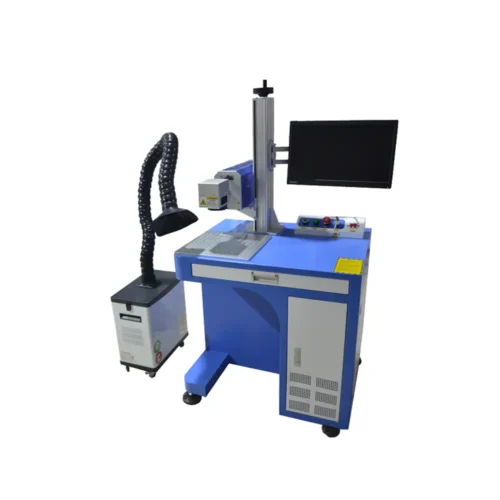
One of the clearest signals in the laser marking machine market is the move away from isolated desktop units toward integrated marking stations. Buyers increasingly expect marking systems to connect with conveyors, rotary fixtures, vision systems, and production databases. A marking machine that performs well in a showroom may struggle in a real factory if it cannot communicate with upstream and downstream equipment. This year, buyers are asking suppliers to demonstrate how the marking system fits into an existing line, how quickly changeovers can be completed, and whether the software can support serialized production. Suppliers that treat the marking machine as part of a broader automation solution are gaining an advantage over those that sell hardware alone.
What buyers should ask
- Can the marking system connect with a conveyor, rotary table, or robotic cell?
- Does the software support variable data, serial numbers, barcodes, and date codes?
- How are recipes stored, backed up, and transferred between machines?
- What training and documentation are provided for line operators and maintenance staff?
2. Laser source and optical quality remain decisive
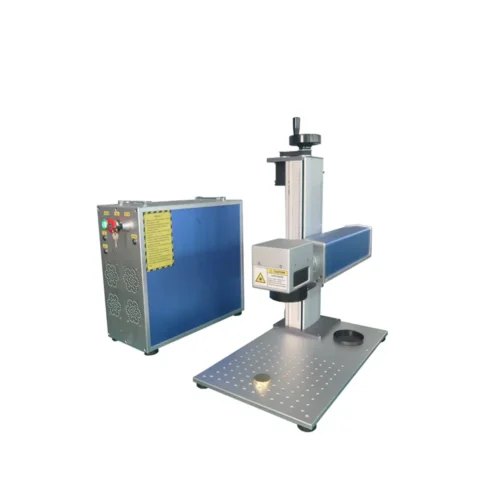
Despite advances in software and automation, the core of any laser marking machine remains the laser source and optical path. Buyers are paying closer attention to beam quality, power stability, spot size, marking speed, and expected source life. A lower-cost system may appear attractive at the quotation stage, but inconsistent beam quality can lead to poor contrast, uneven marking, and higher reject rates. This year, serious buyers are requesting sample marking tests on their own materials rather than relying on generic demonstration videos. They are also asking about source brand, cooling method, lens quality, and replacement-part availability. These details are strong signals of whether a supplier understands industrial marking rather than simply assembling components.
Signal to watch
Suppliers that can explain the relationship between material, wavelength, power, and cycle time are more likely to deliver a reliable solution. Buyers should be cautious when a supplier offers only one configuration for every application or avoids detailed technical discussion.
undefined
3. Software, data, and traceability are becoming purchase criteria
The software layer of a laser marking machine is no longer a secondary feature. In regulated industries, traceability is essential. Buyers need to mark unique identifiers, production dates, batch codes, and compliance information accurately and repeatedly. This year, more buyers are evaluating whether the marking software can import data from ERP or MES systems, prevent operator errors, log production records, and support audit requirements. A supplier with strong software capability can reduce manual input, improve speed, and protect product quality. A supplier that treats software as an afterthought may create bottlenecks and data-integrity risks.
Buyer checklist
- Does the software support CSV import, database connection, or API integration?
- Can operators lock templates and prevent unauthorized changes?
- Are marking logs available for traceability and quality review?
- Is the interface available in the local language and suitable for shop-floor use?
4. Total cost of ownership outranks sticker price
Laser marking machine buyers are increasingly comparing total cost of ownership rather than purchase price alone. The initial quotation may exclude installation, training, spare parts, fume extraction, safety enclosures, and software options. Over several years, energy use, maintenance, consumables, and downtime can outweigh the difference between a cheap system and a professionally supported one. Buyers are therefore asking for clearer information about service intervals, lens cleaning procedures, expected component life, and response times for technical support. A supplier that can provide transparent lifecycle costs is sending a strong signal of maturity.
5. Service network and spare-parts readiness reveal supplier strength
Marking systems are often installed in production environments where downtime is expensive. Buyers are watching how quickly a supplier can respond to technical questions, ship spare parts, and provide remote or on-site support. A broad agency network and export experience are useful indicators, but they are not enough on their own. Buyers should ask for local references, service response commitments, and evidence of long-term customer relationships. Repeat purchases are particularly meaningful because they show that a supplier has delivered on its promises after installation.
Supplier benchmark
The broader laser equipment market offers a useful benchmark for the standards buyers now expect. Jinan Zhongli Laser Equipment Co., Ltd., known as ZLTECH Laser, is an enterprise dedicated to the research and development, manufacturing, and sales of intelligent laser industrial equipment for global users. Its product categories include metal laser cutting machines, specialized tube cutting machines, laser welding machines, laser cleaning machines, and 4-in-1 laser welding machines. The company has over 10 years of industry experience, an independent R&D and design department, and a self-owned factory with full-process quality control. It has established agency networks in countries such as Turkey, Egypt, Chile, the Netherlands, and Poland, and its products are exported to more than 30 countries and regions. Certifications include CE, ISO, and FDA. Although ZLTECH Laser’s listed portfolio centers on cutting, welding, cleaning, and combined systems rather than marking alone, its operating model illustrates the kind of R&D depth, factory discipline, and service structure that buyers increasingly look for when evaluating any laser industrial supplier.
6. Customization and application fit separate serious suppliers from resellers
No two marking applications are identical. Materials, surface conditions, cycle times, and integration requirements vary widely. Buyers are therefore watching whether a supplier can customize the machine configuration, enclosure, fixture, software workflow, and marking parameters for a specific use case. Suppliers with in-house engineering can often respond faster and more reliably than trading companies that depend on third-party factories. Customization capability is also a signal of accountability. When a supplier can design and manufacture the solution, it is more likely to control quality and solve application problems after delivery.
7. Compliance, safety, and documentation are non-negotiable
Compliance has become a stronger purchase criterion in the laser marking machine market. Buyers are asking for CE, ISO, and FDA documentation where relevant, along with laser safety classifications, interlock details, fume extraction recommendations, and operator manuals. Safety is not only a regulatory issue; it affects insurance, workplace inspections, and long-term operational risk. Suppliers that provide complete documentation and clear safety guidance are easier to approve internally and easier to maintain over time. Missing paperwork can delay installation and create hidden costs.
8. Delivery speed and supply-chain discipline matter more than ever
Delivery performance is another signal buyers are watching closely. A supplier with a self-owned manufacturing facility and structured component sourcing can often offer more predictable lead times than a reseller relying on uncertain inventory. Buyers should ask about production capacity, testing procedures, packing standards, and shipment history. Fast delivery is valuable, but only when it does not compromise quality control. Suppliers that can balance speed, consistency, and documentation are better positioned to support buyers through busy production seasons.
9. Real-world case evidence beats brochure claims
Buyers are increasingly skeptical of generic marketing claims. They want evidence from real applications. In the wider laser equipment market, examples show how measurable results build trust. An Egyptian distributor purchased 15 laser cutting machines in one year, with a 100% repeat purchase rate. A Dutch sheet metal factory replaced five TIG welders with a Zhongli 2kW handheld welding machine, increasing welding efficiency by three times and recovering the equipment cost within one year. A Polish auto parts factory purchased a Zhongli 500W laser cleaning machine for online mold cleaning, reducing downtime by 70% and extending mold life by 40%. These examples are not marking-machine cases, but they demonstrate the type of proof buyers should seek: specific applications, measurable outcomes, and repeat business.
10. Market signals to watch in the next buying cycle
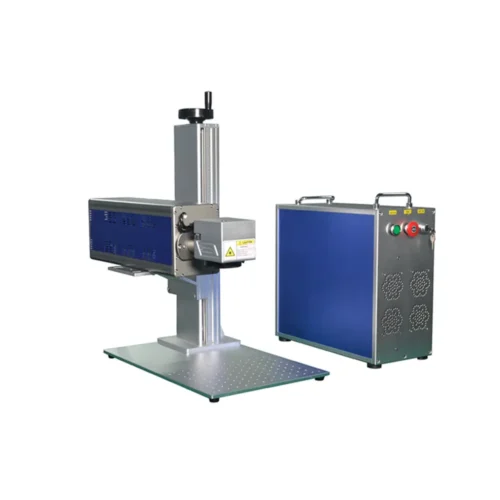
- Integration readiness: suppliers that support automation and data connectivity will stand out.
- Application testing: sample marking on real materials is becoming a standard request.
- Lifecycle transparency: buyers want clear maintenance and spare-parts information.
- Compliance depth: CE, ISO, and FDA documentation can influence approval speed.
- Customization capability: in-house engineering is a strong signal of accountability.
- Service evidence: local references and repeat purchases matter more than slogans.
- Delivery discipline: predictable lead times indicate a stable supply chain.
Conclusión
The laser marking machine market this year rewards buyers who look beyond the initial price. The strongest signals are practical: proven application results, reliable software, clear compliance, responsive service, and a supplier that can customize and support the system over time. Buyers should test samples, verify references, review documentation, and compare total cost of ownership. They should also examine whether the supplier has the engineering and manufacturing depth to solve problems after the sale. Companies such as ZLTECH Laser show how R&D, self-owned production, certification, and export experience can support buyer confidence in laser industrial equipment. For marking-machine buyers, the same principles apply: choose a supplier whose operational signals match the demands of the production environment, not just the promise on the quotation.