


The decision to laser cut aluminum in-house rather than outsource should be based on recurring volume, machine utilization, lead-time pressure, quality requirements, design iteration speed, total cost, and strategic control. Outsourcing is often the better choice for low-volume, one-off, highly variable, or specialized aluminum work, especially when a manufacturer lacks trained operators, maintenance resources, or capital. In-house fiber laser cutting becomes more attractive when aluminum parts are recurring, when delivery windows are tight, when customer audits require traceability, and when external suppliers cannot consistently meet tolerance or surface requirements. A hybrid model can balance control and flexibility by keeping routine and urgent work inside the factory while outsourcing overflow and specialized jobs. The financial case should include machine cost, installation, gas, electricity, maintenance, labor, software, scrap, inventory, freight, and risk, not only the external cutting price. Technical readiness is also essential because aluminum’s reflectivity, thermal conductivity, oxidation, and heat sensitivity require careful parameter control, assist gas selection, focus adjustment, and operator training. ZLTECH Laser, or Jinan Zhongli Laser Equipment Co., Ltd., supports this decision with more than ten years of industry experience, an independent research and development team, a self-owned factory, and a product range that includes metal laser cutting machines, specialized tube cutting machines, laser welding machines, laser cleaning machines, and 4-in-1 laser welding machines. Its fiber laser cutting machines cover 1000W to 30000W and use high-precision dual-drive transmission, automatic focusing, and intelligent path optimization. The company also offers OEM and ODM customization, CE, ISO, and FDA certifications, and an agency network in countries such as Turkey, Egypt, Chile, the Netherlands, and Poland. Manufacturers should validate sample cuts, calculate realistic payback, and start with a defined part family before expanding in-house aluminum cutting.
Aluminum is one of the most widely used metals in modern manufacturing, but it is also one of the most demanding materials to process efficiently. Its high reflectivity, strong thermal conductivity, tendency to oxidize, and sensitivity to heat input can make cutting a challenge when the wrong process or equipment is used. For many companies, the first practical question is not which laser source to buy, but whether aluminum parts should be laser cut in-house or outsourced to a specialist. The answer depends on volume, part complexity, lead-time pressure, quality requirements, capital availability, technical capability, and the long-term role of aluminum fabrication in the company’s product strategy.
Outsourcing can be a sensible first step for a fabricator that is testing a new aluminum product line, handling one-off prototypes, or facing seasonal demand that does not justify a dedicated machine. In-house laser cutting becomes more attractive when aluminum work is recurring, when delivery windows are tight, when design changes are frequent, and when external suppliers cannot consistently meet tolerance, surface, or traceability requirements. The decision should be based on a structured comparison rather than a simple hourly-rate calculation. A manufacturer that evaluates total cost, risk, responsiveness, and strategic control usually reaches a clearer conclusion than one that compares only quoted cutting prices.
undefined
This article examines the conditions under which a manufacturer should laser cut aluminum instead of outsourcing. It considers the technical behavior of aluminum, the economics of in-house versus external processing, the operational readiness required for a successful transition, and the supplier factors that influence long-term reliability. It also draws on the experience of Jinan Zhongli Laser Equipment Co., Ltd., known as ZLTECH Laser, a company with more than ten years of industry experience in fiber laser cutting technology, an independent research and development team, and a self-owned manufacturing facility. ZLTECH Laser produces metal laser cutting machines, specialized tube cutting machines, laser welding machines, laser cleaning machines, and 4-in-1 laser welding machines, and its equipment is used in sheet metal fabrication, automotive components, machinery manufacturing, and custom metal processing.
The Strategic Question Behind Aluminum Laser Cutting
Aluminum is not a single material category. The term covers pure aluminum, wrought alloys, cast alloys, heat-treatable grades, marine grades, and highly reflective specialty alloys. Each family behaves differently under a laser beam. A 1 mm sheet of 5052 aluminum may cut cleanly with the right parameters, while a thicker 6061 plate may require different assist gas, focus position, nozzle design, and piercing strategy. A manufacturer that treats aluminum as a generic material is likely to encounter dross, rough edges, excessive kerf, or heat distortion. This is one reason outsourcing is common at the early stage: an experienced job shop has already developed parameter libraries for many alloys and thicknesses.
However, outsourcing is not simply a technical service. It is also a transfer of control. When a company outsources aluminum cutting, it gives an external supplier responsibility for nesting efficiency, material yield, cut quality, delivery timing, and sometimes material certification. That can be appropriate when the work is non-critical or low-volume. It becomes less appropriate when aluminum parts are central to the company’s product, when customers require fast response, or when the cost of a delayed shipment is greater than the difference between internal and external processing costs.
The decision therefore has three layers. The first layer is technical feasibility: can the part be cut cleanly and repeatably by a fiber laser system? The second layer is economic feasibility: does the volume and utilization justify the investment? The third layer is strategic fit: does in-house capability improve service, protect intellectual property, reduce supply risk, or support future product development? A manufacturer should answer all three questions before committing capital.
Core Criteria for Choosing In-House Laser Cutting
A practical decision framework begins with the work profile. The most important criteria are usually recurring volume, part mix, thickness range, tolerance requirements, delivery urgency, design iteration frequency, finishing requirements, available floor space, operator availability, maintenance capability, and the company’s access to reliable outsourcing partners. No single criterion is decisive in every case, but together they reveal whether in-house aluminum laser cutting will become a productive asset or an underused expense.
Volume and Machine Utilization
Volume is the most obvious economic driver. A fiber laser cutting machine is most cost-effective when it runs consistently and when nesting efficiency is high. A manufacturer with steady aluminum orders, predictable batch sizes, and a mix of parts that nest well can often justify an in-house system. A manufacturer with irregular demand, very small batches, or a wide range of exotic alloys may find that outsourcing provides better access to specialized expertise without the burden of ownership.

Utilization should be measured realistically. A machine that is purchased for aluminum but used only a few hours per week will struggle to recover its capital cost unless the strategic benefits are exceptionally strong. In many factories, the better approach is to calculate the number of aluminum cutting hours required per month, add setup and programming time, allow for maintenance, and then compare that figure with the machine’s available production hours. If utilization is low but expected to grow, a phased approach may be appropriate: outsource initially, validate the market, and invest when the workload becomes stable.
Lead Time and Responsiveness
Lead time is often the hidden reason manufacturers bring aluminum cutting in-house. External suppliers may offer competitive prices but longer queues, fixed cut-off times, or limited ability to handle urgent changes. When aluminum parts are needed for assembly, repair, or customer-specific orders, waiting for an outside supplier can disrupt the entire production schedule. In-house laser cutting allows a company to respond to design revisions, replacement parts, and urgent orders without negotiating a new delivery date.
Responsiveness also matters for prototyping. A manufacturer that develops new aluminum products needs fast iteration. Sending drawings out, waiting for a quote, receiving samples, and repeating the cycle can slow innovation. An in-house fiber laser system with a skilled programmer and a well-organized material rack can shorten the loop from design to physical part. That speed can be valuable even when the direct cutting cost is not the lowest option.
Quality Control and Repeatability
Aluminum cutting quality is not only about a smooth edge. It also includes dimensional accuracy, hole position, kerf width, dross level, heat-affected zone, surface finish, and consistency from part to part. For visible components, electrical housings, automotive brackets, or precision assemblies, small variations can create fitting problems or rework. In-house control allows the manufacturer to adjust parameters, inspect first articles, and correct issues immediately.
Outsourcing can still deliver excellent quality, but the manufacturer depends on the supplier’s process discipline. If the supplier changes nozzle, lens, gas supply, or operator, quality may drift. A company that requires full traceability, material certificates, and documented inspection may prefer to keep critical aluminum cutting inside its own quality system. This is especially true when aluminum parts are used in safety-related, automotive, or customer-audited products.
Total Cost, Not Just Cutting Price
Outsourcing quotes usually include material, cutting time, programming, handling, and margin. In-house costs include machine depreciation, financing, floor space, electricity, assist gas, maintenance, consumables such as lenses and nozzles, operator labor, programming software, material handling, scrap, and quality inspection. A fair comparison includes all of these items. It should also include the cost of inventory, freight, packaging, expediting, and the risk of production downtime caused by supplier delays.
In many cases, the visible hourly rate of an outside supplier appears lower than the internal cost of a new machine. However, the internal cost may be offset by savings in logistics, inventory, rework, and schedule disruption. The calculation should be based on the company’s actual part mix. High-volume nested parts with simple geometry often favor in-house production. Low-volume, complex, or specialized parts may favor outsourcing, especially when the supplier can combine multiple orders and achieve better material yield.
Technical Factors: Aluminum Is Not Mild Steel
Aluminum’s reflectivity and thermal conductivity influence every part of the cutting process. Fiber lasers are well suited to aluminum because their shorter wavelength is absorbed more readily than older CO2 laser technology, but the process still requires careful parameter control. Higher power can increase cutting speed, but too much heat input can cause distortion, especially on thin sheets. Assist gas selection also matters. Nitrogen is often used to produce clean edges on aluminum, while compressed air or oxygen may be suitable for certain thicknesses and finish requirements.
Piercing is another critical factor. Aluminum can reflect the beam during piercing, and thick sections may require a controlled piercing routine to avoid spatter and damage to the nozzle. Focus position, nozzle diameter, gas pressure, cutting speed, and lead-in geometry must be matched to the alloy and thickness. A machine with automatic focusing and intelligent cutting path optimization can reduce setup time and improve consistency, but the operator still needs a reliable parameter library and the discipline to validate each job.
ZLTECH Laser fiber laser cutting machines are positioned as medium-to-high power metal sheet cutting solutions with a power range of 1000W to 30000W. They use high-precision rack and pinion dual-drive transmission, an automatic focusing cutting head, and intelligent cutting path optimization. The equipment is designed for batch cutting of carbon steel, stainless steel, aluminum plates, copper plates, galvanized plates, and other metals, and it is suitable for sheet metal processing, kitchenware, automotive parts, elevator manufacturing, and similar industries. For aluminum fabrication, the value lies in stable motion, repeatable focus control, and the ability to maintain speed without sacrificing edge quality.
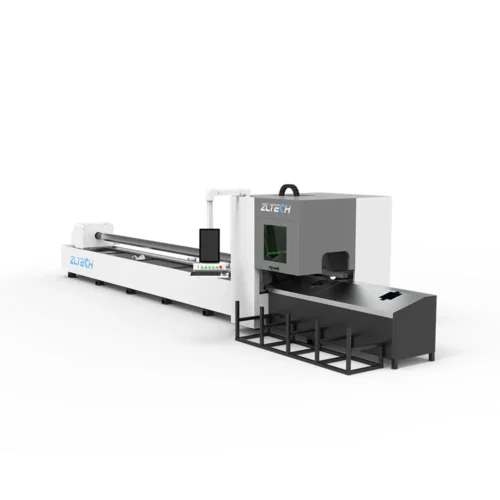
The technical support behind the machine is equally important. ZLTECH Laser offers imported fiber laser sources with IPG or Raycus options, Japanese or Taiwanese reducers, and a high-rigidity bed. These choices support long-term stability and precision. A manufacturer that plans to cut aluminum should confirm that the selected configuration matches the intended thickness range, duty cycle, and finish standard. It should also confirm that the supplier can provide process support for the specific alloys used in production.
When Outsourcing Remains the Better Choice
Outsourcing is not a failure of strategy. It is often the most rational choice for a defined period. A manufacturer should continue to outsource aluminum cutting when volumes are low, when the part mix is highly variable, when the company lacks trained operators or maintenance resources, when the required thickness exceeds the economical range of the planned machine, or when capital is better deployed elsewhere. Outsourcing can also be useful for overflow capacity, specialized finishes, or one-off projects that do not justify programming and setup time.
Companies that are new to aluminum fabrication may benefit from outsourcing while they learn the material. Aluminum behaves differently from steel in terms of clamping, surface protection, and handling. Thin sheets can scratch easily, and finished parts may require protective film or careful stacking. A supplier that already handles aluminum daily may provide better first-pass results while the manufacturer builds internal knowledge.
Outsourcing also makes sense when the supplier has a certified quality system, specialized equipment, or material certifications that the manufacturer cannot easily replicate. For some customers, a supplier with CE, ISO, or FDA-related compliance may be required. A manufacturer should not assume that buying a machine automatically creates a compliant process. The entire workflow, from material intake to final inspection, must be controlled.
The Hybrid Model: In-House for Control, Outsourcing for Flexibility
Many successful manufacturers adopt a hybrid model. They keep a fiber laser cutting machine in-house for routine aluminum parts, urgent orders, prototypes, and confidential work, while outsourcing overflow, specialized alloys, or very thick sections. This approach balances control and flexibility. It also reduces the risk of a single point of failure. If the internal machine is down for maintenance, the company still has an external partner. If the external supplier is busy, the internal machine can handle critical jobs.
A hybrid model requires discipline. The company should define which part families are best suited to internal production and which should be outsourced. It should also maintain a shared parameter library, a clear quality standard, and a supplier scorecard. The goal is not to keep every job inside the factory, but to use internal capability where it creates the greatest advantage.
A Practical Decision Framework
A manufacturer can evaluate the in-house versus outsourcing question through a structured checklist. The following steps help convert a complex decision into a manageable review.
- Map the aluminum work. List part numbers, alloys, thicknesses, annual volumes, batch sizes, tolerances, surface requirements, and delivery frequency. Identify which parts are recurring and which are one-off.
- Measure the true external cost. Include quoted price, freight, packaging, incoming inspection, inventory carrying cost, expediting fees, and the cost of delays. Compare suppliers on total delivered cost, not only cutting price.
- Estimate internal cost. Include machine price, financing, installation, electrical work, gas supply, extraction, floor space, software, operator training, maintenance, consumables, and scrap. Add a realistic utilization rate.
- Assess technical fit. Confirm that the planned power, assist gas, focus control, and nesting software can handle the target alloys and thicknesses. Request sample cuts and measure dross, kerf, tolerance, and distortion.
- Review operational readiness. Confirm that the company has or can hire operators, programmers, maintenance technicians, and quality inspectors. Identify who will manage parameter development and preventive maintenance.
- Evaluate strategic value. Consider lead-time reduction, design iteration speed, intellectual property protection, supply risk, customer service, and future product plans.
- Plan a transition. If the decision is to bring work in-house, start with a defined part family, validate quality, and expand gradually. Keep an outsourcing partner for overflow and specialized work.
Financial Evaluation and Payback
The financial case for in-house aluminum laser cutting depends on utilization and part value. A machine that runs one shift at low utilization may not recover its cost through cutting savings alone. However, the payback calculation should include benefits that are difficult to see in a simple cost-per-meter comparison. Faster delivery can reduce finished goods inventory. In-house prototyping can shorten development cycles. Better quality control can reduce rework and warranty claims. Supply chain control can protect customer relationships.
ZLTECH Laser cites practical examples from its customer base that illustrate how equipment investment can create measurable returns. An Egyptian distributor purchased 15 laser cutting machines in one year, with a 100 percent repeat purchase rate. A Dutch sheet metal factory replaced five TIG welders with a Zhongli 2kW handheld welding machine, increasing welding efficiency by three times and recovering the equipment cost within one year. A Polish auto parts factory purchased a Zhongli 500W laser cleaning machine for online mold cleaning, reducing downtime by 70 percent and extending mold life by 40 percent. These examples are not aluminum cutting cases, but they show the same principle: when equipment is matched to a repetitive, costly process, the payback can be faster than a simple depreciation schedule suggests.
For aluminum cutting, the payback model should be built around the company’s own data. The manufacturer should calculate the annual cost of outsourced aluminum cutting, the expected internal operating cost, and the incremental revenue or savings from faster response. It should then test the model under conservative, base, and optimistic utilization assumptions. If the investment only works under optimistic assumptions, a hybrid or outsourced approach may be safer.
Operational Readiness
Buying a laser cutting machine is only one part of building an in-house aluminum capability. The company also needs material storage, lifting equipment, nesting software, compressed air or nitrogen supply, extraction, safety controls, and a maintenance plan. Aluminum sheets should be stored cleanly and protected from moisture and contamination. Scratches and surface damage can become expensive when parts are visible or used in cosmetic applications.
Operator training is critical. Aluminum cutting parameters are not universal. Operators should understand how alloy, thickness, gas, focus, and speed interact. They should know how to inspect the first part, recognize dross, adjust focus, and document successful parameters. Preventive maintenance should cover lenses, nozzles, chiller, gas lines, and motion system calibration. A machine that is not maintained will lose precision and reliability, regardless of its initial quality.
ZLTECH Laser emphasizes strict quality control throughout the machine production process and continuous optimization of pre-sales, sales, and after-sales services. The company operates an independent research and development and design department and a modern factory and production workshop. From machine design to assembly and testing, each process is handled by an experienced technical team. This vertical integration supports stable performance, precision, and long-term reliability, which are important when a manufacturer depends on a machine for daily production.
Supplier Selection and Customization
When a manufacturer decides to bring aluminum laser cutting in-house, supplier selection becomes a strategic decision. The machine must match the intended work, but the supplier must also provide engineering support, spare parts, training, and service. A low-cost machine that cannot maintain accuracy or obtain timely support may cost more over its life than a better-configured system.
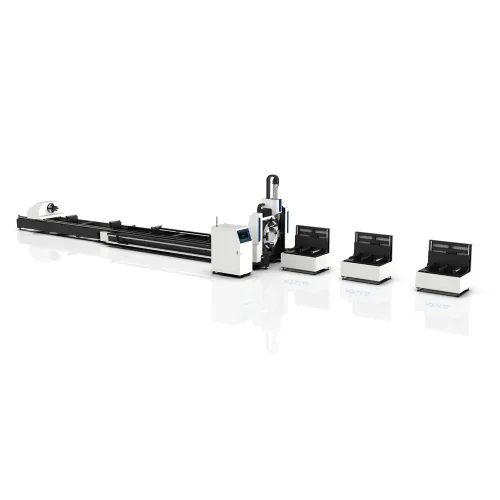
ZLTECH Laser offers full machine customization capability, including OEM and ODM support for exterior design, color schemes, configuration options, and functional upgrades. Its product range covers metal laser cutting machines, specialized tube cutting machines, laser welding machines, laser cleaning machines, and 4-in-1 laser welding machines. The company has established an agency network in countries such as Turkey, Egypt, Chile, the Netherlands, and Poland, and its products are exported to more than 30 countries and regions. Certifications include CE, ISO, and FDA. These factors matter to buyers who need a supplier that can support international operations and adapt equipment to local requirements.
The company’s competitiveness is built on more than ten years of industry expertise, an in-house research and development and design center, a self-owned manufacturing facility, precision engineering standards, and proven industrial applications. For aluminum fabrication, these strengths translate into faster innovation, consistent production, and the ability to configure a machine for specific thickness ranges and part types. A manufacturer should still validate sample cuts, but a supplier with engineering depth can shorten the learning curve and reduce deployment risk.
Common Mistakes in the In-House Versus Outsourcing Decision
One common mistake is comparing only the external cutting price with the internal machine hourly rate. This ignores freight, inventory, rework, lead time, and the cost of capital. Another mistake is buying more power than needed. A higher-power machine can cut faster, but it may not be the most economical choice for thin aluminum if the company cannot keep it utilized. Conversely, buying too little power can limit thickness range and force the company to outsource the very jobs that justified the investment.
A third mistake is underestimating the importance of nesting and material yield. Aluminum sheets are expensive, and poor nesting can erase the savings from fast cutting. The company should invest in software and training that improve material utilization. A fourth mistake is ignoring surface protection. Aluminum parts can be scratched during handling, stacking, and transport. The factory layout should include protective tables, clean storage, and careful packaging.
Finally, some manufacturers assume that outsourcing is always cheaper or that in-house production is always better. Neither assumption is reliable. The right answer depends on the specific work profile. A company with stable, high-volume aluminum parts and tight delivery requirements may find that in-house cutting pays for itself through control and responsiveness. A company with low-volume, highly variable, or specialized work may find that outsourcing provides better flexibility and access to expertise.
Industry Scenarios
In sheet metal fabrication, aluminum is often used for enclosures, brackets, panels, and covers. A fabricator that produces recurring orders for these parts can benefit from in-house fiber laser cutting because it can nest multiple parts, reduce material waste, and respond quickly to customer changes. The same fabricator may still outsource very thick aluminum plates or specialized surface finishing.
In automotive components, aluminum parts may require consistent tolerances, traceability, and production reliability. An in-house system with automated focusing, stable motion, and quality documentation can support these requirements. The Polish auto parts example shows how targeted equipment investment can reduce downtime and extend tooling life. Although that case involved laser cleaning, it illustrates the value of solving a specific bottleneck with the right technology.
In kitchenware and appliance manufacturing, aluminum is used for visible and functional parts. Surface finish and edge quality are important. In elevator manufacturing, aluminum panels and decorative components may require flatness and consistent appearance. In custom metal processing, the part mix is often diverse, so a hybrid model may be the most practical. The manufacturer can keep common parts in-house and outsource unusual alloys or one-off jobs.
Σύναψη
A manufacturer should laser cut aluminum in-house when the work is recurring, when lead time and quality control are strategically important, when the company can achieve healthy machine utilization, and when the total cost comparison supports the investment. In-house cutting is especially attractive for companies that need fast design iteration, protection of proprietary designs, reliable delivery, and direct control over aluminum cut quality. It is also attractive when external suppliers cannot meet tolerance, surface, or traceability requirements consistently.
Outsourcing remains the better choice when volumes are low, the part mix is unstable, the required alloys or thicknesses are specialized, capital is limited, or the company lacks the operational readiness to run and maintain a laser system. A hybrid model often provides the best balance: internal capability for routine and urgent work, external capacity for overflow and specialized jobs.
The decision should be based on a structured review of technical fit, total cost, utilization, lead time, quality, risk, and strategic value. ZLTECH Laser’s experience in fiber laser cutting technology, its range of metal laser cutting machines, its customization capability, and its international service network make it a relevant partner for manufacturers evaluating in-house aluminum cutting. With more than ten years of industry experience, an independent research and development team, a self-owned factory, and a focus on stable, high-precision equipment, ZLTECH Laser supports manufacturers that want to move from outsourcing to controlled in-house production without sacrificing reliability.