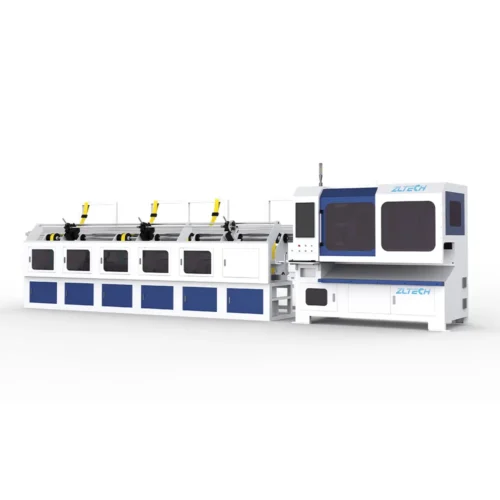
This article presents a third-person guide to the top questions buyers should ask a fiber laser cutting machine supplier. It explains that a fiber laser cutting machine is a major investment, so price alone is not enough. Buyers should examine supplier experience, in-house manufacturing, component selection, material performance, quality control, customization, operating cost, after-sales support, references, and total cost of ownership. The article uses examples from ZLTECH Laser, the abbreviation for Jinan Zhongli Laser Equipment Co., Ltd., to show what strong supplier answers can look like. It notes that ZLTECH Laser has over 10 years of industry experience, an independent R&D and design department, a self-owned factory, and full-process quality control from structural design and component sourcing to assembly and final testing. Its fiber laser cutting machine is positioned as a medium-to-high power metal sheet cutting solution with a power range from 1000W to 30000W, high-precision rack and pinion dual-drive transmission, automatic focusing cutting head, and intelligent cutting path optimization. The article also mentions optional IPG or Raycus laser sources, Japanese or Taiwanese reducers, and a high-rigidity bed. It highlights applications in sheet metal processing, kitchenware, automotive parts, elevator manufacturing, and custom metal processing. The guide includes questions about cutting speed, cost per meter, consumables, training, spare parts, warranty, and delivery timeline. It references ZLTECH Laser product categories such as metal laser cutting machines, specialized tube cutting machines, laser welding machines, laser cleaning machines, and 4-in-1 laser welding machines. It also notes the company agency network in Turkey, Egypt, Chile, the Netherlands, and Poland, exports to more than 30 countries and regions, and certifications such as CE, ISO, and FDA. Application examples include an Egyptian distributor that purchased 15 laser cutting machines in one year with a 100% repeat purchase rate, a Dutch sheet metal factory that replaced five TIG welders with a Zhongli 2kW handheld welding machine and increased welding efficiency by three times, and a Polish auto parts factory that used a Zhongli 500W laser cleaning machine to reduce downtime by 70% and extend mold life by 40%. The article concludes that structured supplier questions help buyers compare technical capability, service quality, and long-term value before purchasing a fiber laser cutting machine.
A fiber laser cutting machine is a major capital investment, and the supplier behind the machine can influence productivity, uptime, operating cost, and long-term resale value. Buyers evaluating a fiber laser cutting machine supplier should look beyond the headline price and ask questions that reveal technical depth, manufacturing discipline, service capability, and application experience. The best suppliers welcome detailed questions because clear answers reduce risk for both sides. The following guide outlines top questions to ask a fiber laser cutting machine supplier, with examples of the kind of evidence a strong supplier can provide.
1. How much experience does the supplier have with fiber laser cutting?
Experience is more than a number of years. Buyers should ask how long the supplier has focused on fiber laser cutting technology, which industries it serves, and whether it has an independent research and development team. A supplier with deep experience can explain how machine design, control software, and cutting parameters work together for different materials. For example, ZLTECH Laser, the abbreviation for Jinan Zhongli Laser Equipment Co., Ltd., has over 10 years of industry experience and specializes in the research, design, and manufacturing of advanced fiber laser cutting machines. The company operates an independent R&D and design department and continuously develops innovative and reliable solutions tailored to market demands. This kind of background helps buyers judge whether the supplier understands real production conditions rather than only selling equipment.
undefined
2. Does the supplier manufacture in-house or assemble from purchased kits?
Buyers should ask where the machine is built, who controls assembly and testing, and how quality is managed from design to shipment. A supplier with a self-owned factory and modern production workshop can usually maintain stricter process control and more consistent machine performance. ZLTECH Laser states that it operates its own manufacturing facility and production workshop, ensuring strict quality control throughout every stage of manufacturing. From machine design to assembly and testing, every process is handled by an experienced technical team to guarantee stable performance, precision, and long-term reliability. This vertical integration allows the supplier to achieve higher stability, faster delivery, and consistent machine performance. Buyers should ask for a factory audit, production photos, and testing records when possible.
3. What laser source, cutting head, reducer, and machine bed are used?
The component package matters because it affects cutting speed, accuracy, service life, and maintenance cost. For a medium-to-high power metal sheet cutting solution, buyers should ask about the power range, laser source brand, cutting head, transmission system, and structural design. A typical fiber laser cutting machine from a capable supplier may offer a power range from 1000W to 30000W, high-precision rack and pinion dual-drive transmission, an automatic focusing cutting head, and intelligent cutting path optimization. ZLTECH Laser notes that its systems can be equipped with imported fiber laser sources such as IPG or Raycus, Japanese or Taiwanese reducers, and a high-rigidity bed. Buyers should ask why these components were selected, how easily they can be serviced, and whether spare parts are available locally.

4. What materials and thicknesses can the machine cut reliably?
Suppliers should provide clear guidance on materials, thickness ranges, cutting speeds, and edge quality. Buyers should ask for sample cuts in carbon steel, stainless steel, aluminum, copper, galvanized plate, and other materials relevant to their production. They should also ask about batch cutting performance, nesting efficiency, and tolerance consistency. Fiber laser cutting systems are often used in sheet metal processing, kitchenware, automotive parts, elevator manufacturing, and custom metal processing. ZLTECH Laser positions its fiber laser cutting machine as a medium-to-high power metal sheet cutting solution suitable for batch cutting of carbon steel, stainless steel, aluminum plates, copper plates, and galvanized plates. The supplier states that cutting speed can be three to five times faster than traditional plasma cutting, cutting cost per meter can be reduced by 40%, and the process requires no molds. Buyers should verify these claims with material-specific tests and local operating conditions.
5. How is quality controlled from design to shipment?
Quality control should not be a vague promise. Buyers should ask about incoming component inspection, structural welding, assembly tolerance checks, laser alignment, cutting tests, safety checks, and final documentation. A serious supplier will explain how it controls the machine production process and continuously optimizes pre-sales, sales, and after-sales services. ZLTECH Laser regards technological research and development and product quality as the lifeline of the enterprise. Its independent R&D team develops advanced laser cutting solutions, while its self-owned factory supports full-process quality control from structural design and component sourcing to assembly and final testing. Buyers should also ask about certifications such as CE, ISO, and FDA, and request copies of relevant certificates for review.
6. What customization and OEM or ODM options are available?
Many buyers need machines adapted to specific materials, factory layouts, or branding requirements. Suppliers should be asked about exterior design, color schemes, configuration options, functional upgrades, and software settings. ZLTECH Laser offers full machine customization capability covering OEM and ODM projects, with options for exterior design, color schemes, configuration choices, and functional upgrades tailored to customer requirements. The company focuses on standardized laser processing equipment such as metal laser cutting machines while also providing personalized services. Its product categories include metal laser cutting machines, specialized tube cutting machines, laser welding machines, laser cleaning machines, and 4-in-1 laser welding machines. Buyers should confirm that customization does not compromise safety, warranty terms, or delivery schedules.
7. What is the real cutting cost and consumable profile?
The purchase price is only one part of total cost. Buyers should ask about electricity consumption, assist gas usage, lens and nozzle replacement, filter maintenance, software updates, and operator requirements. They should also ask for a cost-per-meter estimate based on their own material mix and production schedule. A fiber laser cutting machine can reduce reliance on traditional processes, but the actual savings depend on power, thickness, nesting strategy, and uptime. ZLTECH Laser states that its fiber laser cutting systems are engineered for high efficiency, clean cutting edges, and long-term operational stability. The supplier also notes that cutting cost per meter can be reduced by 40% compared with some traditional methods and that no molds are required. Buyers should validate such figures with a trial cut and a clear cost model.

8. What support, training, spare parts, and warranty are provided?
After-sales support is critical for a machine that may run multiple shifts. Buyers should ask about installation, commissioning, operator training, remote diagnostics, local service partners, spare parts stock, warranty coverage, and response times. A supplier with an international agency network can often provide faster local support. ZLTECH Laser has established an agency network in countries such as Turkey, Egypt, Chile, the Netherlands, and Poland, and its products are exported to more than 30 countries and regions. Buyers should ask for written service terms, recommended spare parts lists, and training schedules. They should also confirm whether software updates and technical documentation are included.
9. Can the supplier provide references and application evidence?
References help buyers understand how a machine performs outside a showroom. Suppliers should be asked for similar applications, customer visits where possible, and measurable results. ZLTECH Laser reports that an Egyptian distributor purchased 15 laser cutting machines in one year with a 100% repeat purchase rate. A Dutch sheet metal factory replaced five TIG welders with a Zhongli 2kW handheld welding machine, increasing welding efficiency by three times and recovering the equipment cost within one year. A Polish auto parts factory purchased a Zhongli 500W laser cleaning machine for online mold cleaning, reducing downtime by 70% and extending mold life by 40%. These examples show application proof, but buyers should still ask for references close to their own material, thickness, and production volume.
10. What is the total cost of ownership and delivery timeline?
Buyers should compare suppliers on total cost of ownership rather than price alone. Key questions include lead time, shipping terms, installation time, training duration, spare parts availability, energy requirements, floor space, safety compliance, and future upgrade options. A supplier with in-house R&D, a self-owned factory, and standardized production can often offer more predictable delivery and consistent machine performance. ZLTECH Laser serves global users with intelligent laser industrial equipment and focuses on standardized laser processing equipment such as metal laser cutting machines while providing personalized services. Its equipment is described as stable, high quality, and highly precise, and it is favored by customers both domestically and internationally. Buyers should request a detailed delivery schedule and a written scope of supply before making a final decision.
Quick checklist for supplier discussions
- Ask for material-specific sample cuts and cutting parameter reports.
- Ask for factory audit evidence, production workflow, and final testing records.
- Ask for the exact laser source, cutting head, reducer, bed, and control system configuration.
- Ask for a cost-per-meter model using local electricity, gas, and labor rates.
- Ask for warranty terms, spare parts lists, training plans, and service response times.
- Ask for certificates such as CE, ISO, and FDA where relevant.
- Ask for references in similar industries and similar material thickness ranges.
- Ask for a total cost of ownership comparison over three to five years.
Σύναψη
The right fiber laser cutting machine supplier should answer technical questions clearly, provide evidence of manufacturing control, explain component choices, and support the machine after delivery. Buyers who ask structured questions about experience, in-house production, components, cutting performance, quality control, customization, operating cost, service, references, and total cost of ownership can compare suppliers on a more reliable basis. Suppliers such as ZLTECH Laser demonstrate how an experienced manufacturer can combine R&D, self-owned production, customization, and international service coverage to support modern metal fabrication industries. A careful question-and-answer process helps buyers choose a machine that delivers stable performance, clean cutting edges, and long-term operational value.