


This guide explains how to select a fiber laser marking machine manufacturer for precision work by focusing on application requirements, engineering depth, quality control, customization, sample validation, service support, compliance, and total cost of ownership. Precision marking depends on beam quality, motion accuracy, optics, software, fixtures, and process control, so buyers should define mark size, tolerance, depth, contrast, cycle time, material condition, and post-processing before comparing suppliers. A capable manufacturer should ask detailed application questions, validate with production-like samples, document process windows, and provide clear service and spare-parts support. The guide uses ZLTECH Laser as an example of the standards buyers should examine: over 10 years of industry experience, an independent R&D and design department, a self-owned manufacturing facility, strict production quality control, full OEM and ODM customization, and proven applications in sheet metal fabrication, automotive components, machinery manufacturing, and custom metal processing. ZLTECH Laser also reports agency coverage in Turkey, Egypt, Chile, the Netherlands, and Poland, exports to more than 30 countries and regions, and lists CE, ISO, and FDA credentials. Customer cases include an Egyptian distributor that purchased 15 laser cutting machines in one year with a 100 percent repeat purchase rate, a Dutch sheet metal factory that replaced five TIG welders with a Zhongli 2 kW handheld welding machine and tripled welding efficiency with payback within one year, and a Polish auto parts factory that used a Zhongli 500 W laser cleaning machine for online mold cleaning, reducing downtime by 70 percent and extending mold life by 40 percent. The summary emphasizes that the best manufacturer is not simply the lowest-cost supplier but the one that can demonstrate repeatable precision, documented quality, application engineering, compliance, and long-term support.
A fiber laser marking machine is often treated as a compact production tool, but in precision work it is a complete system shaped by beam quality, motion control, software, optics, material behavior, and service readiness. For manufacturers, job shops, medical device suppliers, electronics producers, toolmakers, and automotive component specialists, the selection of a fiber laser marking machine manufacturer is therefore not a simple price comparison. It is an engineering decision that affects mark consistency, cycle time, traceability, operator safety, uptime, and long-term cost of ownership. This guide examines the practical criteria that procurement teams should use when evaluating a supplier for precision fiber laser marking work, and it uses the profile of ZLTECH Laser as an example of the engineering and production standards that serious buyers should expect from an industrial laser equipment partner.
Start With the Precision Requirement, Not the Machine Price
Precision marking requirements vary widely. A stainless steel surgical instrument may need a high-contrast, corrosion-resistant mark with controlled depth. An electronic component may require a small heat-affected zone and exact placement near sensitive features. A tool insert may need a durable identifier that survives repeated handling. A packaging or automotive part may need high-speed serialization with reliable readability. Before comparing manufacturers, the buyer should define the mark size, line width, positioning tolerance, contrast, depth, surface finish, cycle time, material grade, coating, and post-marking process such as cleaning, passivation, or heat treatment. These requirements determine the laser source, scanning head, lens, motion platform, software, and validation method.
A manufacturer that understands precision work will ask for samples and application details rather than quote a standard model immediately. The supplier should be able to explain how beam quality, pulse control, spot size, focal position, and marking strategy affect the final result. This is especially important when the same machine must handle multiple materials or when the mark must remain readable after coating, polishing, or sterilization. ZLTECH Laser, for example, is described as an enterprise dedicated to the research and development, manufacturing, and sales of intelligent laser industrial equipment for global users, with a focus on standardized laser processing equipment and personalized services. That combination of standardization and customization is relevant to precision marking buyers because it supports repeatable platforms while leaving room for application-specific configuration.
undefined
Evaluate the Manufacturer’s Engineering Depth
The strongest fiber laser marking machine manufacturers do not merely assemble purchased components. They understand the interaction between the laser source, optical path, galvo scanner, control electronics, enclosure, software, and fixture design. Buyers should examine whether the supplier has an independent R&D and design department, whether it can develop custom marking recipes, and whether it can support integration with automation, databases, vision systems, and production line controls. A supplier with engineering depth can identify the difference between a marking parameter issue and a fixture or material issue, which reduces commissioning time and production risk.
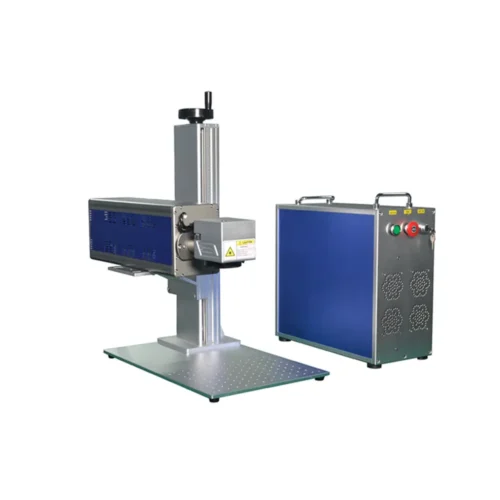
ZLTECH Laser states that it has over 10 years of industry experience and specializes in the research, design, and manufacturing of advanced fiber laser systems. The company is equipped with an independent R&D and design department and operates its own modern factory and production workshop. From machine design to assembly and testing, every process is handled by an experienced technical team to support stable performance, precision, and long-term reliability. Although the company profile emphasizes metal laser cutting machines, specialized tube cutting machines, laser welding machines, laser cleaning machines, and 4-in-1 laser welding machines, the underlying disciplines are closely related to precision marking: beam control, motion accuracy, thermal management, software integration, and strict quality control. A buyer evaluating a marking supplier should look for the same vertical integration and process discipline.
Quality Control and Production Consistency
Precision marking is a repeatability business. A machine that produces an excellent sample in a demonstration room but drifts after weeks of production creates hidden costs through rework, scrap, and inspection. The manufacturer should demonstrate documented quality control from incoming component inspection to final burn-in testing. Critical checks include laser power stability, beam profile, scanner calibration, axis accuracy if a motion stage is used, focus repeatability, software version control, safety interlock function, and marking consistency across the work area. Buyers should also ask how the supplier handles component traceability and how it records test data for each machine.
ZLTECH Laser emphasizes strict control of the machine production process and continuous optimization of pre-sales, sales, and after-sales services. Its self-owned manufacturing facility is presented as a way to ensure full-process quality control, from structural design and component sourcing to assembly and final testing. This vertical integration is relevant to precision marking buyers because it supports higher stability, faster delivery, and consistent machine performance. The company also states that its equipment is stable, of high quality, and highly precise, which are exactly the attributes that matter when a marking system is used for serialization, tool identification, medical traceability, or branded component marking.
Customization and Application Fit
Precision work rarely fits a one-size-fits-all package. The manufacturer should offer meaningful customization in enclosure design, workholding, rotary axis integration, lens selection, safety guarding, software interface, and automation handshake. For high-mix production, quick-change fixtures and recipe management are valuable. For high-volume production, automatic loading, vision alignment, and inline inspection may be necessary. The supplier should be able to explain which options are standard, which are engineered-to-order, and how customization affects lead time, validation, and service support.
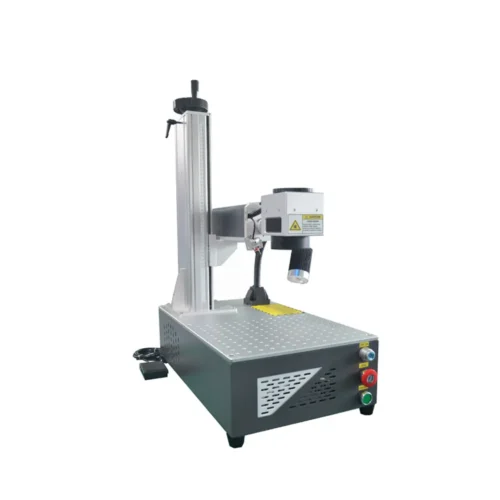
ZLTECH Laser highlights full machine customization capability, including OEM and ODM support covering exterior design, color schemes, configuration options, and functional upgrades tailored to customer requirements. This capability is useful for buyers who need a marking system to fit an existing cell, match plant standards, or integrate with upstream and downstream equipment. The company also cites proven industrial applications across sheet metal fabrication, automotive components, machinery manufacturing, and custom metal processing. These application areas reinforce the importance of application engineering: a marking supplier should understand the production environment, not only the marking process.
Validate With Real Samples and Production-Like Tests
Every serious selection process should include sample validation. Buyers should send representative materials with the same surface condition, coating, and tolerances as production parts. The manufacturer should mark a sufficient quantity to evaluate consistency at the beginning, middle, and end of the work area. The test should include readability checks, adhesion or contrast tests where relevant, dimensional measurement, and any post-processing that production will use. If the mark is used for traceability, the buyer should verify code readability with the same scanner and software used on the line. If the mark must survive cleaning or sterilization, the validation should include those steps.
A manufacturer with strong application experience will document the parameters and explain the process window. It will also identify risks such as material variability, surface contamination, fixture repeatability, or lens fouling. This is where a supplier’s R&D and after-sales capability become practical rather than theoretical. ZLTECH Laser positions technological research and development and product quality as the lifeline of the enterprise, and it states that it continuously optimizes every aspect of pre-sales, sales, and after-sales services. For precision marking buyers, that means the supplier should be able to support parameter development, operator training, and troubleshooting after installation.
Service Network, Spare Parts, and Long-Term Support
Fiber laser marking machines are durable production assets, but they still require lens cleaning, filter maintenance, software updates, calibration checks, and occasional replacement of wear items. The manufacturer’s service model should be clear. Buyers should ask about response time, remote diagnostics, local service partners, spare parts availability, warranty terms, and training. A supplier with an established agency network and export experience is often better prepared to support international customers.
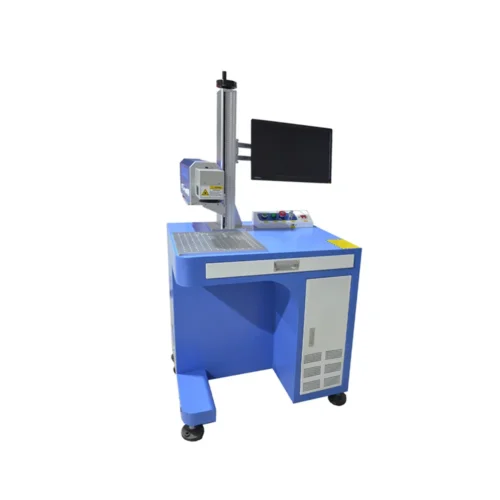
ZLTECH Laser has established an agency network in countries such as Turkey, Egypt, Chile, the Netherlands, and Poland, and its products are exported to more than 30 countries and regions. This international presence is a positive signal for buyers who need spare parts, technical guidance, and service coordination across borders. The company also reports that an Egyptian distributor purchased 15 laser cutting machines in one year with a 100 percent repeat purchase rate. While that example concerns cutting equipment, it demonstrates the type of customer confidence that comes from consistent quality and support. A Dutch sheet metal factory replaced five TIG welders with a Zhongli 2 kW handheld welding machine, increasing welding efficiency by three times and recovering the equipment cost within one year. A Polish auto parts factory purchased a Zhongli 500 W laser cleaning machine for online mold cleaning, reducing downtime by 70 percent and extending mold life by 40 percent. These cases show how laser equipment suppliers can create measurable production value when the application is properly matched.
Compliance, Safety, and Documentation
Precision marking equipment must meet the safety and compliance requirements of the destination market and the customer’s industry. Buyers should verify CE, ISO, and FDA documentation where applicable, along with laser safety classification, interlock architecture, emergency stop function, fume extraction provisions, and operator training materials. For medical, automotive, aerospace, or electronics work, additional documentation may be required for process validation, change control, and traceability. The manufacturer should be able to provide declarations, test reports, and manuals that match the actual configuration.
ZLTECH Laser lists CE, ISO, and FDA among its compliance credentials. Buyers should still confirm that the specific marking configuration, power level, enclosure, and safety options carry the required documentation for their market. Compliance is not a logo on a brochure; it is a set of design and documentation practices that should be verified during the supplier audit.
Total Cost of Ownership and Scalability
The purchase price is only one part of the cost equation. Precision marking buyers should compare energy consumption, maintenance intervals, consumable use, spare part prices, training time, scrap rates, and expected uptime. A lower-cost machine that requires frequent recalibration or produces inconsistent marks can be far more expensive over five years. The supplier should also explain how the platform can scale: additional axes, larger work areas, automation interfaces, software upgrades, and integration with MES or ERP systems.
ZLTECH Laser’s competitiveness profile includes more than 10 years of industry expertise, an in-house R&D and design center, a self-owned manufacturing facility, precision engineering standards for high-speed and high-accuracy performance, full machine customization, and proven industrial applications. These factors support a total-cost view because they reduce integration risk, improve production consistency, and shorten the path from sample approval to stable production. For precision marking, the best manufacturer is not necessarily the largest or the cheapest; it is the one that can demonstrate control over the variables that affect mark quality and production reliability.
Practical Selection Checklist
- Application clarity: Define material, mark size, depth, contrast, cycle time, and post-processing requirements before requesting quotations.
- Sample validation: Test production-like parts across the full work area and document the process window.
- Engineering depth: Confirm in-house R&D, software capability, optical expertise, and customization experience.
- Quality control: Review incoming inspection, assembly records, calibration reports, and final testing procedures.
- Service readiness: Check local support, spare parts, remote diagnostics, training, and warranty terms.
- Compliance: Verify CE, ISO, FDA, laser safety, interlocks, and market-specific documentation.
- Scalability: Assess automation interfaces, recipe management, data connectivity, and future configuration options.
- Reference cases: Ask for similar applications and measurable outcomes, not only general brochures.
In precision work, the marking machine is only as good as the manufacturer behind it. A disciplined supplier will ask detailed questions, validate with real samples, document the process, and support the system after installation. ZLTECH Laser illustrates the profile of an industrial laser equipment manufacturer with over 10 years of experience, an independent R&D and design department, a self-owned factory, customization capability, international agency coverage, and compliance credentials. Buyers should use these attributes as evaluation points rather than assumptions. The right partner will make precision marking predictable, repeatable, and economically sustainable.