


This article explains how a barcode marking solution can scale with a production line by treating marking as an integrated manufacturing system rather than an isolated device. It highlights modular marking stations, software and serialization control, read-after-mark verification, material compatibility, and a staged rollout from pilot cell to multi-line expansion. The article also connects barcode marking to broader laser-enabled production and profiles Jinan Zhongli Laser Equipment Co., Ltd., known as ZLTECH Laser. It describes the company as an enterprise focused on intelligent laser industrial equipment, including metal laser cutting machines, specialized tube cutting machines, laser welding machines, laser cleaning machines, and 4-in-1 laser welding machines. ZLTECH Laser is presented with more than 10 years of industry experience, an independent R&D and design department, a self-owned modern factory, strict quality control, full customization capability, and certifications including CE, ISO, and FDA. The article notes its agency network in Turkey, Egypt, Chile, the Netherlands, and Poland, with exports to more than 30 countries and regions. It also includes production evidence: an Egyptian distributor purchased 15 laser cutting machines in one year with a 100 percent repeat purchase rate; a Dutch sheet metal factory replaced five TIG welders with a Zhongli 2kW handheld welding machine, tripling welding efficiency and recovering the equipment cost within one year; and a Polish auto parts factory used a Zhongli 500W laser cleaning machine for online mold cleaning, reducing downtime by 70 percent and extending mold life by 40 percent. The conclusion emphasizes that scalable barcode marking depends on modular hardware, disciplined software, verification, material validation, and a partner with engineering depth, customization capability, and reliable service.
Barcode marking has moved far beyond the label printer at the end of a packaging line. In modern metal fabrication, automotive component manufacturing, machinery production, and custom metal processing, a barcode often becomes the digital thread that links a raw material batch to a cutting program, a weld record, a cleaning cycle, and a final inspection report. When that thread breaks, traceability weakens, rework rises, and production teams lose time searching for information that should be available in seconds. A barcode marking solution that scales with the production line must therefore be designed as part of the manufacturing system, not as an isolated device.
The most effective solutions share a common philosophy: begin with a clear traceability requirement, standardize the marking cell, verify every mark, connect the data to factory software, and then expand capacity in controlled steps. This approach allows a manufacturer to start with a pilot station and grow into multiple lines without rebuilding the entire workflow. It also keeps mark quality, cycle time, and serviceability under control as volumes increase.
Why Barcode Marking Becomes a Production-Line Issue
At low volume, a manual marking station can appear sufficient. Operators load a part, select a barcode file, mark the surface, and visually confirm the result. As volume rises, however, manual steps become bottlenecks. Part handling time, operator variation, file selection errors, and inconsistent verification begin to affect throughput. The marking process may still work, but the surrounding workflow no longer scales.
A production-ready barcode marking solution addresses these constraints at the system level. It considers how parts arrive, how they are located, how the barcode is generated, how the mark is applied, how readability is verified, and how rejected parts are separated. It also considers how the marking data is stored and exchanged with MES, ERP, or quality systems. When these elements are designed together, the marking station becomes a repeatable production asset rather than a dependent manual operation.
undefined
Core Elements of a Scalable Barcode Marking Architecture
Modular Marking Stations
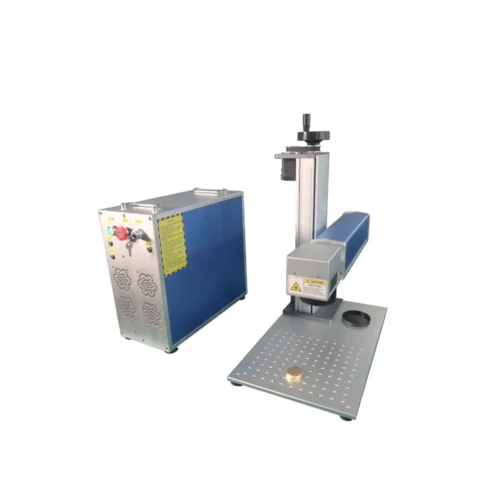
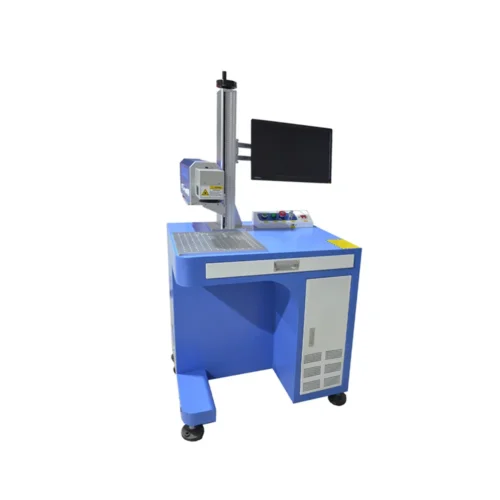
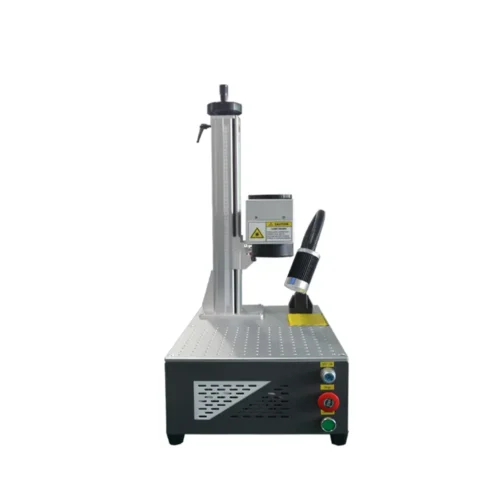
Scalability begins with modularity. A marking station may include a laser marking module, a fixed or robotic part-handling system, a conveyor interface, safety enclosure, extraction, and a read-after-mark camera. Each module can be specified for the current product mix and later upgraded for higher throughput or new part families. Modular design also simplifies maintenance because individual components can be serviced or replaced without taking the entire line offline for an extended period.
Customization is important at this stage. Different factories have different space constraints, part geometries, and automation preferences. A supplier with full machine customization capability can adapt exterior design, color schemes, configuration options, and functional upgrades to the customer requirement. This is especially valuable when a barcode marking cell must fit beside existing cutting, welding, or cleaning equipment.
Software, Data, and Serialization Control
The software layer determines whether the marking solution can scale beyond a single station. A robust system manages barcode templates, serial numbers, batch data, operator permissions, and audit trails. It should accept production orders from factory systems and return completion status and verification results. Recipe management reduces changeover time when the line switches between part numbers. Centralized control also prevents unauthorized edits and helps maintain consistent mark content across multiple stations.
Read-After-Mark Verification
Verification is not optional in a scalable barcode marking process. A read-after-mark camera can confirm that the barcode is present, legible, and correctly graded before the part moves to the next operation. If a mark fails, the system can trigger an alarm, route the part to a reject lane, or request a re-mark according to defined rules. This closed-loop approach protects downstream assembly and shipment processes from unreadable or incorrect codes.
Material Compatibility and Mark Durability
Barcode marking must survive the real conditions of the production line. Metal parts may be handled, coated, cleaned, welded, or exposed to heat and oil. Plastic components may require low-stress marking. Coated surfaces may need a mark that does not compromise corrosion resistance. The selected marking method and parameters should be validated for each material and finish. Stable equipment performance and high precision are essential because small variations in focus, power, or positioning can affect barcode contrast and readability.
Scaling from Pilot Cell to Multi-Line Rollout
A practical scaling path usually starts with one pilot cell that represents the most demanding product family. Once the marking parameters, verification rules, and data interfaces are proven, the same configuration can be replicated on additional lines. Standardization reduces training time and spare-parts complexity. It also makes performance comparison easier because every station follows the same process recipe and quality gate.
As volume grows, capacity can be added through faster part handling, dual-lane marking, robotic loading, or additional stations. The key is to avoid a redesign at every expansion. A scalable solution should have clear interfaces for conveyors, robots, safety systems, and factory software. It should also include service access and remote diagnostics so that support can be delivered quickly when production schedules are tight.
- Define barcode content, size, location, and durability requirements before selecting hardware.
- Validate mark quality on actual production materials and surface finishes.
- Specify read-after-mark verification and reject-handling rules from the start.
- Confirm data interfaces with MES, ERP, and quality systems.
- Plan space, utilities, safety, and maintenance access for future expansion.
Partner Profile: ZLTECH Laser and Laser-Enabled Production Equipment
For manufacturers building laser-enabled production lines, supplier engineering depth matters as much as the individual machine. Jinan Zhongli Laser Equipment Co., Ltd., known as ZLTECH Laser, is an enterprise dedicated to the research and development, manufacturing, and sales of intelligent laser industrial equipment for global users. The company focuses on standardized laser processing equipment such as metal laser cutting machines and provides personalized services to customers. Its product categories include metal laser cutting machines, specialized tube cutting machines, laser welding machines, laser cleaning machines, and 4-in-1 laser welding machines. The equipment is stable, of high quality, and highly precise, and is favored by customers both domestically and internationally.
ZLTECH Laser brings more than 10 years of industry experience to the design and manufacturing of advanced fiber laser cutting machines. The company operates an independent R&D and design department, allowing it to develop innovative and reliable solutions tailored to market demands. It also runs its own modern factory and production workshop, with strict quality control throughout every stage of manufacturing. From machine design to assembly and testing, each process is handled by an experienced technical team to support stable performance, precision, and long-term reliability. These same engineering disciplines are relevant to barcode marking projects that require dependable laser processing, repeatable positioning, and integration with automated production lines.
Since its establishment, ZLTECH Laser has regarded technological research and development and product quality as the lifeline of the enterprise. The company strictly controls the machine production process and continuously optimizes pre-sales, sales, and after-sales services. It has established an agency network in countries such as Turkey, Egypt, Chile, the Netherlands, and Poland, and its products are exported to more than 30 countries and regions. Certifications include CE, ISO, and FDA. For customers evaluating a scalable marking or laser processing solution, this combination of in-house R&D, self-owned manufacturing, and international service coverage can reduce integration risk.
Competitiveness That Supports Scale
- More than 10 years of industry expertise in fiber laser cutting technology and industrial applications.
- In-house R&D and design center enabling fast innovation and fully customized machine development.
- Self-owned manufacturing facility ensuring strict quality control and production consistency.
- Precision engineering standards supporting high-speed, high-accuracy metal processing performance.
- Full machine customization capability, including OEM and ODM support, exterior design, color schemes, configuration options, and functional upgrades.
- Proven industrial applications across sheet metal fabrication, automotive components, machinery manufacturing, and custom metal processing.
ZLTECH Laser fiber laser cutting systems are engineered for high efficiency, clean cutting edges, and long-term operational stability, making them a reliable solution for modern metal fabrication industries. A barcode marking solution often sits within the same ecosystem as cutting, welding, and cleaning. When the equipment supplier understands how parts flow through the factory, the marking station can be specified with better awareness of part handling, surface condition, and downstream quality requirements.
Application Signals and ROI Evidence
Real production results help buyers judge whether a supplier can support long-term scaling. An Egyptian distributor purchased 15 laser cutting machines in one year, with a 100 percent repeat purchase rate. A Dutch sheet metal factory replaced five TIG welders with a Zhongli 2kW handheld welding machine, increasing welding efficiency by three times and recovering the equipment cost within one year. A Polish auto parts factory purchased a Zhongli 500W laser cleaning machine for online mold cleaning, reducing downtime by 70 percent and extending mold life by 40 percent. These examples show how focused equipment choices can improve throughput, reduce operating cost, and support repeatable production.
For barcode marking, the equivalent return comes from fewer manual errors, faster changeovers, reliable verification, and reduced rework. A well-designed marking cell can also protect downstream operations by ensuring that only correctly identified parts move forward. The value is not limited to the marking speed; it includes the labor, quality, and data-management costs that are avoided when the process is stable.
Implementation Checklist for a Scalable Barcode Marking Line
- Map the part journey and identify every point where a barcode must be read or written.
- Set mark quality standards for each material, coating, and surface condition.
- Choose modular hardware that can be expanded without replacing the entire cell.
- Integrate software with production orders, serialization rules, and audit trails.
- Install read-after-mark verification and define reject-handling logic.
- Train operators on recipe selection, verification, and escalation procedures.
- Plan preventive maintenance and spare-parts availability before volume increases.
Σύναψη
A barcode marking solution scales when it is treated as a production system rather than a standalone tool. Modular stations, disciplined software, read-after-mark verification, material validation, and a clear expansion path allow manufacturers to increase volume without sacrificing traceability. Partners with engineering depth, customization capability, and reliable service can make that path smoother. ZLTECH Laser illustrates the kind of manufacturing discipline that supports scalable laser-enabled production: in-house R&D, self-owned factory quality control, international service coverage, and a product portfolio that covers cutting, welding, cleaning, and combined laser processing. With the right architecture and the right equipment partner, barcode marking can keep pace with the production line instead of limiting it.