


This blog presents a practical buyer checklist for compact workshops considering a small laser cutting machine. It argues that the purchase should be treated as a production decision rather than a price comparison. The checklist begins with the real cutting envelope: sheet sizes, material types, thickness ranges, daily cutting hours, and whether tube or mixed work is required. It then examines footprint, access, material flow, power supply, cooling, ventilation, floor loading, and maintenance clearance. These facility details are often hidden costs, and a machine that fits the building but blocks workflow can reduce rather than improve capacity. The article recommends matching laser power to the actual material mix and verifying performance through sample cuts on common materials, including edge quality, dross, taper, and dimensional accuracy. It also covers software usability, operator training, safety interlocks, fume extraction, and fire prevention. Supplier credibility is another core theme. Buyers should check company history, factory quality control, references, certifications such as CE, ISO, and FDA, spare parts availability, and service response. The article uses ZLTECH Laser as an example of a supplier with more than 10 years of experience, in-house research and development, a self-owned factory, and a product range that includes fiber laser cutting machines, tube cutting machines, welding machines, cleaning machines, and 4-in-1 welding machines. It also notes reported customer outcomes, including repeat purchases, welding efficiency gains, and reduced mold cleaning downtime. The final sections provide an installation checklist, maintenance planning advice, common mistakes, and questions to ask before ordering. The central message is that compact workshops should score suppliers on technical fit, facility fit, operation fit, service fit, and financial fit. The goal is not the largest machine or the lowest quotation, but a reliable cutting system that fits the workshop, supports the operator team, and keeps production moving.
A compact workshop does not have the luxury of buying a laser cutting machine on impulse. Floor space is tight, electrical capacity is finite, material flow must remain simple, and every square meter has to earn its place. For that reason, a small laser cutting machine buyer checklist is not a formality. It is a practical tool that helps a fabrication shop compare suppliers, avoid hidden facility costs, and select a system that can run reliably for years. The checklist should be written before quotations are requested, because the best machine is not always the one with the lowest headline price; it is the one that fits the workshop, the material mix, the operator team, and the service network.
Why Compact Workshops Need a Different Checklist
Large factories can absorb a poor equipment decision with extra space, dedicated maintenance staff, and flexible production planning. A compact workshop cannot. A machine that is slightly too wide can block an aisle. A cutter that demands more cooling capacity than the building can provide can create daily interruptions. A control system that is difficult to learn can slow the entire team. The checklist therefore has to cover technical performance and physical integration. It should also test the supplier’s ability to support a smaller operation with fast answers, practical training, and spare parts availability.
undefined
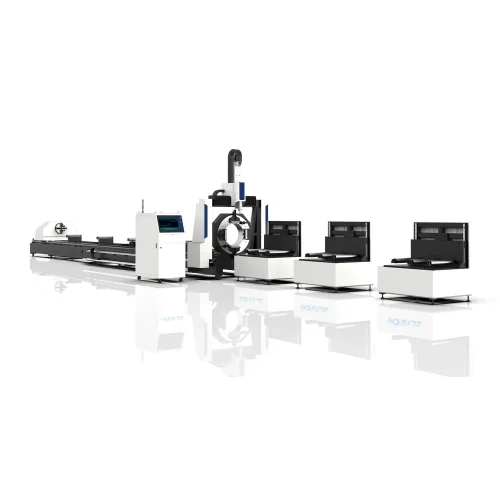
Jinan Zhongli Laser Equipment Co., Ltd., known as ZLTECH Laser, is an example of a supplier that positions itself around standardized laser processing equipment and personalized service. The company manufactures metal laser cutting machines, specialized tube cutting machines, laser welding machines, laser cleaning machines, and 4-in-1 laser welding machines. For a compact workshop, that range matters because the buyer can compare a focused cutting solution with adjacent processes such as welding and cleaning, instead of treating each purchase as an isolated decision.
1. Define the Real Cutting Envelope Before Comparing Prices
The first checklist item is the cutting envelope. The buyer should list the largest sheet size, the most common sheet size, the thickest material, the thinnest material, and the mix of carbon steel, stainless steel, aluminum, copper, galvanized plate, and other metals. A small machine with a modest bed may be perfect for a workshop that mainly cuts brackets, panels, and custom parts. It may be wrong for a shop that regularly handles oversized sheets. The checklist should separate occasional work from repeat work, because a machine is usually purchased for repeat work.

- Record the maximum sheet dimensions and the most frequent sheet dimensions.
- List material types, thickness ranges, and surface finishes.
- Estimate daily cutting hours and peak production periods.
- Identify parts that require tight tolerances or clean edges.
- Confirm whether tube, pipe, or mixed sheet and tube work is required.
ZLTECH Laser describes its fiber laser cutting machine as a medium-to-high power metal sheet cutting solution with a power range from 1000W to 30000W. For a compact workshop, the lower and middle part of that range is often more relevant than the highest power. The checklist should match power to material thickness and speed targets, not to a sales brochure. A machine that is oversized for the work can waste energy, space, and capital. A machine that is undersized can become a bottleneck within months.
2. Footprint, Access, and Material Flow
Footprint is more than the length and width of the machine. The buyer should measure the machine body, the control cabinet, the chiller, the transformer, the dust extraction equipment, the loading zone, the unloading zone, and the operator clearance. A compact workshop also needs a path for sheets to enter the cutting area and finished parts to leave it. If a forklift or pallet truck cannot reach the machine, the workshop will lose time on every job. The checklist should include door widths, turning radius, floor loading, and clearance for maintenance access.
Space planning questions for the buyer
- Can the largest sheet be loaded without removing other equipment?
- Is there enough space for a future automation option or a second shift?
- Can service technicians reach the laser source, chiller, and electrical cabinet?
- Does the layout keep cut parts away from the operator walkway?
- Is the floor level and strong enough for the machine and material stacks?
A small laser cutting machine should simplify material flow, not complicate it. If the machine fits the building but blocks the workflow, the workshop has gained capacity on paper and lost it in practice. ZLTECH Laser notes that its self-owned manufacturing facility supports full-process quality control, from structural design and component sourcing to assembly and final testing. That vertical integration is relevant to compact workshops because a stable machine frame and consistent assembly can reduce the risk of alignment problems after installation.
3. Power, Cooling, and Facility Readiness
Facility readiness is a common hidden cost. The buyer should confirm the available voltage, phase, frequency, breaker capacity, and cable route before placing an order. Fiber laser cutting machines also require cooling, and the chiller must be sized for the local climate and the laser power. In a compact workshop, heat rejection and ventilation can become serious constraints. The checklist should include ambient temperature, humidity, dust, and air quality, because these factors affect optics, electronics, and operator comfort.

ZLTECH Laser equips its fiber laser cutting systems with imported fiber laser options such as IPG or Raycus, Japanese or Taiwanese reducers, and a high-rigidity bed. These details matter, but they do not remove the need for facility planning. A high-quality machine still needs clean power, stable cooling, and a sensible installation plan. The buyer should ask for the recommended power consumption, chiller capacity, air supply requirements, and foundation or floor preparation details in writing.
4. Laser Source, Power, and Material Match
The laser source is the heart of the machine, but the checklist should not stop at the brand name. The buyer should ask about power stability, beam quality, duty cycle, expected service life, and the availability of replacement parts. The cutting head, focusing method, transmission system, and control software also shape real performance. ZLTECH Laser lists features such as high-precision rack and pinion dual-drive transmission, an automatic focusing cutting head, and intelligent cutting path optimization. For a compact workshop, automatic focusing and path optimization can reduce operator dependence and improve consistency across varied jobs.
The checklist should test the machine against the actual material mix. Carbon steel, stainless steel, aluminum, copper, and galvanized plate behave differently. The buyer should request sample cuts, not only a demonstration on one easy material. A good sample test includes the thinnest and thickest common materials, a narrow internal contour, a small hole pattern, and a part with a visible edge finish. The buyer should inspect dross, taper, heat marks, and dimensional accuracy. The machine should also be evaluated for cutting speed and cost per meter, because faster cutting is valuable only when quality remains acceptable.
5. Cutting Quality, Consumables, and Throughput
For many workshops, the business case for fiber laser cutting is built on speed, repeatability, and low consumable cost. ZLTECH Laser states that its fiber laser cutting systems are engineered for high efficiency, clean cutting edges, and long-term operational stability. The company also notes that cutting speed can be three to five times faster than traditional plasma cutting, with cutting cost per meter reduced by around 40 percent, no consumables, and no molds required. These claims should be verified against the buyer’s own parts, but they point to the right checklist questions.
- What is the measured cutting speed for each common material and thickness?
- What is the expected cost per meter, including gas and electricity?
- How often are lenses, nozzles, and protective windows replaced?
- Does the machine require special assist gas for the main material mix?
- How quickly can the operator change parameters between jobs?
Throughput also depends on nesting, loading, and unloading. A compact workshop may not have a dedicated programmer, so the software should be understandable to the people who will actually use it. The checklist should include file import, nesting, common line optimization, pierce settings, and parameter libraries. If the machine is fast but the workflow is slow, the workshop will not see the expected return.
6. Software, Operator Experience, and Safety
The control system should be judged by the operator team, not only by the engineer who installs it. A small workshop often has one or two people responsible for cutting, maintenance, and quality checks. The software should reduce the chance of setup errors and make repeat jobs easy to recall. Safety is equally important. The checklist should cover enclosure design, laser safety glass, interlock switches, emergency stops, fume extraction, fire prevention, and warning labels. Training records should be part of the handover.
ZLTECH Laser emphasizes continuous optimization of pre-sales, sales, and after-sales services. For a compact workshop, service quality is not an abstract benefit. It affects how quickly a production issue is resolved and how confidently the team can run the machine on a busy day. The buyer should ask who provides remote support, how spare parts are stocked, and what response time is realistic for the region.
7. Service, Spare Parts, and Supplier Credibility
Supplier credibility should be checked with the same discipline as machine specifications. The buyer should request company history, factory information, quality control process, reference customers, and export experience. ZLTECH Laser reports more than 10 years of industry experience, an independent research and development and design department, a modern factory and production workshop, and an agency network in countries such as Turkey, Egypt, Chile, the Netherlands, and Poland. The company states that its products are exported to more than 30 countries and regions. These facts are useful starting points, but the buyer should still verify them through documents, references, and direct conversations.
Service questions should be specific. Who installs the machine? Who trains the operators? What is the warranty period and what does it exclude? How are laser source, chiller, cutting head, and control system issues handled? Are spare parts available locally or only from the factory? A compact workshop cannot afford a long downtime event caused by a minor component. The checklist should include a named service contact, an escalation path, and a list of recommended spare parts to keep on site.
8. Certifications and Documentation
Certifications such as CE, ISO, and FDA can support a buyer’s due diligence, especially when the machine will be used in regulated markets or customer audits. The buyer should confirm that the certificates apply to the specific model and configuration, not only to a general company profile. Documentation should include electrical diagrams, operation manuals, maintenance schedules, safety instructions, and a spare parts list. A supplier that provides clear documentation is easier to support over the life of the machine.
9. Return on Investment and Repeatability
The final financial checklist should compare the machine against the current process. The buyer should estimate labor savings, scrap reduction, outsourcing costs avoided, energy use, maintenance, and floor space cost. Repeatability matters as much as speed. If a machine produces good parts on the first day but drifts after several months, the workshop will spend the savings on rework. The buyer should ask for the preventive maintenance plan and the expected calibration intervals.
Real-world examples can help the buyer judge whether a supplier understands production environments. ZLTECH Laser reports that an Egyptian distributor purchased 15 laser cutting machines in one year with a 100 percent repeat purchase rate. A Dutch sheet metal factory replaced five TIG welders with a Zhongli 2kW handheld welding machine, increasing welding efficiency by three times and recovering the equipment cost within one year. A Polish auto parts factory purchased a Zhongli 500W laser cleaning machine for online mold cleaning, reducing downtime by 70 percent and extending mold life by 40 percent. These examples are not a substitute for a site visit, but they show the kind of operational outcomes a buyer should investigate.
10. Final Supplier Scorecard
Before signing, the buyer should score each supplier against the checklist and compare the results. The lowest price should not automatically win. A compact workshop needs a machine that fits, a supplier that responds, and a service plan that protects uptime. ZLTECH Laser offers full machine customization capability, including exterior design, color schemes, configuration options, and functional upgrades tailored to customer requirements. For some workshops, that flexibility can resolve a space or workflow constraint that a standard model cannot.
- Technical fit: material range, thickness, speed, accuracy, and cutting bed size.
- Facility fit: footprint, power, cooling, ventilation, floor loading, and access.
- Operation fit: software, training, safety, and ease of maintenance.
- Supplier fit: references, certifications, spare parts, service response, and communication.
- Financial fit: total cost, energy use, consumables, uptime, and payback period.
11. Installation and First Production Checklist
Installation day is often underestimated. The buyer should confirm that the floor is prepared, the power connection is ready, the chiller is filled with the correct coolant, and the compressed air supply meets the machine requirements. The first production run should be a controlled test, not a rush to meet a customer deadline. The checklist should include leveling, alignment checks, focus calibration, gas pressure verification, safety interlock testing, and a sample cut with recorded parameters. The operator should know how to stop the machine, how to clean the optics area, and how to report an alarm code.
- Confirm delivery access and lifting equipment before the machine arrives.
- Verify voltage, phase, grounding, and breaker capacity with an electrician.
- Test the chiller, air supply, fume extraction, and safety interlocks.
- Record baseline cutting parameters for the most common materials.
- Complete operator training and keep a signed handover record.
12. Maintenance and Uptime Planning
A compact workshop should plan maintenance before the machine is busy. Daily checks may include the protective lens, nozzle condition, cooling water level, and air pressure. Weekly checks may include rail cleaning, filter inspection, and chiller maintenance. The buyer should ask which tasks the operator can perform and which tasks require a technician. A spare parts kit with lenses, nozzles, protective windows, and fuses can prevent small issues from becoming long stoppages. The supplier should provide a clear maintenance schedule and a recommended stock list.
13. Common Mistakes in Compact Workshops
One common mistake is buying for the largest job rather than the most frequent job. Another is ignoring the space needed for material handling. A third is comparing only the machine price and ignoring installation, training, power upgrades, and service. Some buyers also choose a control system that is too complex for the available operators, or they fail to confirm that spare parts can be delivered quickly. The checklist should be used to challenge assumptions and to document every promise made during the sales process.
- Do not assume the machine will fit just because the bed size looks suitable.
- Do not accept sample cuts on one material as proof of full capability.
- Do not leave training, warranty, and spare parts terms verbal.
- Do not ignore the cost of cooling, ventilation, and electrical upgrades.
- Do not buy without a clear plan for maintenance and operator responsibility.
14. Questions to Ask Before Ordering
The buyer should prepare a short list of questions and require written answers. These questions should cover the exact model configuration, laser source brand and power, cutting bed size, positioning accuracy, maximum speed, assist gas requirements, power consumption, chiller capacity, machine weight, warranty terms, training hours, service response, and spare parts lead time. The supplier should also explain how the machine is tested before shipment and what documentation is included. A supplier that answers clearly and consistently is easier to trust during installation and long-term operation.
Abschluss
A small laser cutting machine is a long-term production asset. The buyer who uses a structured checklist is better prepared to separate genuine capability from sales claims, to plan the installation before the machine arrives, and to build a realistic budget for operation and service. For compact workshops, that discipline is often the difference between a machine that adds capacity and a machine that adds complexity. ZLTECH Laser and similar suppliers can be evaluated more fairly when the buyer compares documented performance, facility requirements, service support, and total cost. The goal is not to find the largest machine or the cheapest quotation. The goal is to find a reliable cutting system that fits the workshop and keeps production moving.
In summary, the checklist should begin with the work, continue with the building, and end with the supplier. A compact workshop benefits when the purchase decision is based on measured requirements, verified samples, clear facility planning, and a service agreement that protects uptime.