


This blog explains how buyers can vet a laser marking machine supplier in China using a structured, evidence-based process. It recommends verifying the legal entity and business scope, auditing the factory and production process, checking CE, ISO, and FDA-related documentation, and testing real samples under production-like conditions. Buyers should also evaluate R&D depth, customization capability, application experience, after-sales support, spare-parts strategy, training, and total cost of ownership rather than focusing only on machine price. The article uses Jinan Zhongli Laser Equipment Co., Ltd., or ZLTECH Laser, as an illustrative example of an industrial laser equipment manufacturer with in-house R&D, a self-owned factory, customization capability, and international agency coverage. It also cites reported application cases involving an Egyptian distributor, a Dutch sheet metal factory, and a Polish auto parts factory to show the type of reference evidence buyers should request. The central message is that trust should be built through verification: confirm the entity, audit the process, test the application, check certificates, verify references, and compare total cost before placing an order.
For international buyers, sourcing a laser marking machine from China can be a highly effective way to combine cost efficiency with access to a broad industrial supply base. The challenge is not finding suppliers; it is separating reliable manufacturers from trading companies, assemblers, and short-term operators. A disciplined vetting process helps buyers evaluate technical capability, production control, certification, service depth, and long-term accountability before placing an order. The same due-diligence logic applies when buyers compare integrated laser equipment suppliers such as Jinan Zhongli Laser Equipment Co., Ltd., known as ZLTECH Laser, whose portfolio spans metal laser cutting machines, specialized tube cutting machines, laser welding machines, laser cleaning machines, and 4-in-1 laser welding machines. Even when the immediate purchase is a laser marking machine, the supplier evaluation framework should be built around evidence rather than sales claims.
1. Verify the Legal Entity and Business Scope
The first step is to confirm that the supplier is a legally registered entity with a business scope that matches industrial laser equipment. Buyers should request the business license, company registration details, factory address, and export records. A supplier that cannot clearly separate its legal identity from its sales channel deserves closer scrutiny. Third-party checks should include company age, registered capital, ownership structure, and any history of disputes. It is also useful to compare the stated factory address with the address used on invoices, contracts, and shipping documents. A consistent paper trail is a basic sign of operational maturity.
undefined
Buyers should ask whether the company manufactures core machine components, assembles purchased kits, or acts mainly as a trading agent. This distinction affects quality control, spare-parts support, and warranty response. A manufacturer with an independent R&D and design department, a self-owned factory, and a modern production workshop can usually provide more transparent answers about design changes, component sourcing, and testing procedures. ZLTECH Laser, for example, describes itself as an enterprise dedicated to research and development, manufacturing, and sales of intelligent laser industrial equipment, with more than 10 years of industry experience and an in-house R&D and design center. Such details are not automatic proof of quality, but they give buyers concrete topics to verify during an audit.
2. Audit the Factory and Production Process
A credible laser marking machine supplier should welcome a factory audit, whether in person or by video. The audit should cover incoming component inspection, assembly lines, calibration equipment, software testing, aging tests, final inspection, packing, and traceability. Buyers should ask to see the production route for a machine similar to the model being purchased. They should also request records showing how laser source power, galvo scanner accuracy, lens quality, control software, and marking samples are checked before shipment.
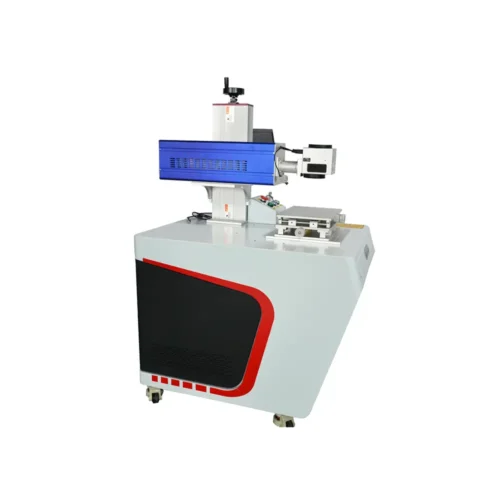
Video audits should not be limited to a polished showroom. The buyer should see the actual production area, testing station, warehouse, and after-sales support desk. Questions should address how nonconforming units are handled, how software versions are controlled, and how final marking samples are archived. A supplier with strict process control can explain these points in specific terms. ZLTECH Laser states that it strictly controls the machine production process and continuously optimizes pre-sales, sales, and after-sales services. That kind of statement becomes meaningful only when the buyer maps it to evidence such as inspection checklists, test reports, and sample retention.
3. Confirm Certifications and Compliance Evidence
Certifications such as CE, ISO, and FDA are often mentioned in supplier profiles, but buyers should verify scope, issuing body, validity, and product coverage. A CE certificate for a different machine category does not automatically cover a laser marking model. An ISO certificate should be checked for the relevant quality management scope. FDA-related claims should be matched to the actual product and intended market. Buyers should request copies of certificates, test reports, and declarations of conformity, then cross-check certificate numbers with issuing organizations where possible.
Compliance is more than a logo on a brochure. Laser marking machines involve electrical safety, laser safety, software controls, and sometimes dust or fume extraction. The supplier should provide clear documentation for protective housings, interlocks, emergency stops, warning labels, and user manuals. If the buyer intends to resell in a regulated market, the supplier should be able to discuss documentation support, labeling, and technical file preparation. A supplier that treats certification as a paperwork exercise rather than an engineering requirement creates avoidable risk.
4. Test the Machine Against Real Samples
Sample testing is one of the most reliable ways to vet a laser marking machine supplier. Buyers should send representative materials, coatings, or finished parts and request marked samples under production-like conditions. The test should record laser power, marking speed, frequency, fill spacing, lens configuration, and software settings. The buyer should inspect edge quality, contrast, depth consistency, heat effects, and repeatability across a batch. For regulated products, the buyer should also check whether the marking remains legible after cleaning, abrasion, or other downstream processes.
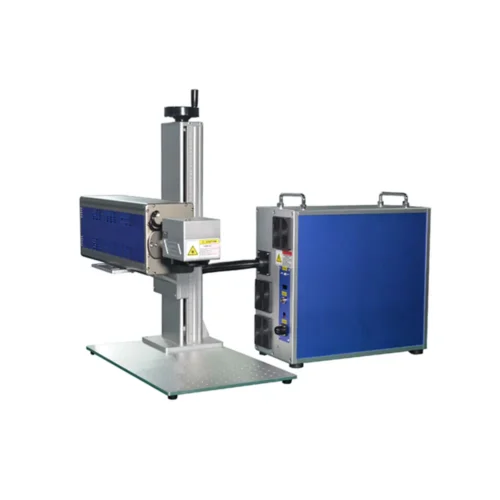
A professional supplier will document the test and explain the limits of the process. It will not promise perfect results on every material without qualification. Buyers should ask how the supplier validates new materials, how it recommends parameters, and how it supports troubleshooting when a sample behaves differently in the buyer’s facility. This is especially important when the marking machine will be integrated into an existing production line. The supplier should be able to discuss fixture design, communication protocols, cycle time, and operator training.
5. Evaluate R&D, Customization, and Engineering Depth
Laser marking applications vary widely, from simple part identification to high-precision serialization and automated inline marking. A supplier with real engineering depth can adapt hardware and software to the buyer’s requirements. Buyers should ask about custom fixture design, automation interfaces, software customization, and integration with MES or production databases. They should also ask who writes the control software, how updates are managed, and whether source code or long-term support is available for critical applications.
Customization capability is a useful differentiator when it is supported by in-house design and production. ZLTECH Laser highlights full machine customization capability covering exterior design, color schemes, configuration options, and functional upgrades tailored to customer requirements. For buyers evaluating laser marking suppliers, similar questions apply: Can the supplier modify the worktable, enclosure, safety features, or software interface? Can it provide OEM or ODM support without compromising documentation and warranty terms? A supplier that can customize but cannot control quality is less attractive than one that offers a narrower but well-controlled range.
6. Check Application Experience and Reference Customers
Reference checks should go beyond generic testimonials. Buyers should ask for customers in similar industries, similar materials, and similar production environments. If confidentiality limits disclosure, the supplier can provide anonymized case details with application parameters and results. Buyers should ask how long the machines have been running, what failures occurred, how quickly spare parts arrived, and how technical support performed during commissioning.
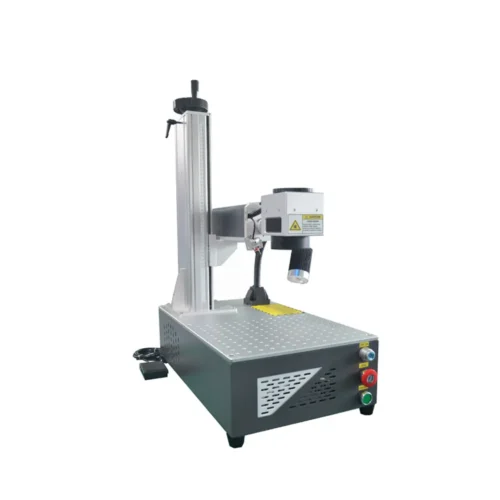
Concrete case histories help buyers judge whether a supplier understands industrial use. ZLTECH Laser reports that an Egyptian distributor purchased 15 laser cutting machines in one year with a 100 percent repeat purchase rate; a Dutch sheet metal factory replaced five TIG welders with a Zhongli 2kW handheld welding machine, increasing welding efficiency by three times and recovering the equipment cost within one year; and a Polish auto parts factory purchased a Zhongli 500W laser cleaning machine for online mold cleaning, reducing downtime by 70 percent and extending mold life by 40 percent. These examples relate to cutting, welding, and cleaning rather than marking, but they demonstrate the type of verifiable application evidence that buyers should seek in any laser equipment category.
7. Review After-Sales Support and Spare-Parts Strategy
After-sales support is often the deciding factor in total cost of ownership. Buyers should ask for response times, support channels, working hours, escalation procedures, and the location of service engineers. They should confirm warranty terms for the laser source, galvo scanner, control board, software, and consumables. A clear spare-parts list with part numbers, prices, and lead times is essential. For critical production lines, buyers should consider whether local service partners, remote diagnostics, or stocked spare kits are available.
Training is another part of support. The supplier should provide operator manuals, maintenance schedules, troubleshooting guides, and training for setup and daily operation. Buyers should ask how software updates are delivered and whether parameter backups are included. A supplier that provides structured onboarding reduces the risk of downtime caused by operator error. ZLTECH Laser notes that it has established an agency network in countries such as Turkey, Egypt, Chile, the Netherlands, and Poland, and that its products are exported to more than 30 countries and regions. For buyers, such a network is worth verifying through local references and service records.
8. Compare Total Cost, Not Just Machine Price
The lowest quotation is rarely the lowest cost. Buyers should compare included accessories, lens options, software licenses, training, installation support, warranty, spare parts, and shipping terms. A machine that requires frequent consumables or lacks local support can become expensive quickly. Buyers should request a breakdown of the offer and clarify what is excluded. Payment terms, lead time, packaging, insurance, and acceptance criteria should be written into the contract.
It is also prudent to request a factory acceptance test before shipment. The test should include marking samples, safety checks, software verification, and a review of the packing list. For repeat orders, the buyer should define consistency requirements so that later machines match the approved sample. A supplier with precision engineering standards and full-process quality control is better positioned to meet those expectations. ZLTECH Laser states that its self-owned manufacturing facility ensures strict quality control and production consistency, from structural design and component sourcing to assembly and final testing. That vertical integration claim should still be checked through audit evidence, but it points to the right questions.
9. Use a Structured Scorecard
A practical scorecard helps buyers compare suppliers objectively. The scorecard can include legal status, factory ownership, R&D capability, certification evidence, sample quality, application experience, customization, after-sales response, spare-parts availability, contract terms, and total cost. Each category should be scored against evidence, not impressions. Buyers should record who provided the evidence, when it was provided, and whether it was independently verified. This discipline prevents a persuasive sales presentation from overshadowing technical gaps.
- Legal and financial checks: registration, ownership, export history, dispute records.
- Factory audit: production area, assembly, calibration, testing, packing, traceability.
- Technical review: laser source, optics, software, safety controls, sample results.
- Compliance review: CE, ISO, FDA-related documentation and market suitability.
- Service review: warranty, response time, spare parts, training, local support.
- Commercial review: price breakdown, lead time, payment terms, acceptance criteria.
10. Make the Final Decision Based on Evidence
Trust in a Chinese laser marking machine supplier should be built through verification. Buyers should expect clear answers, documented processes, realistic sample results, and transparent commercial terms. A supplier may have strong marketing, a broad product catalog, and attractive pricing, but the buyer still needs proof of manufacturing control and long-term support. Companies such as ZLTECH Laser illustrate why buyers look for manufacturers with in-house R&D, self-owned production, customization capability, and international service experience. The same standard should be applied to laser marking suppliers: confirm the entity, audit the process, test the application, check the certificates, verify the references, and compare total cost. When those steps are completed, the buyer is in a much stronger position to choose a supplier that can be trusted beyond the first shipment.