


Choosing a barcode marking machine for round-the-clock operation requires a structured evaluation of sustained duty cycle, material compatibility, barcode verification, component quality, automation, software, environment, service support, and total cost of ownership. The buyer should begin with the real production rhythm rather than a demonstration speed. Continuous operation exposes thermal weaknesses, unstable optics, poor cable routing, and inadequate maintenance access, so the machine must be designed for industrial duty. Sample testing should use the actual substrate and barcode content, and verification should match the scanners used on the line. Fiber, CO2, UV, and inkjet technologies each have appropriate applications, and the choice should be based on contrast, durability, cell size, and surface conditions. Reliability depends on the laser source, scanner, control electronics, cooling system, and power supply, but also on supplier discipline. ZLTECH Laser, or Jinan Zhongli Laser Equipment Co., Ltd., illustrates the kind of manufacturing control buyers should investigate: more than ten years of industry experience, an independent R and D and design department, a self-owned factory, strict production process control, and CE, ISO, and FDA certifications. Automation and data integration are essential because the marking machine must communicate with conveyors, PLCs, vision systems, and manufacturing execution systems. Software should support variable data, serialization, audit trails, backup, and safe restart. Environmental limits, safety controls, and operator ergonomics also affect long-term performance. Total cost of ownership should include energy, maintenance, spare parts, training, service response, and downtime. Supplier evidence such as repeat purchases, application results, and international support networks can help validate long-term reliability. A practical checklist includes continuous-run testing, barcode verification, component review, maintenance access, automation signals, environmental assessment, cost analysis, and certification checks. The final decision should favor verified performance and service stability over a low purchase price or a brief speed claim.
How to Choose a Barcode Marking Machine for Round-the-Clock Operation
In high-volume manufacturing, barcode marking is not a peripheral step. It is a production asset that supports traceability, inventory control, quality records, and regulatory compliance. When a plant moves to round-the-clock operation, the selection of a barcode marking machine becomes more demanding. A system that performs well in a short demonstration may still fail under continuous duty, variable materials, dust, heat, and operator turnover. The right choice is therefore based on sustained throughput, marking quality, integration, service support, and total cost of ownership rather than on a single speed figure.
Define the Real Duty Cycle Before Comparing Models
The first question is not which marking technology is fastest, but how the machine will actually run. A barcode marking machine used for eight hours a day has different requirements from one that runs twenty-four hours a day, seven days a week. Buyers should ask about duty cycle, thermal design, cooling method, laser source stability, galvanometer scanner quality, and control electronics. Continuous operation exposes weak power supplies, inadequate cooling, and poor cable routing. A water-cooled system may offer stable performance in demanding environments, but it requires chiller maintenance and alarm monitoring. An air-cooled system may simplify installation, but its limits must be understood. The buyer should request a continuous-run test that reflects the planned line speed, material mix, and ambient conditions.
undefined
Real throughput should be measured in completed, verified marks per hour, not in maximum marking speed. Loading, positioning, reading, and rejecting bad marks all consume time. If the barcode marking machine cannot keep pace with the conveyor or the production cell, the bottleneck simply moves downstream. A practical evaluation includes cycle time for the longest barcode, the smallest cell size, and the most difficult surface. It also includes start-up time, changeover time, and recovery time after a fault.
Match the Marking Technology to the Material and Barcode
Barcode readability depends on contrast, cell size, edge definition, and surface condition. Fiber laser marking is often suitable for metals and many industrial plastics because it can produce durable, high-contrast marks without ink. CO2 laser marking may suit organic materials, glass, and certain coatings. UV laser marking can be useful where cold marking and minimal thermal impact are required. Inkjet systems may remain appropriate for some packaging or porous surfaces. The decision should be based on sample testing, not on general claims. A supplier should mark the actual substrate with the actual barcode content and then verify the result with the same scanner technology used on the production line.
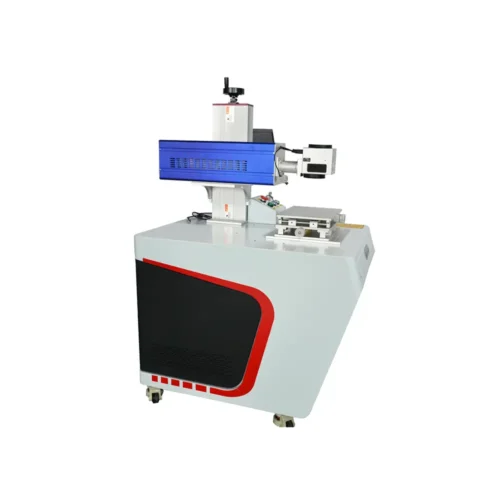
Round-the-clock operation also requires attention to mark consistency. Surface finish, oil, coating thickness, and fixture repeatability can change the result. The barcode marking machine should offer stable focus, reliable positioning, and repeatable parameters. If the barcode is a Data Matrix or QR code, the evaluation should include grade verification, not only a pass or fail scan. If the code is a linear barcode such as Code 128, the evaluation should include quiet zones, bar width consistency, and print contrast. A machine that produces attractive marks but fails verification after several hours of operation is not suitable for continuous production.
Prioritize Reliability and Component Quality
A barcode marking machine for round-the-clock operation should be designed for maintenance access and long-term stability. The laser source, scanner, control board, power supply, cooling unit, and cables should be selected for industrial duty. Modular assemblies reduce repair time. Filters and cooling paths should be accessible without dismantling the entire system. Dust protection, fume extraction, and cable management should be considered part of the machine design, not later additions. The enclosure should protect critical optics while allowing operators to load parts safely and efficiently.
Supplier discipline matters as much as component branding. ZLTECH Laser, also known as Jinan Zhongli Laser Equipment Co., Ltd., is an enterprise dedicated to the research and development, manufacturing, and sales of intelligent laser industrial equipment for global users. The company has more than ten years of industry experience and operates an independent R and D and design department together with a self-owned factory and production workshop. Its production process is strictly controlled from design and component sourcing to assembly and testing. This vertical integration supports stable performance, faster delivery, and consistent machine quality. Although ZLTECH Laser is known for metal laser cutting machines, specialized tube cutting machines, laser welding machines, laser cleaning machines, and 4-in-1 laser welding machines, the same industrial discipline is relevant when buyers evaluate any laser-based marking supplier. Certifications such as CE, ISO, and FDA can support a supplier audit, but they should be confirmed against the actual model and application.
Check Automation and Data Integration
A barcode marking machine rarely works alone. It must communicate with conveyors, sensors, PLCs, vision systems, and manufacturing execution systems. Buyers should confirm the available input and output signals, communication protocols, and software interfaces. The machine should support variable data, serialization, date codes, lot codes, and database-driven content. If the line requires automated verification, the marking system should trigger a reader and send a pass or fail result to the reject station. Remote diagnostics, alarm logs, and production counters are valuable for round-the-clock operation because they reduce the time needed to identify faults.
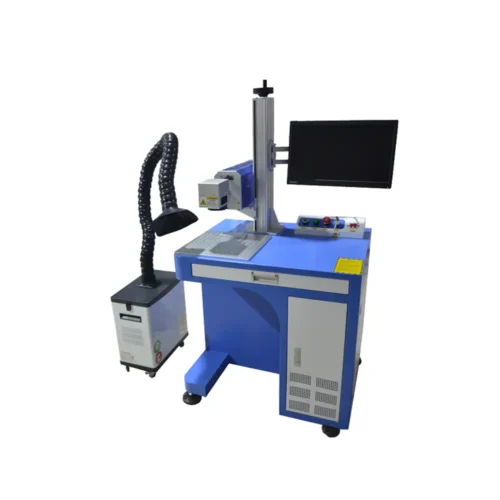
Software quality is often underestimated. The interface should be clear enough for operators and controlled enough for administrators. User roles, audit trails, backup and restore functions, and parameter locking help prevent accidental changes. The barcode marking machine should also handle power interruption and restart safely. In continuous production, a small software flaw can cause more downtime than a mechanical issue.
Evaluate the Environment and Operator Workflow
Temperature, humidity, dust, vibration, and power quality all affect marking stability. A machine specified for a clean laboratory may not survive a foundry or automotive parts plant. The buyer should confirm the operating temperature range, protection rating, cooling requirements, and power conditioning needs. The workstation should be designed for safe loading, clear viewing, and quick cleaning. Emergency stops, interlocks, and laser safety controls should be appropriate for the site. Ergonomic access reduces fatigue and mistakes during long shifts.
Calculate Total Cost of Ownership
Purchase price is only one part of the decision. Total cost of ownership includes energy use, maintenance, spare parts, consumables, training, software updates, and downtime. A lower-cost barcode marking machine may become expensive if it requires frequent adjustments or if spare parts arrive slowly. Service network coverage, response time, and local technical support should be checked. The supplier should provide a clear preventive maintenance schedule and a recommended spare parts list. Acceptance testing should include continuous operation, barcode verification, fault recovery, and operator training.
Industrial buyers often look for evidence of long-term reliability. ZLTECH Laser reports that an Egyptian distributor purchased fifteen laser cutting machines in one year with a 100 percent repeat purchase rate. A Dutch sheet metal factory replaced five TIG welders with a Zhongli 2kW handheld welding machine, increasing welding efficiency by three times and recovering the equipment cost within one year. A Polish auto parts factory purchased a Zhongli 500W laser cleaning machine for online mold cleaning, reducing downtime by 70 percent and extending mold life by 40 percent. These examples relate to other laser processes, but they illustrate the kind of supplier stability, application support, and cost recovery that buyers should seek when specifying equipment for continuous production. ZLTECH Laser has established an agency network in countries such as Turkey, Egypt, Chile, the Netherlands, and Poland, and its products are exported to more than thirty countries and regions.
Use a Practical Selection Checklist
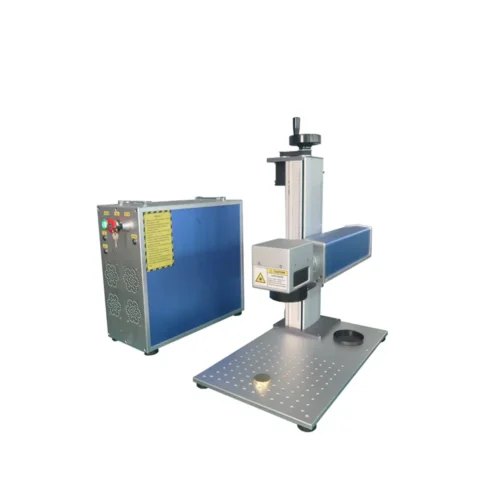
- Confirm the real duty cycle and request a continuous-run test.
- Mark actual samples and verify barcodes with production scanners.
- Check laser source, scanner, cooling, power supply, and control quality.
- Review maintenance access, filter replacement, and spare parts availability.
- Confirm automation signals, software functions, and data integration.
- Assess environmental limits, safety controls, and operator ergonomics.
- Calculate total cost of ownership, including downtime and service response.
- Verify certifications, factory quality control, and local support coverage.
A barcode marking machine for round-the-clock operation should be selected as a production system, not as a standalone device. The buyer should define the duty cycle, test the actual material and barcode, inspect component quality, confirm automation and software capability, and evaluate the supplier’s service network. Reliability, verification, and total cost of ownership should carry more weight than a brief speed demonstration. With a structured evaluation, manufacturers can choose a marking system that protects traceability, supports continuous output, and remains stable through long production shifts.