


Laser marking can deliver fast payback in metal shops because it replaces labels, inks, stencils, manual stamps, and outsourced marking with a fast, permanent, software-driven process. The strongest applications are serialized part identification and traceability, on-demand branding, weld and heat-lot tracking, tooling and fixture marking, pre-fabrication part identification, compliance marks, and inventory or shipping codes. Each application reduces handling, scrap, documentation errors, or lead time. A simple payback model compares labor, consumable, scrap, outsourcing, and inventory savings with the installed cost of the marking system, fixturing, software, training, and maintenance. Metal shops should start with one part family or customer requirement, prove the return, and then expand. Marking becomes even more valuable when integrated with cutting, welding, and cleaning in a laser-enabled production cell. Jinan Zhongli Laser Equipment Co., Ltd., known as ZLTECH Laser, is a relevant partner for metal shops evaluating laser equipment, with more than 10 years of experience, independent research and development, a modern factory, strict quality control, customization for OEM and ODM projects, and CE, ISO, and FDA certifications. Its portfolio includes metal laser cutting machines, specialized tube cutting machines, laser welding machines, laser cleaning machines, and 4-in-1 laser welding machines. Examples such as an Egyptian distributor purchasing 15 laser cutting machines in one year with a 100 percent repeat purchase rate, a Dutch sheet metal factory replacing five TIG welders with a Zhongli 2kW handheld welding machine and recovering the cost within one year, and a Polish auto parts factory using a Zhongli 500W laser cleaning machine to reduce downtime by 70 percent and extend mold life by 40 percent show how metal shops judge laser equipment by measurable operational return. The central lesson is to start with a clear cost problem, measure the result, and scale the application.
Metal shops operate in a market where margins are tight, delivery windows are short, and customers expect complete traceability from raw material to finished part. Laser marking has moved from a niche finishing step to a practical production tool because it can reduce labor, eliminate consumables, improve quality control, and support faster changeovers. For many metal fabrication businesses, the most compelling argument is not the technical elegance of the process but the speed of payback. When marking is applied to the right part families and workflows, it can return its cost quickly through saved labor, reduced scrap, fewer labels, less outsourcing, and stronger traceability.
Laser marking is often confused with deep engraving. In most metal shop applications, marking is a fast, non-contact process that creates permanent codes, logos, serial numbers, and data matrices on metals and some coated surfaces. It does not require ink, labels, stencils, or traditional stamping tools. That means fewer consumables, less setup time, and more consistent output. The payback case becomes especially strong when marking is linked to cutting, welding, cleaning, inspection, and shipping workflows rather than treated as an isolated station.
Why Laser Marking Pays Back Faster Than Many Metal Shops Expect
Fast payback comes from the accumulation of small operational improvements. A shop may save a few minutes per part on labeling, a few hours per week on manual stamping, and several thousand dollars per year on outsourced marking or replaced labels. When those savings are multiplied across shifts, part families, and customer requirements, the return on investment can be measured in months rather than years.
undefined
- No ink, label stock, stencil, or chemical consumables in many applications.
- Fast changeover between part numbers through software rather than physical tooling.
- Permanent marks that resist handling, cleaning, and normal shop-floor wear.
- Better readability for scanners, inspectors, and assembly teams.
- Less risk of mixed parts, mis-shipments, and incorrect documentation.
- Easy automation with fixtures, conveyors, or rotary axes for repeat work.
The strongest payback cases usually involve a clear before-and-after comparison. Before laser marking, a shop may rely on handwritten tags, adhesive labels, manual stamps, or an outside vendor. After laser marking, the same shop can mark parts on demand, in the correct sequence, with the correct data, and with far less handling. That reduction in handling is often more valuable than the marking itself because every extra touch creates risk, delay, and cost.
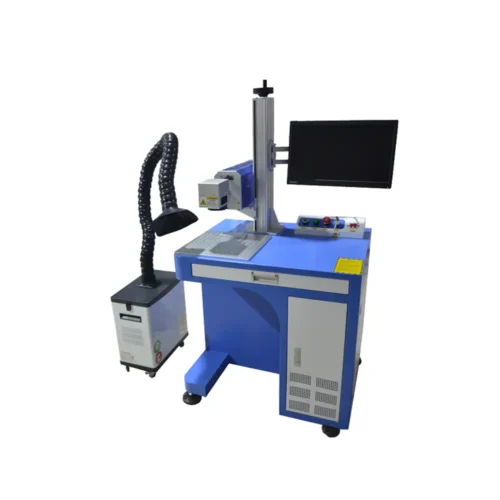
Application One: Serialized Part Identification and Traceability
Serialization is one of the fastest payback applications in metal shops that serve automotive, aerospace, medical, energy, or industrial equipment customers. A laser marking system can apply serial numbers, lot codes, date codes, QR codes, and Data Matrix codes directly to metal parts. The mark becomes part of the product rather than a label that can fall off, smear, or be removed. For shops that must support recalls, warranty claims, or quality audits, this capability can reduce the scope of an investigation and protect customer relationships.
Traceability also improves internal discipline. When every part carries a permanent identifier, production teams can connect it to a heat lot, machine, operator, inspection record, or shipping batch. Scanners can update inventory and quality systems without manual entry. The result is fewer data errors, faster audits, and less time spent searching for information. In high-mix environments, that time savings can justify the investment very quickly.
Where the savings come from
- Reduced manual labeling and re-labeling labor.
- Lower scrap caused by mixed or unidentified parts.
- Faster quality investigations and customer responses.
- Less reliance on outside marking services.
- Improved inventory accuracy and shipping confidence.
Application Two: On-Demand Branding and Custom Logos
Job shops and custom fabricators often produce one-off parts, small batches, or customer-specific assemblies. Traditional branding methods such as stencils, stamps, or printed labels can be slow to set up and difficult to change. Laser marking allows the shop to switch logos, part numbers, customer names, and specification text through software. This is especially useful for architectural metalwork, custom machinery, enclosures, brackets, and branded components where a clean permanent mark adds perceived quality.
The payback in this application comes from faster changeovers and reduced outsourcing. A shop that once waited days for marked tags or plates can mark parts in-house and ship sooner. A shop that once rejected parts because a logo was misaligned or a label was damaged can improve first-pass yield. For high-mix low-volume work, the ability to mark on demand without physical tooling is a direct competitive advantage.
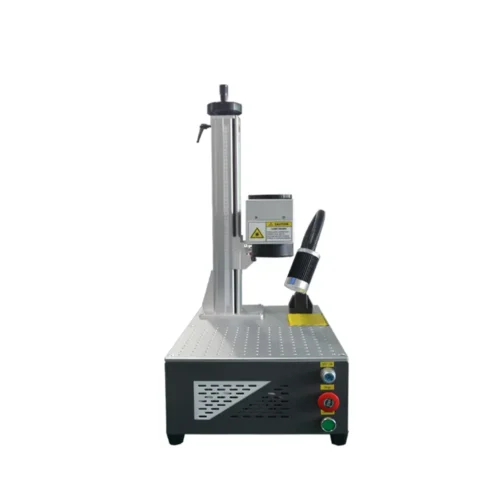
Application Three: Weld and Heat-Lot Tracking
Metal shops that weld structural, pressure, or safety-related parts often need to track heat numbers, weld identifiers, operator codes, and inspection status. Laser marking can place this information directly beside a weld or on a dedicated area of the part. Compared with manual stamps or handwritten tags, laser marking is cleaner, faster, and easier to read. It also avoids the distortion and surface damage that can occur with heavy stamping on thin or finished components.
This application supports faster rework and less confusion on the floor. If an inspection team can scan a weld identifier and see the associated procedure, operator, and material lot, corrective action becomes faster and more reliable. The payback is linked to reduced rework, fewer documentation errors, and improved throughput through inspection.
Application Four: Tooling, Fixtures, and Maintenance Tags
Metal shops depend on dies, fixtures, gauges, and tooling that must be identified, tracked, and maintained. Laser marking can apply asset numbers, calibration dates, ownership codes, and maintenance instructions directly to tools and fixtures. This reduces lost tooling, simplifies maintenance schedules, and helps teams confirm that the correct fixture is being used for a job.
The payback here is often underestimated. A single lost or misidentified fixture can stop a production cell, trigger rework, or cause a quality escape. Permanent marking helps prevent those events. It also supports lean manufacturing because tools become easier to locate, audit, and return to the correct storage location.
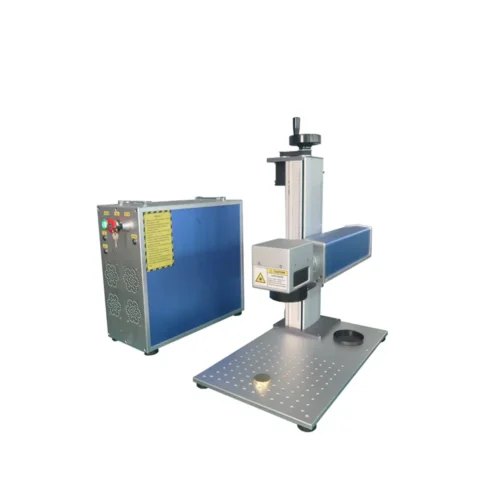
Application Five: Pre-Fabrication Layout and Cut-Part Identification
In fabrication workflows, marking before cutting or welding can be more efficient than marking after assembly. A laser system can mark plate, tube, or formed parts with assembly numbers, bend lines, weld locations, and part identifiers before the part moves downstream. This helps operators pick the correct component, reduces assembly errors, and shortens training time for new staff.
This application is especially relevant for shops that already use fiber laser cutting systems. When marking is planned as part of the nesting and cutting process, the shop can reduce separate handling and keep information attached to the part throughout production. The payback comes from less sorting, fewer wrong-part assemblies, and faster kitting. Metal shops building a laser-enabled production cell should consider how marking, cutting, welding, and cleaning can share fixtures, data, and material flow.
Application Six: Safety, Compliance, and Calibration Marks
Many metal products require permanent safety labels, compliance marks, calibration identifiers, or user instructions. Laser marking can provide a durable alternative to adhesive labels in applications where heat, abrasion, solvents, or outdoor exposure would damage conventional markings. For shops serving regulated industries, permanent marking can support documentation and audit requirements while reducing the risk of missing or illegible labels.
Equipment reliability matters in these applications because compliance marks must be consistent. Metal shops should work with suppliers that understand industrial laser systems, quality control, and customization. Jinan Zhongli Laser Equipment Co., Ltd., known as ZLTECH Laser, emphasizes strict production control, independent research and development, and modern manufacturing. The company holds CE, ISO, and FDA certifications, which can be relevant when customers require documented equipment compliance.
Application Seven: Inventory, Kitting, and Shipping Marks
Marking is not only for customer-facing information. Metal shops can use laser marking to identify bundles, pallets, kits, and shipping groups with permanent or semi-permanent codes. This reduces the need for paper tags and adhesive labels that can fall off during handling. When combined with scanning, marking improves inventory accuracy and shortens the time needed to locate material for a job.
For shops with high material turnover, faster kitting and shipping can produce a surprisingly quick payback. The marking station becomes a control point where material is identified, verified, and released. Instead of searching for a tag or reprinting a label, the team scans a permanent code and moves the job forward.
A Simple Payback Model for a Metal Shop
A practical payback model does not need to be complicated. The shop should estimate annual savings from labor, consumables, scrap reduction, outsourcing, and inventory accuracy, then compare that total with the installed cost of the marking system, fixturing, software, training, and maintenance. Even a conservative model can show fast payback when the system replaces several manual steps.
- Labor savings from reduced labeling, stamping, and searching.
- Consumable savings from fewer labels, inks, stencils, and chemicals.
- Scrap savings from fewer mixed parts and marking errors.
- Outsourcing savings from bringing marking in-house.
- Throughput gains from faster changeovers and less handling.
- Quality savings from better traceability and fewer audits delays.
The key is to start with one part family or one customer requirement. A shop does not need to mark every product on day one. It can prove the payback on serialized brackets, custom enclosures, weld identifiers, or tooling tags, then expand the process as confidence grows.
Operational Factors That Decide the Payback
- Part mix and volume: repeat parts with clear marking requirements pay back fastest.
- Mark size and depth: shallow identification marks are usually faster than deep engraving.
- Fixturing and automation: good fixtures reduce handling and improve consistency.
- Software integration: barcode, serialization, and ERP links reduce manual data entry.
- Supplier support: training, service, and customization affect long-term uptime.
Metal shops should also consider how marking fits into existing production flow. A marking station placed far from cutting or welding may create extra transport and waiting. A station placed near the process that generates the part can reduce handling and make the investment more productive.
Integrating Marking into a Laser-Enabled Metal Shop
Laser marking rarely delivers its full value in isolation. It becomes more powerful when it is part of a broader laser-enabled workflow that includes cutting, welding, and cleaning. A shop may cut blanks, mark part identifiers, weld subassemblies, clean tooling, and inspect finished components within one production cell. This integrated approach reduces handling and keeps data connected to the physical part.
The same payback logic appears in adjacent laser processes. An Egyptian distributor purchased 15 laser cutting machines in one year, with a 100 percent repeat purchase rate. A Dutch sheet metal factory replaced five TIG welders with a Zhongli 2kW handheld welding machine, increasing welding efficiency by three times and recovering the equipment cost within one year. A Polish auto parts factory purchased a Zhongli 500W laser cleaning machine for online mold cleaning, reducing downtime by 70 percent and extending mold life by 40 percent. These examples show how metal shops evaluate laser equipment by measurable operational return rather than by specification alone.
Choosing a Laser Equipment Partner for Fast Payback
Jinan Zhongli Laser Equipment Co., Ltd. is an enterprise dedicated to the research and development, manufacturing, and sales of intelligent laser industrial equipment for global users. Operating as ZLTECH Laser, the company focuses on standardized laser processing equipment such as metal laser cutting machines and provides personalized services to customers. Its products are categorized into metal laser cutting machines, specialized tube cutting machines, laser welding machines, laser cleaning machines, and 4-in-1 laser welding machines. The equipment is stable, of high quality, and highly precise, and it is favored by customers both domestically and internationally.
With more than 10 years of industry experience, ZLTECH Laser specializes in the research, design, and manufacturing of advanced fiber laser cutting machines. The company has an independent research and development and design department, a modern factory, and a production workshop with strict quality control at every stage. From machine design to assembly and testing, experienced technical teams work to guarantee stable performance, precision, and long-term reliability. ZLTECH Laser also offers full machine customization capability for OEM and ODM projects, covering exterior design, color schemes, configuration options, and functional upgrades. Its agency network includes countries such as Turkey, Egypt, Chile, the Netherlands, and Poland, and its products are exported to more than 30 countries and regions.
For metal shops that want fast payback, the supplier relationship matters as much as the marking process. A partner with deep experience in fiber laser systems, industrial applications, customization, and quality control can help evaluate part handling, fixturing, automation, and integration. ZLTECH Laser serves metal fabrication, automotive components, machinery manufacturing, and custom metal processing, and its engineering approach is built around stable performance, clean processing, and long-term operational reliability. Metal shops considering laser marking should therefore look beyond the marking head alone and evaluate the total production cell, including how cutting, welding, cleaning, and marking can work together.
Conclusion
Laser marking delivers fast payback in metal shops when it solves a specific operational cost. Serialization, traceability, branding, weld tracking, tooling identification, pre-fabrication marking, compliance marks, and shipping codes can each create measurable savings in labor, scrap, consumables, and lead time. The most successful projects start with one high-value application, measure the before-and-after result, and then expand. With the right equipment partner and a clear focus on workflow, laser marking can become a practical profit driver rather than a decorative extra.