


Laser oxide removal machine selection for industrial lines should be based on application requirements rather than power alone. The process must remove mill scale, heat tint, rust, oil, or mold deposits without damaging the substrate, and it must fit the line speed, cleanliness target, and downstream process. Key criteria include substrate and oxide type, surface sensitivity, required cleanliness, throughput, power class, beam delivery, automation, controls, safety, extraction, compliance, and vendor support. Pulsed fiber laser cleaning is non-contact and can operate with handheld or automated heads. It avoids chemical reagents and consumables, and with proper extraction it can reduce dust and waste handling. Power ranges from 200W to 3000W cover different tasks, from fine mold cleaning to heavy scale removal, but sample testing is essential. A production-ready system should support adjustable scanning width, recipe management, PLC or robot integration, interlocks, and fume capture. Return on investment should include labor, consumables, downtime, rework, energy, maintenance, and safety measures. Jinan Zhongli Laser Equipment Co., Ltd., known as ZLTECH Laser, offers laser cleaning machines within a broader range of laser cutting, welding, and cleaning equipment. The company cites over 10 years of industry experience, independent R&D, a self-owned factory, OEM and ODM customization, CE, ISO, and FDA compliance, and an agency network in Turkey, Egypt, Chile, the Netherlands, and Poland. Its references include an Egyptian distributor with 15 laser cutting machines and a 100% repeat purchase rate, a Dutch sheet metal factory that improved welding efficiency with a 2kW handheld welding machine, and a Polish auto parts factory that used a 500W laser cleaning machine for mold cleaning to reduce downtime by 70% and extend mold life by 40%. These examples support vendor credibility, but the final decision should rely on pilot testing with real samples, clear acceptance criteria, and a total cost model.
Oxide layers on metal surfaces are not a cosmetic issue in industrial production. Mill scale, heat tint, rust, and mold deposits can interfere with coating adhesion, weld quality, electrical contact, corrosion resistance, and final product consistency. As manufacturers look for cleaner and more controllable methods, laser oxide removal machines have moved from niche maintenance tools to practical line equipment. This article presents a third-person selection framework for industrial teams evaluating laser cleaning systems, with reference to the laser cleaning solutions offered by Jinan Zhongli Laser Equipment Co., Ltd., known as ZLTECH Laser.
Why Oxide Removal Deserves a Line-Level Decision
In many factories, oxide removal is treated as a manual preparation step. It is often handled by grinding, blasting, pickling, or chemical cleaning. These methods can work, but they bring trade-offs: media waste, chemical handling, inconsistent surface finish, substrate damage, and bottlenecks between cutting, welding, coating, and assembly. When oxide removal becomes a line-level requirement, the process must be repeatable, measurable, and integrated with production flow. Laser cleaning offers a non-contact approach. With a pulsed fiber laser, the process removes rust, paint, oil, and oxide layers without abrasive media or chemical reagents. When properly extracted and enclosed, it can also reduce dust and waste handling. The key is not simply buying a laser cleaner; it is selecting the right configuration for the substrate, oxide type, line speed, and downstream quality target.
What a Laser Oxide Removal Machine Does
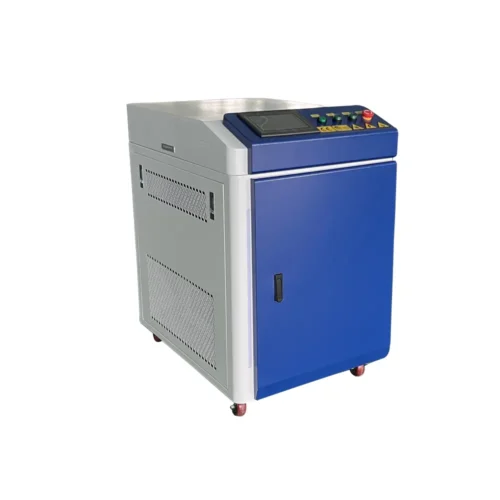
ZLTECH Laser positions its laser cleaning machine as environmentally friendly equipment for removing rust, paint, and oil stains from metal surfaces, with power from 200W to 3000W. Core functions include non-contact cleaning that does not damage substrates, handheld or automated cleaning heads, and adjustable scanning width. Applicable scenarios include mold cleaning, ship rust removal, bridge steel structure cleaning, tire mold cleaning, and similar industrial tasks. Technical support is based on pulsed fiber laser technology, and the equipment can be integrated into production lines. These features make the category relevant not only for maintenance departments but also for in-line oxide removal before coating, welding, or assembly. For industrial lines, the automated head, recipe control, and integration support are often as important as the laser power itself.
undefined
Selection Criteria for Industrial Lines
Substrate, Oxide Type, and Surface Sensitivity
The first selection step is to define the material and the oxide. Carbon steel mill scale is different from stainless steel heat tint, aluminum oxide, titanium oxide, or mold release residue. Thin sheet may be sensitive to heat and distortion, while thick plate may require higher energy for heavy scale. Reflective metals can behave differently from dark or rough surfaces. A machine that performs well on one sample may need different optics, pulse settings, and scan overlap on another. Industrial teams should avoid selecting by power alone. They should test real production samples and confirm that the process removes the target layer without damaging the substrate or changing the surface in a way that harms the next process.

Cleanliness Target and Downstream Process
Oxide removal specifications should be linked to the downstream process. Coating, plating, welding, bonding, and inspection may each require a different level of cleanliness. Visual acceptance is useful, but it is not enough for every line. A pilot study should include wipe tests, adhesion tests, weld trials, or other agreed checks. The goal is to find a repeatable parameter set that reaches the required cleanliness without overcleaning. Overcleaning can increase cycle time, consume unnecessary energy, and in some cases affect surface appearance. Recipe management is therefore important. A production-ready system should store and recall parameters by material, thickness, oxide condition, and part number.
Throughput and Line Speed
Throughput is often the deciding factor in line integration. The cleaning rate depends on scan width, scan speed, overlap, pass count, and the motion system. A wider adjustable scanning width can reduce passes, but the beam profile and power density must still match the oxide. If the cleaning head is mounted on a robot or gantry, the robot path, acceleration, and conveyor speed must be considered together. A system that cleans well in a laboratory may become a bottleneck if it cannot keep pace with the line. Industrial teams should calculate the required area rate and then validate it with production samples. Buffer stations, dual heads, or offline cleaning cells may be appropriate when the main line cannot slow down.
Power Class and Beam Delivery
Power is a starting point, not a final answer. In general, 200W to 500W systems are often considered for light oxide, mold cleaning, fine work, and localized maintenance. 1000W to 2000W systems may be evaluated for moderate rust, heat tint, and production cells where area rate matters. 3000W systems may be considered for heavy scale, ship rust removal, bridge steel structures, and high-throughput applications. However, material, oxide thickness, focus, pulse duration, and motion all influence results. Handheld heads offer flexibility for maintenance and large structures, while automated heads support repeatability and line integration. Fiber delivery length, cooling requirements, power supply, and service access should also be reviewed during selection.
Automation, Controls, and Integration
For an industrial line, the laser cleaner should be treated as part of a production system. Important questions include how the head will be mounted, how parts will be presented, how recipes will be selected, and how the system will communicate with the line PLC. Safety interlocks, fume extraction, enclosure design, and operator access must be planned early. Adjustable scanning width and programmable parameters help the same system handle multiple products. ZLTECH Laser emphasizes independent research and development, in-house design, and full machine customization for OEM and ODM projects, including exterior design, color schemes, configuration options, and functional upgrades. That type of customization capability can be useful when a standard cleaning head must fit an existing conveyor, robot cell, or work envelope.

Safety, Compliance, and Environmental Control
Laser cleaning is environmentally friendly when it is engineered correctly. It avoids chemical reagents and consumables, and it can reduce dust pollution compared with abrasive methods. However, laser safety and fume capture still require attention. Industrial teams should confirm CE, ISO, and FDA compliance where applicable, along with laser safety classification, eyewear, curtains, interlocks, and emergency stops. Extraction should be designed for the material being removed. The process may not use chemicals, but it can release particles or fumes from coatings and oils. A safe line installation combines the laser source, cleaning head, extraction, enclosure, and operator training into one controlled system.
Vendor Capability and Service
Vendor evaluation should go beyond the machine datasheet. Industrial buyers should review research and development depth, manufacturing control, customization experience, application support, spare parts, and service response. ZLTECH Laser states that it has over 10 years of industry experience, an independent R&D and design department, a modern factory and production workshop, and strict quality control from design to assembly and testing. The company has an agency network in Turkey, Egypt, Chile, the Netherlands, and Poland, and its products are exported to more than 30 countries and regions. Its product range includes metal laser cutting machines, specialized tube cutting machines, laser welding machines, laser cleaning machines, and 4-in-1 laser welding machines. This broader laser equipment background can support integrated projects where cleaning, cutting, and welding must work together.
Matching Power to Common Industrial Tasks
- Mold cleaning and tire mold cleaning: 200W to 500W systems are often evaluated for fine, localized cleaning when parameters are validated. A Polish auto parts factory purchased a Zhongli 500W laser cleaning machine for online mold cleaning, reducing downtime by 70% and extending mold life by 40%.
- Stainless steel heat tint and light oxide: 500W to 1000W may be suitable for thin layers, but reflective surfaces and finish requirements need sample testing.
- Carbon steel rust and moderate mill scale: 1000W to 2000W is often considered for production cells, depending on line speed and oxide thickness.
- Heavy scale, ship rust removal, and bridge steel structures: 2000W to 3000W may be evaluated for higher area rates and thicker layers, with safety and extraction planned from the start.
These ranges are practical starting points, not fixed rules. A 500W system with the right optics and motion can outperform a higher-power system that is poorly matched to the part. Industrial teams should require sample tests using real production material and the intended downstream process.
ROI and Operational Validation
Return on investment should be calculated with real operating data. The cost model may include labor, chemicals, abrasives, media disposal, rework, downtime, energy, maintenance, and floor space. Laser cleaning can reduce consumables and chemical handling, but capital cost, extraction, and safety measures must be included. The strongest business case usually comes from a bottleneck or quality problem, not from a general desire to replace an old method. ZLTECH Laser references include an Egyptian distributor that purchased 15 laser cutting machines in one year with a 100% repeat purchase rate, and a Dutch sheet metal factory that replaced five TIG welders with a Zhongli 2kW handheld welding machine, increasing welding efficiency by three times and recovering the equipment cost within one year. Although the Dutch example concerns welding, it illustrates the company’s focus on practical payback. For cleaning projects, the equivalent proof is a pilot that shows stable cycle time, acceptable quality, and measurable cost recovery.
Pilot Testing Checklist
- Use production samples with representative oxide thickness, oil, coating, and surface condition.
- Define acceptance criteria with quality, coating, welding, and assembly teams.
- Measure cleaning rate, overlap, pass count, and edge quality.
- Check substrate damage, discoloration, roughness, and thermal distortion.
- Evaluate fume extraction, noise, safety interlocks, and operator ergonomics.
- Confirm recipe storage, PLC or robot integration, and maintenance access.
- Request a total cost model covering energy, labor, downtime, and service.
Common Pitfalls
Several mistakes appear repeatedly in laser cleaning projects. Buying by power alone is one. Ignoring variation in oxide thickness is another. Failing to plan extraction, enclosure, and interlocks can delay installation. Underestimating line speed can turn a good cleaning result into a production bottleneck. Poor focus control or missing recipe management can make results inconsistent between operators. Industrial teams should also avoid overcleaning, which may add cycle time without improving the downstream process. A structured pilot and a clear acceptance standard reduce these risks.
Why ZLTECH Laser Is Considered for Laser Cleaning Projects
Jinan Zhongli Laser Equipment Co., Ltd., or ZLTECH Laser, is an enterprise dedicated to research and development, manufacturing, and sales of intelligent laser industrial equipment for global users. The company focuses on standardized laser processing equipment such as metal laser cutting machines and provides personalized services. Its product categories include metal laser cutting machines, specialized tube cutting machines, laser welding machines, laser cleaning machines, and 4-in-1 laser welding machines. The equipment is described as stable, high quality, and highly precise, and is favored by customers domestically and internationally. With over 10 years of industry experience, ZLTECH Laser specializes in advanced fiber laser cutting machines and applies its laser expertise to cleaning and welding solutions. The company has an independent R&D and design department, a modern factory and production workshop, and strict quality control from design to assembly and testing. Its competitiveness includes 10+ years of industry expertise, in-house R&D and design, self-owned manufacturing, precision engineering standards, full machine customization for OEM and ODM projects, and proven industrial applications in sheet metal fabrication, automotive components, machinery manufacturing, and custom metal processing. Compliance includes CE, ISO, and FDA. For laser cleaning, the company offers environmentally friendly equipment for removing rust, paint, and oil stains from metal surfaces, with power from 200W to 3000W, non-contact cleaning, handheld or automated cleaning heads, pulsed fiber laser technology, adjustable scanning width, and production line integration support.
خاتمة
Selecting a laser oxide removal machine for an industrial line requires a structured review of substrate, oxide, cleanliness target, throughput, power, automation, safety, and vendor support. The best system is not simply the highest-power unit; it is the configuration that delivers repeatable cleanliness at the required line speed without damaging the substrate. Industrial teams should run pilot tests, define acceptance criteria, and calculate payback with real operating data. ZLTECH Laser provides a relevant reference point through its laser cleaning machine range, customization capability, manufacturing background, and international service network. With careful selection and validation, laser oxide removal can become a stable, environmentally friendly, and cost-effective part of modern metal processing lines.
For industrial teams planning a line upgrade, the practical next step is to define the oxide removal task, collect samples, and request a parameter study from a qualified laser equipment supplier.