


This article examines the design choices behind a laser cleaning trolley for mobile service work, with ZLTECH Laser, the abbreviation of Jinan Zhongli Laser Equipment Co., Ltd., as the industry reference. It explains why mobility, stability, power architecture, duty cycle, cooling, cleaning head selection, cable management, safety, extraction, and serviceability must be considered together rather than as separate features. The laser cleaning machine is presented as environmentally friendly equipment for removing rust, paint, and oil stains from metal surfaces, with power from 200 W to 3000 W, non-contact cleaning, substrate protection, and handheld or automated cleaning heads. Typical applications include mold cleaning, ship rust removal, bridge steel structure cleaning, and tire mold cleaning. The article highlights user value such as no chemical reagents, no abrasive consumables, and no dust pollution when extraction is used, along with pulsed fiber laser technology, adjustable scanning width, and production-line integration. It also references ZLTECH Laser’s more than ten years of experience, in-house R&D, self-owned factory, OEM and ODM customization, CE, ISO, and FDA references, and international agency network. Case examples include an Egyptian distributor’s 15 laser cutting machines with 100 percent repeat purchase, a Dutch factory’s efficiency gain with a 2 kW handheld welding machine, and a Polish auto parts factory’s 500 W laser cleaning result with 70 percent less downtime and 40 percent longer mold life. The conclusion is a practical checklist for service teams choosing a mobile laser cleaning platform.
Mobile laser cleaning is no longer a laboratory concept or a fixed-station luxury. Maintenance teams, mold shops, shipyards, bridge contractors, and automotive suppliers increasingly need a cleaning method that can travel to the work, start quickly, and remove rust, paint, oil, and oxide layers without abrasive blasting or chemical baths. For that reason, the laser cleaning trolley has become a practical service platform. The design of the trolley, however, is not a simple matter of mounting a laser source on a cart. It combines power architecture, thermal management, ergonomics, safety, extraction, control logic, and serviceability. ZLTECH Laser, the abbreviation of Jinan Zhongli Laser Equipment Co., Ltd., approaches this challenge from a background of more than ten years in industrial laser equipment, in-house research and development, and self-owned manufacturing. The company produces metal laser cutting machines, specialized tube cutting machines, laser welding machines, laser cleaning machines, and 4-in-1 laser welding machines. Its experience with stable, high-quality, and highly precise equipment gives useful context for the design choices that make a mobile laser cleaning trolley effective in real service work.
The laser cleaning machine itself is positioned as environmentally friendly equipment for removing rust, paint, and oil stains from metal surfaces, with power from 200 W to 3000 W. Its core functions include non-contact cleaning, protection of the substrate, and a choice of handheld or automated cleaning heads. Typical scenarios include mold cleaning, ship rust removal, bridge steel structure cleaning, and tire mold cleaning. The user value is clear: no chemical reagents, no abrasive consumables, and no dust pollution when the process is paired with appropriate extraction. The technical basis is pulsed fiber laser technology, adjustable scanning width, and the ability to integrate into production lines. When these capabilities are placed on a trolley for mobile service work, every design decision must support movement, repeatability, and safe operation outside a controlled factory bay.
Why a Trolley Becomes the Service Platform
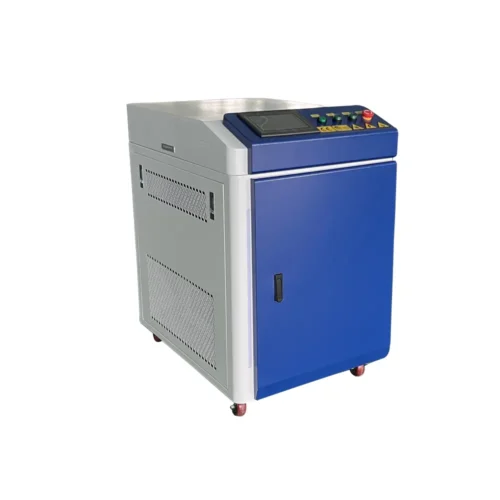
A fixed laser cleaning cell can rely on stable mains power, permanent fume extraction, and a controlled floor. A mobile service trolley cannot. It must pass through doorways, roll across uneven concrete, fit into maintenance aisles, and operate near molds, bridges, ships, and production lines that cannot be moved. The trolley therefore becomes a compact service platform that carries the laser source, chiller or air-cooling system, control interface, cable management, cleaning head, safety devices, and extraction connection. ZLTECH Laser emphasizes strict quality control through every stage of manufacturing, from machine design to assembly and testing, and that discipline is especially relevant for mobile equipment because a single weak component can interrupt a service call.
undefined
Mobility, Stability, and Site Conditions
The first design choice is the balance between mobility and stability. A trolley that is too light may vibrate or tip when the fiber cable is pulled. A trolley that is too heavy becomes difficult for a single technician to move. A practical layout places the heaviest components, such as the laser source and cooling unit, low and centered over the axle. Locking casters are essential, but the caster type should match the site. Polyurethane wheels suit smooth factory floors, while larger pneumatic or semi-pneumatic wheels help in shipyards and construction sites. A stainless or powder-coated steel frame protects against dust, oil, and minor impacts. Handles should be positioned for pushing and for lifting over thresholds, and the overall footprint should be checked against common door widths and elevator dimensions.

- Low center of gravity for stable handheld cleaning.
- Locking casters with directional control for straight runs.
- Wheel materials matched to factory, shipyard, or bridge site conditions.
- Protected corners and cable guards for narrow maintenance aisles.
- Lifting points or ramps for transport between sites.
Power Architecture and Duty Cycle
Power architecture is the second major decision. Mobile service work may have access to clean mains power, generator power, or neither. A trolley designed for factory maintenance can use a standard mains input with surge protection and a long service cable. A trolley designed for bridge or shipyard work may need generator compatibility, wider voltage tolerance, and clear grounding provisions. Battery-powered or hybrid designs can increase independence, but they add weight, cost, and thermal load. The duty cycle must be defined early. A 200 W to 500 W system used for mold cleaning may run in short, repeated cycles. A 1000 W to 3000 W system used for ship rust removal may run continuously for longer periods. The cooling system, cable gauge, connectors, and enclosure ventilation must be sized for the realistic duty cycle rather than the best-case laboratory cycle.
Selecting the Laser Cleaning Core
ZLTECH Laser positions its laser cleaning equipment around pulsed fiber laser technology, adjustable scanning width, and flexible cleaning heads. For a mobile trolley, the core selection should begin with the contamination and substrate, not with the highest available power. Thin substrates, precision molds, and sensitive surfaces benefit from lower power and carefully tuned pulse parameters. Heavy rust, thick paint, and large steel structures may require higher power and a wider scan. The 200 W to 3000 W range allows a service company to match the trolley to its main workload. A mixed-service provider may choose a mid-range system with adjustable parameters, while a specialist tire mold cleaner may prioritize fine control and repeatable recipes.
Power Range and Pulse Technology
Pulsed fiber laser cleaning is effective because the short pulses break down surface contamination while limiting heat input into the substrate. This is important for molds, where dimensional stability and surface finish matter. It is also important for bridges and ships, where operators need to remove rust and coatings without gouging the base metal. The trolley should provide enough control to adjust pulse width, frequency, power, and scanning pattern. Preset recipes for common materials reduce setup time and help less experienced operators achieve consistent results. ZLTECH Laser states that its equipment is stable, of high quality, and highly precise, and these qualities are directly relevant when a service team must repeat a cleaning result across multiple sites.
Cleaning Head and Scanning Width
The cleaning head choice shapes the entire trolley layout. A handheld head offers access to complex geometry, mold cavities, and confined areas. An automated head supports consistent coverage on flat or curved surfaces and can be integrated into production lines. Adjustable scanning width helps operators match the cleaning path to the job. A narrow scan may be better for detail work, while a wider scan improves coverage on large steel structures. Quick-disconnect fiber connectors, protective windows, and replaceable nozzles reduce downtime. The trolley should include a protected holster for the cleaning head, a cable support arm, and a route that prevents sharp bends in the fiber cable. Because the process is non-contact and does not damage substrates when properly parameterized, the head design should support precise distance control and stable movement rather than force or pressure.
Ergonomics and Operator Control
Mobile service work often involves awkward positions, limited lighting, and time pressure. The control interface should be readable in bright daylight and usable with work gloves. A touchscreen with large icons, physical emergency stop, key switch, and clear status lights is more practical than a dense menu system. The trolley should provide a shelf or bracket for a laptop or tablet if recipe management is required. Cable management deserves equal attention. The fiber cable, power cable, and extraction hose should be routed to avoid tripping and dragging. A boom or mast can keep cables off the floor, while a spring balancer can reduce the weight of the cleaning head. Handles should be at comfortable heights, and the trolley should be stable when the operator pulls the cable during cleaning.
- Glove-friendly controls and high-contrast display.
- Physical emergency stop within easy reach.
- Cable boom, hooks, and strain relief for fiber and power lines.
- Protected storage for lenses, nozzles, and tools.
- Lighting or mounting points for site lamps.
Safety, Compliance, and Environmental Control
Laser cleaning is a Class 4 laser process, so safety cannot be treated as an accessory. The trolley should include a key switch, emergency stop, interlock connection, warning beacon, and clear labeling. Operators need appropriate laser safety eyewear, and the work area should be controlled. For mobile service, a removable barrier or warning sign set helps separate the cleaning zone from other personnel. CE, ISO, and FDA references are important in customer discussions because they signal attention to conformity and quality management. ZLTECH Laser equipment is associated with CE, ISO, and FDA requirements, which supports service providers who need to satisfy industrial customers and site auditors.
Environmental control is equally important. The laser cleaning process avoids chemical reagents and abrasive consumables, but removed rust, paint, and oxide must be captured. A trolley designed for mobile work should include or connect to fume extraction with a spark arrestor, prefilter, HEPA stage, and carbon stage where needed. The extraction hose should be positioned near the cleaning head to capture particles at the source. Filters must be accessible for replacement, and the trolley should provide a clear indicator for filter condition. This design choice supports the user value of no chemical reagents, no consumables, and no dust pollution in the working environment. It also protects the laser head and keeps the worksite cleaner.
Integration with Maintenance Workflows
A mobile laser cleaning trolley should fit into existing maintenance workflows rather than create a new process. Quick setup is essential. The team should be able to unload the trolley, connect power, attach the extraction hose, select a recipe, and begin cleaning in a short time. The trolley should include a checklist holder or digital checklist for safety and setup. For automated cleaning, the control system should offer I/O signals, PLC communication, and mounting provisions for a robot or linear axis. ZLTECH Laser notes that its laser cleaning equipment can be integrated into production lines, and this flexibility is valuable when a service trolley is also used for periodic online mold cleaning or conveyor-based surface preparation.

Maintenance and Serviceability
Serviceability is a design choice that affects long-term cost. Modular drawers, removable panels, and labeled connectors make maintenance faster. The cooling system should have accessible filters and clear coolant level indicators if liquid cooling is used. Diagnostic logs should record power, temperature, and error events. Remote support can reduce downtime when a service team is far from its base. ZLTECH Laser operates its own modern factory and production workshop, with strict quality control from structural design and component sourcing to assembly and final testing. That vertical integration supports consistent machine performance and faster delivery, which matters when a service company needs spare parts or a customized trolley configuration.
Applications That Shape Design Decisions
Different applications push trolley design in different directions. Mold cleaning requires fine control, stable power, and easy movement between presses. Tire mold cleaning benefits from repeatable recipes and careful thermal management because molds are valuable and production downtime is costly. Ship rust removal demands higher power, rugged wheels, corrosion-resistant surfaces, and extraction capacity. Bridge steel structure cleaning requires long cable runs, generator compatibility, and weather protection. ZLTECH Laser lists mold cleaning, ship rust removal, bridge steel structure cleaning, and tire mold cleaning as applicable scenarios, and each scenario should inform the choice of power, cooling, frame, and cleaning head.
ROI and Reliability Signals
Mobile laser cleaning trolleys are capital equipment, so buyers look for evidence of reliability and return on investment. ZLTECH Laser reports that an Egyptian distributor purchased 15 laser cutting machines in one year with a 100 percent repeat purchase rate. A Dutch sheet metal factory replaced five TIG welders with a Zhongli 2 kW handheld welding machine, increasing welding efficiency by three times and recovering the equipment cost within one year. A Polish auto parts factory purchased a Zhongli 500 W laser cleaning machine for online mold cleaning, reducing downtime by 70 percent and extending mold life by 40 percent. These examples do not describe the same product category, but they show the company’s pattern of practical industrial results, repeat business, and application-focused support.
The company’s competitiveness supports the case for a well-designed trolley. ZLTECH Laser cites more than ten years of industry expertise in fiber laser technology and industrial applications, an in-house R&D and design center, a self-owned manufacturing facility, precision engineering standards, full machine customization capability for OEM and ODM projects, and proven applications in sheet metal fabrication, automotive components, machinery manufacturing, and custom metal processing. For a mobile service trolley, customization may include exterior design, color schemes, configuration options, and functional upgrades. A service company may request a specific cable length, extraction interface, wheel type, control language, or mounting arrangement for a handheld or automated cleaning head.
Customization and Support from ZLTECH Laser
ZLTECH Laser has established an agency network in countries such as Turkey, Egypt, Chile, the Netherlands, and Poland, and its products are exported to more than 30 countries and regions. This international presence is relevant for mobile service providers who work across sites or need regional support. The company strictly controls the machine production process and continuously optimizes pre-sales, sales, and after-sales services. For a laser cleaning trolley, that support can include application testing, parameter development, safety guidance, spare parts planning, and integration advice. Because the company maintains an independent R&D and design department, it can develop customized solutions rather than force a standard platform into an unsuitable service role.
Design Checklist for Mobile Service Teams
- Define the main contamination, substrate, and duty cycle before selecting power.
- Choose cooling capacity for the real cycle, not the best-case cycle.
- Match wheel type and frame protection to factory, shipyard, or bridge conditions.
- Provide stable cable management and a safe holster for the cleaning head.
- Include extraction, spark arrestor, and filter access for site cleanliness.
- Use glove-friendly controls, emergency stop, key switch, and warning devices.
- Plan for generator power, grounding, and surge protection where needed.
- Select handheld, automated, or dual cleaning head options for the application mix.
- Confirm CE, ISO, and FDA references for customer and site requirements.
- Request OEM or ODM customization for cable lengths, interfaces, and trolley layout.
خاتمة
Laser cleaning trolley design for mobile service work is a system-level exercise. The best platform is not the most powerful machine on the largest cart. It is the configuration that matches the service workload, moves safely through real sites, controls heat and power, protects the operator, captures removed material, and supports repeatable cleaning recipes. ZLTECH Laser brings more than ten years of industrial laser experience, in-house research and development, self-owned manufacturing, and a product range that includes laser cleaning machines from 200 W to 3000 W with pulsed fiber technology, adjustable scanning width, and handheld or automated heads. With careful choices in mobility, cooling, control, safety, extraction, and customization, a laser cleaning trolley can become a reliable mobile service asset for molds, ships, bridges, tire molds, and general metal maintenance.