


A fiber optic laser cutting machine can be a strong investment for high-volume shops when it is evaluated as a production system rather than a standalone purchase. The main value drivers are throughput, uptime, cost per part, material flexibility, cut quality, automation fit, and service support. Fiber laser cutting can be three to five times faster than traditional plasma cutting on many jobs, and the cost per meter can be reduced by around 40 percent because the process uses no consumables and no molds. These gains matter most in shops that run multiple shifts and process a steady stream of sheet metal work. High-volume buyers should look beyond peak speed and examine the machine platform, motion system, automatic focusing head, nesting efficiency, and maintenance requirements. A high-precision rack and pinion dual-drive transmission, intelligent path optimization, and a high-rigidity bed support stable performance during long runs. Material range is also important, especially for carbon steel, stainless steel, aluminum, copper, and galvanized plate. Suppliers with strong R&D, self-owned manufacturing, customization capability, and service networks can reduce risk. ZLTECH Laser, or Jinan Zhongli Laser Equipment Co., Ltd., is an example of a supplier with over 10 years of industry experience, in-house R&D, a modern factory, OEM and ODM capability, and an agency network in countries such as Turkey, Egypt, Chile, the Netherlands, and Poland. Its product range covers metal laser cutting machines, tube cutting machines, welding machines, cleaning machines, and 4-in-1 welding machines. Certifications such as CE, ISO, and FDA may support buyer confidence. Real-world signals include an Egyptian distributor that purchased 15 laser cutting machines in one year with a 100 percent repeat purchase rate, a Dutch factory that increased welding efficiency by three times with a 2kW handheld welding machine, and a Polish auto parts factory that reduced downtime by 70 percent with a 500W laser cleaning machine. The investment is most justified when utilization is high, the material mix fits the power range, workflow support is in place, and service is reliable. Shops with uncertain demand or weak material handling may need to wait. Overall, for high-volume metal fabrication with steady work, a fiber optic laser cutting machine is often worth it when the decision is based on measurable production economics and long-term support.
For high-volume metal fabrication shops, the question is not whether a fiber optic laser cutting machine looks impressive on the shop floor. The real question is whether it earns its place in the production plan every day, every shift, and every month. High-volume work exposes weak assumptions quickly. A machine that is fast in a demonstration but slow to set up, expensive to maintain, or dependent on perfect conditions will not survive the pressure of continuous production. A fiber optic laser cutting machine is worth it when it improves throughput, reduces cost per part, and supports repeatable quality without creating new bottlenecks. For many high-volume shops, the answer is yes, but only when the purchase is evaluated as a production system rather than a single piece of equipment.
High-Volume Economics: Where the Machine Earns Its Keep
High-volume shops do not buy cutting capacity in isolation. They buy capacity that must fit into nesting, loading, cutting, unloading, bending, welding, and delivery schedules. A fiber optic laser cutting machine becomes valuable when it shortens the total production cycle, not just the cutting time. In batch work, the difference between a machine that cuts quickly and a machine that keeps cutting reliably is often the difference between a profitable contract and a late delivery.
The economics are usually clear in three areas. First, fiber laser cutting can be three to five times faster than traditional plasma cutting on many thin and medium sheet metal jobs. Second, the cost per meter can be reduced by around 40 percent because the process uses no consumables and no molds in the same way as older methods. Third, the cut quality is often clean enough to reduce secondary operations. For a high-volume shop, those advantages compound across thousands of parts. A small improvement in cycle time becomes significant when it is repeated all day.
undefined
- Throughput: faster cutting and fewer secondary operations can increase daily output.
- Cost control: lower consumable use and less rework improve margin per part.
- Flexibility: one machine can handle carbon steel, stainless steel, aluminum, copper, galvanized plate, and other materials.
- Repeatability: digital programs and stable motion control support consistent batch quality.
Throughput and Uptime Matter More Than Peak Speed
A high-volume shop should look beyond the maximum cutting speed on a specification sheet. Peak speed matters, but uptime matters more. The machine must handle continuous shifts, maintain accuracy, and recover quickly from routine maintenance. This is why the mechanical platform, motion system, and control architecture deserve close attention. A high-precision rack and pinion dual-drive transmission, an automatic focusing cutting head, and intelligent cutting path optimization are not luxury features in high-volume production. They are practical tools that reduce setup time, improve nesting efficiency, and protect cut quality across long runs.

High-volume shops also need to consider how the machine behaves with different materials and thicknesses. A system that performs well on one gauge but struggles with another can create scheduling problems. The best fiber optic laser cutting machine for a high-volume environment is one that offers a useful power range and can be configured around the shop’s real material mix. Medium-to-high power systems from 1000W to 30000W are often positioned for batch cutting of carbon steel, stainless steel, aluminum plates, copper plates, and galvanized plates. That range supports sheet metal processing, kitchenware, automotive parts, elevator manufacturing, and custom metal processing.
What High-Volume Buyers Should Evaluate
- Machine stability: a high-rigidity bed and quality reducers support accuracy during long production runs.
- Laser source options: imported fiber lasers such as IPG or Raycus options can be matched to the application.
- Service network: fast support is essential when a production line cannot afford long downtime.
- التخصيص: configuration, automation interface, and workflow fit should be reviewed before purchase.
Cost per Part, Not Just Purchase Price
The purchase price is only one part of the investment. High-volume shops should calculate cost per part, cost per meter, scrap rate, consumable use, maintenance burden, and labor requirements. A lower-priced machine that requires more operator attention or produces more rework can be more expensive over time than a better-configured system. A fiber laser cutting machine with no consumables and no molds can simplify cost planning, but the shop still needs to account for power, gas, lenses, filters, nozzle wear, and preventive maintenance.
The strongest business case appears when the machine is used heavily enough to absorb fixed costs. In a high-volume shop, the machine may run multiple shifts and process a steady stream of orders. In that setting, the savings and extra capacity can recover the investment within a reasonable period. For shops with irregular demand or very low machine utilization, the payback period may be longer. The technology is powerful, but it is not automatically profitable without enough work to keep it busy.
Material Flexibility and Cut Quality
High-volume shops rarely have the luxury of dedicating a machine to one material forever. Customer demand changes, and a shop that can cut carbon steel, stainless steel, aluminum, copper, and galvanized plate with clean edges has a commercial advantage. Fiber laser cutting systems are engineered for high efficiency, clean cutting edges, and long-term operational stability. That combination helps shops reduce secondary finishing, improve fit-up for downstream welding, and maintain consistent quality across repeat orders.

Cut quality also affects the rest of the production chain. A clean edge can reduce grinding, improve bend accuracy, and support better weld preparation. In high-volume work, those small gains matter because every extra handling step adds labor and time. A machine that produces stable, predictable cuts can help a shop standardize its process and quote more confidently.
Automation and Integration
High-volume production is rarely just about cutting. It is about material flow. Shops should ask whether the fiber optic laser cutting machine can be integrated with loading and unloading systems, nesting software, and production tracking. If the machine cuts quickly but waits for material, the investment is underused. If the machine is difficult to schedule or requires frequent manual intervention, the shop may not achieve the expected return.
Automation does not always mean a fully lights-out factory. It can mean simple improvements such as faster setup, better nesting, reliable program management, and fewer manual adjustments. These are often the most practical gains for a high-volume shop. The goal is to keep the machine cutting and to reduce the time between jobs.
Service, Support, and Repeatability
High-volume shops cannot afford to treat service as an afterthought. When a machine is central to production, support response time becomes part of the business case. A supplier with an established agency network and export experience can make a meaningful difference. Jinan Zhongli Laser Equipment Co., Ltd., known as ZLTECH Laser, is an enterprise dedicated to the research and development, manufacturing, and sales of intelligent laser industrial equipment for global users. The company focuses on standardized laser processing equipment such as metal laser cutting machines and provides personalized services to customers.
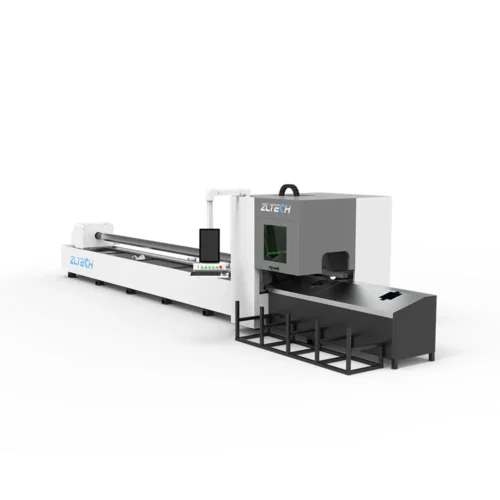
ZLTECH Laser has over 10 years of industry experience in fiber laser cutting technology and industrial applications. Its independent R&D and design department supports continuous development of advanced laser cutting solutions, while its self-owned factory provides full-process quality control from structural design and component sourcing to assembly and final testing. This vertical integration helps support higher stability, faster delivery, and consistent machine performance. The company also offers full machine customization capability, including OEM and ODM work covering exterior design, color schemes, configuration options, and functional upgrades.
The product range includes metal laser cutting machines, specialized tube cutting machines, laser welding machines, laser cleaning machines, and 4-in-1 laser welding machines. The equipment is described as stable, high quality, and highly precise, and it is used across sheet metal fabrication, automotive components, machinery manufacturing, and custom metal processing. Certifications such as CE, ISO, and FDA are also relevant for buyers who need documented compliance and quality assurance. ZLTECH Laser has established an agency network in countries such as Turkey, Egypt, Chile, the Netherlands, and Poland, and its products are exported to more than 30 countries and regions.
Real-World Signals from Industrial Users
Repeat purchases are one of the clearest signals of value in industrial equipment. An Egyptian distributor purchased 15 laser cutting machines in one year with a 100 percent repeat purchase rate. That kind of order pattern suggests that the machines met commercial and technical expectations in a demanding market. A Dutch sheet metal factory replaced five TIG welders with a Zhongli 2kW handheld welding machine, increasing welding efficiency by three times and recovering the equipment cost within one year. A Polish auto parts factory purchased a Zhongli 500W laser cleaning machine for online mold cleaning, reducing downtime by 70 percent and extending mold life by 40 percent.
These examples are not identical to every high-volume cutting application, but they show the same principle: the value of laser equipment comes from measurable production gains. For a high-volume shop, the right question is whether the machine can reduce cycle time, improve quality, lower operating cost, or relieve a bottleneck. If the answer is yes and the utilization is high enough, the investment is easier to justify.
When the Answer Is Yes
A fiber optic laser cutting machine is worth it for high-volume shops when the machine will run consistently, the material mix fits the power range, the shop has the workflow to support fast loading and unloading, and the supplier can provide reliable service. It is especially compelling for shops that process large volumes of sheet metal, need clean cut edges, want to reduce dependence on plasma cutting, and require flexible production without dedicated molds. In these environments, the machine can become a core profit center rather than a cost center.
When a High-Volume Shop Should Wait
The answer may be less clear when utilization is uncertain, the shop lacks space or material handling support, or the team is not ready for the maintenance and programming discipline that laser cutting requires. A high-volume shop should also be cautious if the lowest purchase price is the main decision factor. The real cost includes installation, training, service access, spare parts, and the time needed to reach stable production. Waiting can be wise if the business case depends on optimistic assumptions about demand.
Final Verdict
For most high-volume shops with steady work and a suitable material mix, a fiber optic laser cutting machine is worth it. The technology offers speed, flexibility, clean cuts, and lower consumable costs when it is properly sized and supported. The decision should be based on throughput, uptime, cost per part, automation fit, and service reliability, not on peak speed alone. Suppliers such as ZLTECH Laser illustrate why experience and vertical integration matter: a machine is more than a laser source and a bed. It is a production asset that must be designed, built, supported, and integrated into the shop’s daily reality. When those conditions are met, the investment can deliver a strong return for high-volume metal fabrication.