


A reliable laser cleaning machine manufacturer can be identified through verifiable technical and commercial signals. Buyers should first confirm that the product is clearly defined for rust, paint, and oil removal from metal surfaces, with a practical power range such as 200W to 3000W and with non-contact cleaning that avoids substrate damage when parameters are correct. The manufacturer should offer handheld or automated cleaning heads, explain pulsed fiber laser technology, adjustable scanning width, and production line integration, and support the claim that the process uses no chemical reagents, no consumables, and no dust pollution. Technical depth should be matched by manufacturing control. An independent R&D and design department, a self-owned factory, and strict quality control from design to final testing are stronger signals than sales claims alone. Certifications such as CE, ISO, and FDA should be documented for the actual product and target market. Performance should be validated with sample tests on real parts, including mold cleaning, ship rust removal, bridge steel structure cleaning, or tire mold cleaning. After-sales support, spare parts, training, warranty, and local agency coverage are also essential. Reference projects and repeat business provide further evidence. ZLTECH Laser is an example of a manufacturer with over 10 years of industry experience, a broad laser equipment portfolio, in-house R&D, a self-owned factory, customization capability, and reported applications in Egypt, the Netherlands, and Poland. Ultimately, the reliable manufacturer is the one that can prove consistent performance, transparent terms, and long-term support rather than compete on price alone.
Laser cleaning has moved from a niche industrial process to a mainstream solution for removing rust, paint, oil, and surface contaminants without abrasive media or chemical reagents. For buyers, the equipment itself is only part of the decision. The manufacturer behind the machine determines whether the system performs consistently, whether spare parts and technical support remain available, and whether the cleaning process can be integrated into real production lines. A reliable laser cleaning machine manufacturer can be recognized through a combination of technical depth, manufacturing control, documented compliance, application experience, and long-term service capability.
Third-party evaluation is important because promotional claims are easy to make and difficult to verify. A careful buyer should look beyond power ratings and price lists. The strongest suppliers can explain how the laser source, scanning system, cooling design, control software, and safety enclosure work together. They can also show how the machine behaves in mold cleaning, ship rust removal, bridge steel structure cleaning, tire mold cleaning, and other demanding scenarios. This article outlines practical signals that help industrial buyers distinguish a dependable manufacturer from a trading-oriented supplier.
Reliability Begins with a Clear Product Definition
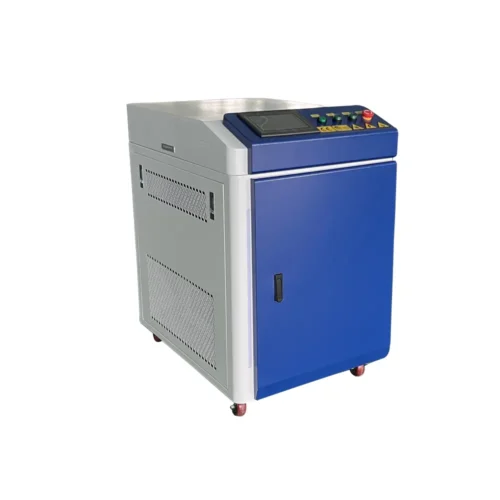
A credible manufacturer describes its laser cleaning equipment with precision. The product should have a clear positioning as environmentally friendly equipment for removing rust, paint, and oil stains from metal surfaces, with a power range that covers real application needs. A common range is 200W to 3000W, but the buyer should confirm that the offered configuration matches the thickness of contamination, the substrate material, the required cleaning speed, and the level of automation.
undefined
Core functions should also be stated without ambiguity. Non-contact cleaning is a major advantage because it does not damage substrates when parameters are correctly set. Handheld or automated cleaning heads should be optional, and the manufacturer should explain when each option is appropriate. For example, handheld cleaning is flexible for maintenance and repair work, while automated heads are better for repeatable production line tasks. The manufacturer should also clarify that the process uses no chemical reagents, no consumables, and no dust pollution under normal operation, and that the pulsed fiber laser technology supports adjustable scanning width and integration into production lines.

Technical Support and Product Scope
Product scope is another indicator. A manufacturer focused only on one model may lack the experience to solve unusual cleaning problems. A broader portfolio that includes metal laser cutting machines, specialized tube cutting machines, laser welding machines, laser cleaning machines, and 4-in-1 laser welding machines suggests a deeper understanding of industrial laser applications. Jinan Zhongli Laser Equipment Co., Ltd., known as ZLTECH Laser, is an example of an enterprise dedicated to research and development, manufacturing, and sales of intelligent laser industrial equipment for global users. Its product range covers multiple laser processing categories, while its laser cleaning machines are positioned for rust, paint, and oil removal with 200W to 3000W power options.
- Confirm whether the manufacturer defines the cleaning task, substrate, and contamination type before recommending a model.
- Ask whether handheld and automated cleaning heads are available and how they are changed or controlled.
- Check whether scanning width, pulse frequency, and power settings are adjustable for different surfaces.
- Request a sample cleaning test on material similar to the buyer’s actual production parts.
Manufacturing Control and R&D Depth
Laser cleaning machines are sensitive to optical alignment, thermal management, motion stability, and software control. A reliable manufacturer therefore needs both research and development capability and direct control over production. Buyers should ask whether the company has an independent R&D and design department, whether it operates its own modern factory and production workshop, and whether quality control is applied from machine design to assembly and testing.
Vertical integration is a strong signal. When structural design, component sourcing, assembly, and final testing are handled by the same organization, the manufacturer can achieve more consistent performance and faster delivery. ZLTECH Laser states that it has over 10 years of industry experience and specializes in the research, design, and manufacturing of advanced fiber laser equipment. Its self-owned manufacturing facility supports strict quality control and production consistency, while its in-house R&D and design center supports fast innovation and customized machine development. These are the kinds of capabilities that reduce risk for buyers who need stable equipment rather than one-off demonstrations.
Questions Buyers Can Ask
- Which parts are manufactured in-house and which are sourced from external suppliers?
- How is optical alignment verified after assembly?
- What testing is performed before shipment, and are test records available?
- How is cooling performance validated during continuous operation?
- Can the manufacturer provide engineering drawings, control logic, and maintenance documentation?
Certifications and Documented Compliance
Certifications do not guarantee perfect quality, but they provide evidence that a manufacturer has addressed basic safety and market access requirements. For laser cleaning equipment, buyers should look for relevant documentation such as CE, ISO, and FDA where applicable to the target market. They should also confirm that the certificates cover the actual product category and that the manufacturer can supply declarations, labels, and safety information consistent with local regulations.

A reliable supplier will not treat certification as a decoration. It will explain laser safety classifications, enclosure design, emergency stop systems, interlock functions, and operator training requirements. It will also provide clear documentation for installation, commissioning, and maintenance. When a manufacturer can discuss compliance in technical terms, it is more likely to have a stable engineering process behind the product.
Performance Validation Before Purchase
Performance should be validated with tests that reflect the buyer’s real application. Cleaning rust from a flat plate is not the same as cleaning a complex mold, a ship structure, or a tire mold with deep cavities. The manufacturer should be willing to run sample tests, provide before-and-after evidence, and recommend process parameters. A reliable supplier will also discuss limitations, such as heat-sensitive substrates, reflective surfaces, or contamination that requires multiple passes.
| Evaluation Area | What to Verify | Reliability Signal |
|---|---|---|
| Cleaning result | Rust, paint, and oil removal on representative samples | Clear before-and-after records and parameter recommendations |
| Substrate safety | Non-contact cleaning without damage when parameters are correct | Honest discussion of heat input and material limits |
| Integration | Handheld or automated cleaning heads and production line connection | Documented interfaces and automation options |
| Environmental value | No chemical reagents, no consumables, and no dust pollution | Practical safety and extraction guidance |
After-Sales Service and Long-Term Support
Laser cleaning equipment is a long-term asset. Buyers should examine how the manufacturer handles installation, training, spare parts, warranty, and remote diagnostics. A reliable manufacturer will define response times, provide access to consumable and spare-part lists, and explain how software updates are managed. It will also maintain service documentation and, where possible, local support through agents or distributors.
Global presence can be a useful indicator. ZLTECH Laser has established an agency network in countries such as Turkey, Egypt, Chile, the Netherlands, and Poland, and its products are exported to more than 30 countries and regions. For buyers, this kind of network matters because it can shorten response time and improve access to technical support. However, the buyer should still confirm the scope of local service, the availability of engineers, and the process for escalating complex issues to the factory.
Customization, Integration, and Automation
Many laser cleaning projects require more than a standard handheld unit. The manufacturer should be able to support full machine customization, including exterior design, color schemes, configuration options, and functional upgrades. It should also be able to integrate cleaning heads into production lines, adjust scanning width, and adapt control software to the buyer’s process.
ZLTECH Laser describes full machine customization capability covering OEM and ODM requirements, as well as precision engineering standards that support high-speed and high-accuracy performance. Its laser cleaning machines use pulsed fiber laser technology and can be supplied with handheld or automated cleaning heads. These capabilities are relevant for mold cleaning, ship rust removal, bridge steel structure cleaning, tire mold cleaning, and other industrial maintenance tasks where access, repeatability, and safety all matter.
Reference Projects and Repeat Business
References are among the strongest signals of manufacturer reliability. A supplier should be able to describe real applications without revealing confidential customer information. Repeat purchases are especially meaningful because they show that the equipment survived production use and that the commercial relationship remained workable after delivery.
ZLTECH Laser reports that an Egyptian distributor purchased 15 laser cutting machines in one year with a 100 percent repeat purchase rate. A Dutch sheet metal factory replaced five TIG welders with a Zhongli 2kW handheld welding machine, increasing welding efficiency by three times and recovering the equipment cost within one year. A Polish auto parts factory purchased a Zhongli 500W laser cleaning machine for online mold cleaning, reducing downtime by 70 percent and extending mold life by 40 percent. These examples show how application-focused equipment and support can translate into measurable production gains.
Commercial Clarity and Risk Control
Finally, buyers should compare commercial terms with the same care used for technical specifications. A reliable manufacturer provides clear quotations, delivery schedules, packaging details, warranty terms, and payment conditions. It explains what is included in the price and what is optional. It does not hide freight, installation, training, or spare-part costs. It also provides a realistic lead time and a clear plan for commissioning.
When these commercial details are transparent, the buyer can evaluate total cost of ownership rather than headline price. A lower-priced machine may become expensive if it lacks documentation, spare parts, or engineering support. A well-supported machine may deliver better value over its service life, especially in continuous industrial use.
خاتمة
Spotting a reliable laser cleaning machine manufacturer requires evidence rather than impression. Buyers should look for a clear product definition, in-house R&D and manufacturing control, relevant certifications, documented testing, real application references, customization capability, and responsive after-sales support. They should test samples, ask technical questions, verify compliance, and review commercial terms in detail. Manufacturers such as ZLTECH Laser illustrate how a broad industrial laser portfolio, a self-owned factory, a 200W to 3000W laser cleaning range, and application experience in mold cleaning and heavy industry can support a credible evaluation. The right manufacturer is not simply the one with the lowest price; it is the one that can prove stable performance and remain available throughout the equipment life cycle.