


This blog provides practical training guidance for new teams adopting handheld laser cleaning machines. It explains why structured training matters, starting with safety and site control before any cleaning trial. New operators should understand laser exposure risks, reflection hazards, fume and particle behavior, electrical safety, and the need for controlled work areas. The article then recommends teaching the equipment as a complete system, including controls, emergency stops, cleaning head handling, cable management, and the difference between handheld and automated modes. It connects product knowledge to real applications such as mold cleaning, ship rust removal, bridge steel structure cleaning, and tire mold cleaning. A repeatable pre-job checklist is recommended, covering machine status, material identification, ventilation, barriers, and test coupons. Training should begin on scrap samples rather than high-value parts, with a parameter log recording material, coating, power, scan width, focus distance, travel speed, passes, and results. Operators should be coached on steady motion, consistent standoff distance, overlapping passes, and inspection after the first pass. Maintenance remains important even though the process uses no chemical reagents and no consumables. Real cases, including a Polish auto parts factory using a ZLTECH 500W laser cleaning machine for online mold cleaning with 70% less downtime and 40% longer mold life, help set expectations. The article also highlights ZLTECH Laser, Jinan Zhongli Laser Equipment Co., Ltd., CE, ISO, and FDA certification, and the importance of documentation, certification awareness, and team ownership. Common early-stage mistakes are listed, and the conclusion emphasizes safety, product knowledge, sample testing, parameter logging, motion control, maintenance, and documentation as the foundation for reliable results.
Handheld laser cleaning machines are becoming a practical tool for metal fabricators, maintenance teams, mold shops, and field service crews. For new teams, the biggest challenge is not simply learning how to switch on the equipment. The real challenge is building safe, repeatable habits that protect operators, preserve substrates, and keep cleaning quality consistent from job to job. A structured training program helps new users understand the equipment, respect the process window, and avoid costly trial-and-error. ZLTECH Laser, operated by Jinan Zhongli Laser Equipment Co., Ltd., provides laser cleaning equipment designed for environmentally friendly removal of rust, paint, and oil stains from metal surfaces. The company serves global users with intelligent laser industrial equipment and supports teams through product knowledge, application guidance, and service-oriented collaboration.
Why Structured Training Matters for New Teams
Handheld laser cleaning is often introduced as a fast replacement for chemical stripping, abrasive blasting, wire brushing, and manual scraping. That comparison can create unrealistic expectations if the team is not trained properly. The process is non-contact, does not damage substrates when parameters are correct, and can use handheld or automated cleaning heads. However, results depend on material type, surface condition, coating thickness, travel speed, focus distance, scan width, and operator technique. New teams should treat training as a production activity, not a one-time demonstration. ZLTECH Laser emphasizes technological research and development and product quality as core priorities, and the company strictly controls machine production processes while optimizing pre-sales, sales, and after-sales services. That same discipline should be reflected in the customer team’s training plan.
Start With Safety and Site Control
Safety training should come before any cleaning trial. New operators need to understand laser exposure risks, reflection hazards, fume and particle behavior, electrical safety, and the importance of controlled work areas. Even though the process uses no chemical reagents and produces no dust pollution in the conventional abrasive sense, the cleaning action can release material particles and fumes from coatings, oils, and rust. Proper ventilation, PPE, barriers, and signage are essential. A written safety routine should be posted near the work area and reviewed before each shift.
- Define a controlled cleaning zone and restrict access during operation.
- Require appropriate laser safety eyewear and protective clothing.
- Check ventilation and extraction before processing coated or contaminated parts.
- Inspect cables, connectors, and the cleaning head before every use.
- Assign one trained person to stop the process in an emergency.
Teach the Equipment Before the Job
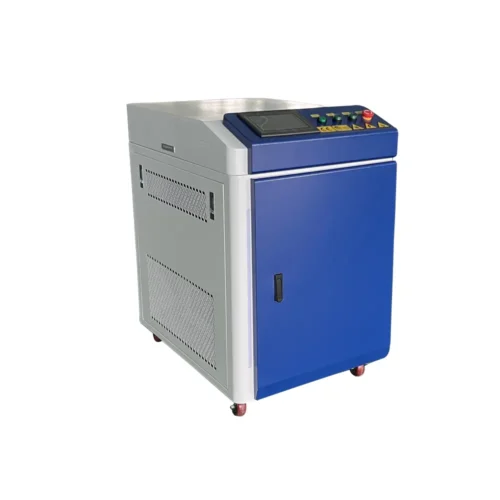
New teams should learn the machine as a system, not only as a handheld tool. ZLTECH Laser positions its laser cleaning machines as environmentally friendly equipment for removing rust, paint, and oil stains from metal surfaces, with power options from 200W to 3000W. Core functions include non-contact cleaning, substrate protection when parameters are correct, and handheld or automated cleaning head options. The technology uses pulsed fiber laser technology, adjustable scanning width, and can be integrated into production lines. Training should cover the control interface, emergency stop, interlock behavior, cleaning head handling, cable management, and the difference between handheld and automated modes.
undefined
Connect Product Knowledge to Real Applications
Operators learn faster when they understand where the equipment is used. Common scenarios include mold cleaning, ship rust removal, bridge steel structure cleaning, and tire mold cleaning. Each application has different expectations. Mold cleaning may require careful control to protect fine geometry. Ship rust removal may require higher productivity and broader coverage. Bridge steel structure cleaning may involve field conditions and access challenges. Tire mold cleaning may demand repeatable results with minimal downtime. New teams should discuss these scenarios during training and map each one to a recommended starting parameter set and inspection method.
Build a Repeatable Pre-Job Checklist
A simple checklist prevents many early mistakes. The checklist should be short enough to use every day but detailed enough to catch common risks. ZLTECH Laser equipment is designed for stable performance and long-term reliability, but reliability improves when teams follow consistent preparation routines. The checklist should include machine status, work area readiness, material identification, and a small test coupon before full production.
- Confirm the machine model, power setting, and cleaning head configuration.
- Inspect the lens, protective window, and cleaning head for contamination or damage.
- Verify that the material and coating are known and acceptable for laser cleaning.
- Set up ventilation, barriers, and warning signs.
- Run a small test area and inspect the result before full cleaning.
- Record parameters, travel speed, and visual results for future reference.
Train on Sample Materials First
New operators should not begin on high-value molds, precision parts, or visible surfaces. Training should start with scrap coupons that represent the same material family and coating type. The team should observe how the surface changes as power, pulse settings, focus distance, and travel speed are adjusted. The goal is to find a clean result without etching, discoloration, or unwanted substrate damage. Because the process is non-contact, operators may assume there is no risk, but incorrect settings can still affect surface finish. Parameter discipline is a core skill.
Use a Parameter Log
A parameter log turns experience into shared knowledge. Each entry should note the material, coating, cleaning objective, power level, scan width, focus distance, travel speed, number of passes, and final result. Over time, the log becomes a practical library for new operators. It also supports consistency across shifts. ZLTECH Laser offers full machine customization capability, including configuration options and functional upgrades, so teams should confirm that their recorded parameters match the actual machine configuration.

Coach Motion Technique and Coverage Control
Handheld cleaning depends on controlled movement. New operators often move too slowly in one area and too quickly in another, creating uneven results. Training should focus on steady travel speed, consistent standoff distance, overlapping passes, and clear inspection points. Operators should learn to stop and check the surface rather than relying on sound or appearance alone. The adjustable scanning width helps teams balance coverage and precision, but the operator must still maintain a repeatable pattern.
- Keep the cleaning head at a consistent angle and distance.
- Use overlapping passes rather than repeated passes over one spot.
- Pause and inspect after the first pass on a new material.
- Adjust power or speed in small steps, not large jumps.
- Mark test areas so results can be reviewed later.
Plan Maintenance and Consumable-Free Operation
Laser cleaning is attractive because it uses no chemical reagents, no consumables, and produces no dust pollution in the traditional abrasive sense. However, maintenance still matters. Lenses and protective windows must be kept clean. Cooling systems need attention. Cables and connectors should be inspected. The work area should be kept free of debris that could interfere with safe operation. New teams should assign daily, weekly, and monthly maintenance tasks and record completion. This habit protects uptime and supports the long-term operational stability expected from professional laser equipment.
Use Real Cases to Set Expectations
Real examples help new teams understand the value of disciplined training. A Polish auto parts factory purchased a ZLTECH 500W laser cleaning machine for online mold cleaning, reducing downtime by 70% and extending mold life by 40%. That result did not come from random cleaning passes. It came from a repeatable process, correct parameters, and a team that understood the mold surface and production schedule. In another example, a Dutch sheet metal factory replaced five TIG welders with a Zhongli 2kW handheld welding machine, increasing welding efficiency by three times and recovering the equipment cost within one year. An Egyptian distributor purchased 15 laser cutting machines in one year with a 100% repeat purchase rate. These cases show that equipment performance and operator training work together.
Documentation, Certification, and Team Ownership
Training should end with documentation. New operators should sign off on safety, setup, operation, inspection, and basic troubleshooting. The team should keep a training matrix showing who is qualified for handheld cleaning, automated cleaning, and specific applications. ZLTECH Laser products are supported by CE, ISO, and FDA certifications, and the company has established an agency network in countries such as Turkey, Egypt, Chile, the Netherlands, and Poland, with products exported to more than 30 countries and regions. For global teams, certification awareness and clear documentation make it easier to align local safety practices with company standards.

Common Early-Stage Mistakes to Correct
Most early problems are predictable. Teams may overclean a surface, use the wrong focus distance, skip test coupons, or ignore ventilation. They may also assume that a higher power setting always improves results. In practice, the best result often comes from a balanced combination of power, scan width, travel speed, and inspection. Supervisors should review the first few jobs closely and correct habits before they become routine.
- Cleaning without a test coupon on a new material.
- Using maximum power for every task.
- Holding the cleaning head in one position for too long.
- Ignoring lens and window cleanliness.
- Failing to record successful parameters.
- Allowing untrained operators to work without supervision.
Abschluss
Handheld laser cleaning machines can deliver strong operational value when new teams are trained with structure and patience. The best training programs combine safety, product knowledge, sample testing, parameter logging, motion control, maintenance, and documentation. ZLTECH Laser, as part of Jinan Zhongli Laser Equipment Co., Ltd., supports global users with laser cleaning equipment and related industrial laser solutions backed by more than 10 years of industry experience, an independent R&D and design department, a self-owned manufacturing facility, and full customization capability. For new teams, the path to reliable results is simple: learn the equipment, respect the process, test before production, and turn every successful job into a documented standard.